
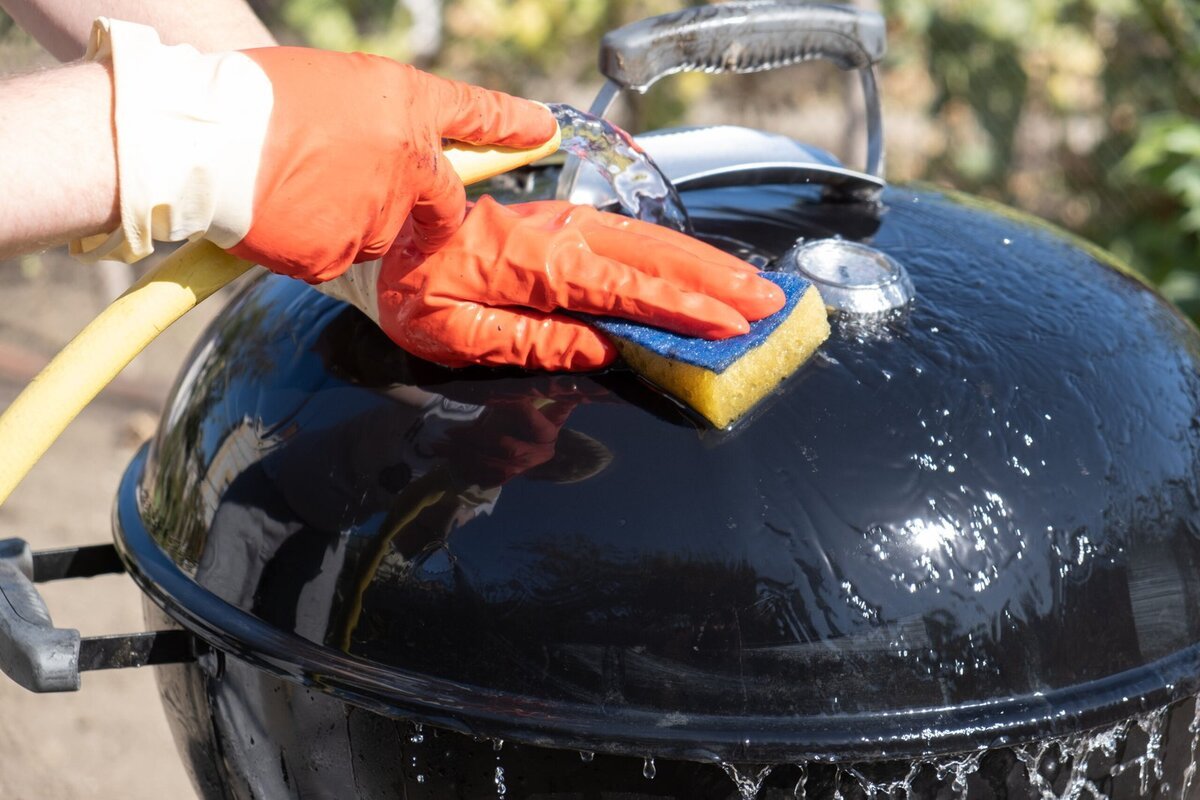
Remove BBQ Grease From Concrete Quickly using the right techniques and household items you probably already have. Grease stains on concrete driveways and patios are common after outdoor cooking sessions, but they don’t have to be permanent eyesores.
Acting fast makes all the difference when dealing with fresh grease spills. The longer grease sits on concrete, the deeper it penetrates into the porous surface, making removal much more difficult.
TL;DR
- Fresh grease stains can be removed in 15-30 minutes using dish soap and hot water.
- Cat litter absorbs wet grease within 2-4 hours when applied immediately after spills.
- Baking soda paste removes set-in stains when left overnight and scrubbed the next morning.
- Power washing with degreaser eliminates stubborn stains that resist other methods.
Remove BBQ Grease From Concrete Quickly
The key to successful grease removal is choosing the right method based on how fresh or set-in the stain is. Fresh spills respond well to absorption techniques, while older stains need stronger cleaning agents.
Start by assessing the stain’s age and size before selecting your approach. This saves time and ensures you use the most effective method for your specific situation.
Immediate Action for Fresh Grease Spills
When grease first hits concrete, you have a golden opportunity to prevent permanent staining. Quick action during the first few hours makes removal significantly easier.
Here’s what to do immediately after a grease spill:
- Absorb excess grease. Pour cat litter, sawdust, or baking soda generously over the wet grease to soak up as much as possible.
- Wait 2-4 hours. Let the absorbent material pull the grease out of the concrete surface completely.
- Sweep up debris. Remove all absorbent material with a stiff brush or broom before moving to the cleaning phase.
- Apply dish soap. Squirt liquid dish soap directly onto the remaining stain and work it in with hot water.
Best Absorbent Materials
Different absorbent materials work better for different situations. Choose based on what you have available and the size of your spill.
- Clay cat litter – works fastest and absorbs the most grease per pound.
- Baking soda – readily available and doubles as a mild abrasive cleaner.
- Sawdust – excellent for large spills and easy to sweep up afterward.
- Cornstarch – surprisingly effective for small grease spots and safe around food prep areas.
Dish Soap and Hot Water Method
This simple approach works well for fresh to moderately set stains. The combination of degreasing agents in dish soap and hot water’s ability to break down fats makes this method highly effective.
Mix 2 tablespoons of liquid dish soap with 1 gallon of hot water for best results. Pour the mixture over the stain and let it sit for 15-20 minutes before scrubbing with a stiff brush.
Step-by-Step Process
- Heat the water. Use the hottest water your hose can produce or heat water in buckets for maximum grease-cutting power.
- Apply soap solution. Pour generously over the stain and work into the concrete with a stiff-bristled brush.
- Let it penetrate. Allow 15-20 minutes for the soap to break down the grease molecules completely.
- Scrub vigorously. Use circular motions and firm pressure to lift the dissolved grease from the concrete pores.
- Rinse thoroughly. Flush with clean water to remove all soap residue and loosened grease.
Pro Cleaning Tip
Add 1 cup of white vinegar to your dish soap solution for extra grease-cutting power. The acid helps break down stubborn grease while the soap lifts it away from the concrete.
Baking Soda Paste for Set-In Stains
Older grease stains that have penetrated deep into concrete respond well to baking soda’s mild abrasive and alkaline properties. This method requires more time but works on stains that resist other approaches.
Create a thick paste using 1 cup baking soda mixed with just enough water to form a spreadable consistency. The paste should stick to vertical surfaces without running off.
Application Process
- Cover completely – spread paste 1/4 inch thick over the entire stain area.
- Let it work overnight – the extended contact time allows deep penetration into concrete pores.
- Scrub in the morning – use a wire brush or stiff bristles to work the paste into the surface.
- Rinse with hot water – flush away the paste and dissolved grease thoroughly.
Commercial Degreaser Solutions
When household methods aren’t enough, commercial degreasers provide the heavy-duty cleaning power needed for stubborn stains. These products are specially formulated to break down automotive and cooking grease on concrete surfaces.
Look for degreasers specifically labeled for concrete use, as some products can damage or discolor certain types of concrete finishes. Always test in an inconspicuous area first.
Popular Degreaser Options
- Simple Green Pro HD – concentrated formula that works on old and new stains.
- Krud Kutter Original – biodegradable option that’s safe around plants and pets.
- Oil Eater Original – specifically designed for petroleum-based stains and cooking oils.
- Concrete Degreaser Plus – professional-strength formula for the toughest stains.
Power Washing Techniques
A pressure washer combined with degreaser can remove even the most stubborn grease stains. The high-pressure water physically blasts away loosened grease while the cleaning solution does the chemical work.
Use a 25-degree nozzle tip to avoid damaging the concrete surface while still providing enough pressure to remove embedded grease. Start with lower pressure and increase gradually as needed.
Safety Considerations
Power washing requires proper safety equipment and technique to avoid injury or property damage. Wear safety glasses and closed-toe shoes when operating any pressure washing equipment.
Keep the nozzle moving to prevent concrete damage from concentrated pressure in one spot. BBQ safety practices extend beyond cooking to include proper cleanup and maintenance procedures.
Prevention Tips for Future Spills
Preventing grease stains is much easier than removing them after they’ve set into concrete. Simple precautions during your outdoor cooking sessions can save hours of cleanup work later.
Position absorbent mats or cardboard under your grill’s grease management system to catch drips before they hit the concrete. Replace these protective barriers regularly, especially during heavy cooking sessions.
Smart Grilling Setup
- Use drip pans – position metal pans under grease outlets to catch overflow before it hits the ground.
- Clean regularly – empty grease traps frequently to prevent overflow during cooking sessions.
- Position strategically – set up your backyard BBQ station over grass or gravel rather than directly on concrete when possible.
- Keep supplies handy – store cat litter and cleaning supplies near your grilling area for immediate spill response.
Articles You May Like
Frequently Asked Questions
How long should I let dish soap sit on a grease stain?
Let dish soap sit for 15-20 minutes on fresh stains or up to 30 minutes on older stains. Longer contact time allows the soap to break down more grease molecules.
Will pressure washing damage my concrete?
Pressure washing won’t damage concrete when done correctly using a 25-degree nozzle tip and keeping the wand moving. Avoid concentrated pressure in one spot for extended periods.
Can I use regular laundry detergent instead of dish soap?
Dish soap works better than laundry detergent because it’s specifically formulated to cut through grease and oils. Laundry detergent focuses more on protein and dirt removal.
How do I know if a grease stain is too old to remove?
Very dark stains that have been present for months or years may be permanent, but it’s worth trying the baking soda paste method overnight before giving up. Some improvement is usually possible even with old stains.
Final Thoughts
Remove BBQ Grease From Concrete Quickly becomes much easier when you know which method to use for different types of stains. Fresh spills respond well to simple absorption and dish soap, while older stains need stronger approaches like commercial degreasers or power washing.
Start with the gentlest method that matches your stain’s age and work up to stronger solutions only if needed. Most grease stains can be eliminated completely with the right approach and a little patience.


Ryan Conlon is a BBQ enthusiast and inspired chef on a journey through the smoky, savory world of outdoor cooking. Hailing from the heart of the Midwest, Ryan’s passion for grilling ignited during his early years, where family gatherings often revolved around the sizzle of the grill and the aroma of seasoned meats.