
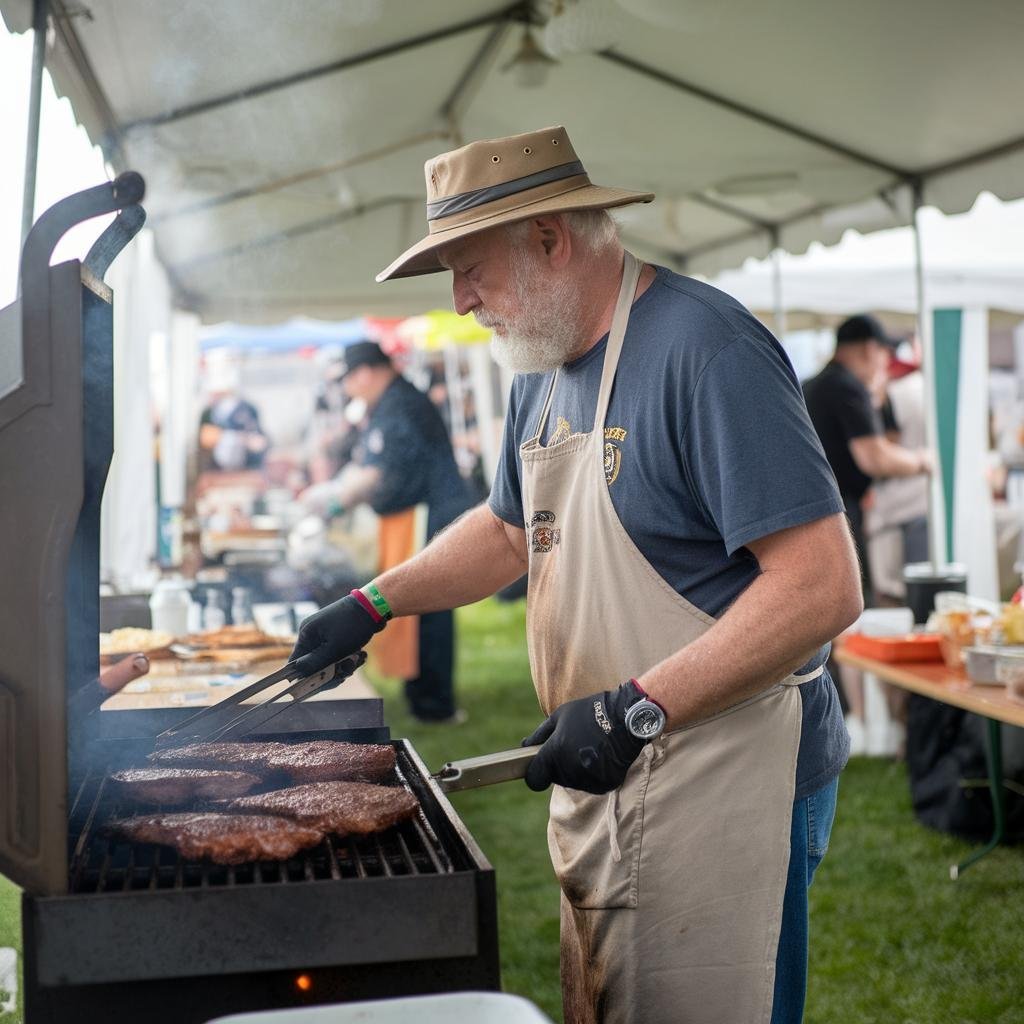
Behind The Scenes What To Expect At A BBQ Competition reveals a world of intense preparation, fierce rivalry, and incredible barbecue mastery that most spectators never see. These events combine culinary artistry with athletic competition, where pitmasters dedicate months of planning and years of skill development to compete for coveted trophies and bragging rights.
The atmosphere buzzes with anticipation as teams arrive with custom smokers, secret rub recipes, and game plans refined through countless practice sessions. What appears to be a casual outdoor cooking event actually operates with military precision, strict judging criteria, and competition rules that can make or break a team’s chances.
TL;DR
- Teams typically arrive 12-24 hours before judging begins to prep and start their smoking process.
- Four main categories are judged: chicken, ribs, pork shoulder, and brisket, each with specific turn-in times.
- Judges score entries on appearance, taste, and tenderness using a standardized 1-9 point system.
- Prize money at major competitions can exceed $100,000, with grand champions earning significant cash and sponsorship opportunities.
Behind The Scenes What To Expect At A BBQ Competition
BBQ competitions operate under strict timelines that would challenge any professional kitchen. Teams must submit their entries in precise 30-minute windows throughout the day, with chicken due first, followed by ribs, pork, and finally brisket.
The preparation starts long before the official cook begins. Most serious competitors arrive on Thursday or Friday for weekend events, spending hours organizing their workspace, checking equipment, and beginning the slow smoking process that can take 12-18 hours for larger cuts like brisket.
Competition Categories and Timing
The Kansas City Barbeque Society (KCBS) sets the standard format used at most sanctioned events. Each category has specific requirements and judging criteria that teams must master.
- Chicken – Due at noon, teams often cook thighs for better flavor and moisture retention.
- Ribs – Submitted at 12:30 PM, with St. Louis-style ribs being the most popular choice.
- Pork – Boston butt entries due at 1:00 PM, requiring perfect balance of bark and tenderness.
- Brisket – The final category at 1:30 PM, considered the ultimate test of barbecue skill.
The Competition Workspace
Each team receives a designated cooking space, typically 20×20 feet, where they set up their mobile barbecue operation. The sight resembles a temporary outdoor kitchen city, with teams arranging smokers, prep tables, refrigeration units, and shelter systems.
Professional teams invest thousands of dollars in custom trailers equipped with multiple smokers, sinks, storage, and sleeping quarters. These rolling barbecue headquarters allow teams to travel the competition circuit efficiently while maintaining consistent cooking conditions.
Essential Equipment and Setup
Beyond the obvious smokers and grills, successful competition teams rely on precise equipment to maintain their edge. Temperature monitoring becomes critical when prize money and reputation are on the line.
- Multiple Thermometers – Digital probes monitor both pit temperature and internal meat temperatures constantly.
- Backup Power – Generators ensure temperature controllers and lighting continue working regardless of weather.
- Weather Protection – Pop-up canopies and sidewalls protect the cooking area from rain, wind, and sun.
- Refrigeration – Coolers or portable fridges maintain food safety standards throughout the event.
The Judging Process
KCBS-certified judges evaluate each entry using a blind tasting system where teams are identified only by numbers. Six judges typically taste each category, scoring appearance (2 points), taste (6 points), and tenderness (2 points) on a scale of 2-9.
The judging environment maintains strict protocols to ensure fairness. Judges cannot communicate during scoring, and entries are presented in identical foam containers to eliminate bias based on presentation style or team reputation.
Competition Strategy Tip
Many winning teams focus more on consistency than attempting to create the perfect single bite. Judges taste multiple samples, so every piece in the box must meet championship standards.
Scoring and Rankings
The scoring system rewards both excellence and consistency across all categories. Teams can win individual categories while losing overall, or place consistently high in all four categories to claim the grand championship.
- Individual Category Winners. Highest total score in each of the four meat categories.
- Reserve Grand Champion. Second-highest combined total across all four categories.
- Grand Champion. Team with the highest combined score from all four meat categories.
Team Dynamics and Strategy
Successful competition teams operate with clearly defined roles and responsibilities. The head cook typically handles the main proteins while team members manage sides, presentation, and logistics support.
Many teams develop signature approaches to each category, spending years perfecting their recipes and cooking methods. Some focus on bold flavors that stand out to judges, while others pursue technical perfection in texture and doneness.
Common Competition Challenges
Even experienced teams face obstacles that can derail months of preparation. Weather conditions, equipment failures, and timing miscalculations create constant pressure throughout the competition.
- Temperature Control – Wind, rain, and extreme temperatures affect cooking times and fuel consumption.
- Time Management – Late entries result in automatic point deductions or disqualification.
- Equipment Failure – Backup plans become essential when smokers malfunction or power systems fail.
- Ingredient Quality – Sourcing consistent, high-quality meat requires advance planning and reliable suppliers.
Prize Structure and Recognition
Major competitions offer substantial prize pools that attract professional and semi-professional teams from across the country. The American Royal and Jack Daniel’s World Championship represent the pinnacle of competitive barbecue, with total prizes exceeding six figures.
Beyond cash prizes, winning teams gain recognition that leads to catering opportunities, product endorsements, and invitations to exclusive events. Many successful competitors parlay their competition success into full-time barbecue businesses or consulting opportunities.
The path to championship-level competition requires significant investment in equipment, travel, and entry fees. Teams often spend $20,000-50,000 annually pursuing major competitions, making it a serious commitment that extends far beyond weekend hobby cooking.
Spectator Experience and Side Events
While teams focus intensely on their cooking, most competitions welcome spectators and create festival atmospheres with live music, vendor booths, and public tasting opportunities. Many events offer barbecue education seminars and demonstrations that provide insights into competition techniques.
Some competitions include public choice awards where attendees can sample entries and vote for their favorites. These people’s choice categories add another dimension to the competition while giving spectators direct participation in the judging process.
Frequently Asked Questions
How long does a typical BBQ competition last?
Most competitions run Friday through Saturday, with teams arriving Thursday for setup and meat prep. The actual judging occurs on Saturday between noon and 2 PM.
Can anyone enter a BBQ competition?
Yes, most competitions welcome amateur teams alongside professionals. Entry fees typically range from $200-500 per team depending on the event size and prize structure.
What happens if a team misses their turn-in time?
Teams face automatic point deductions for late entries, and entries more than 10 minutes late are typically disqualified from that category completely.
Do judges know which team prepared each entry?
No, all entries are identified only by numbers to ensure blind judging. This system prevents bias and focuses evaluation purely on the food quality.
Final Thoughts
Behind The Scenes What To Expect At A BBQ Competition shows a level of dedication and skill that transforms backyard cooking into serious athletic competition. The combination of technical expertise, time management, and competitive pressure creates an environment where only the most prepared teams succeed consistently.
Whether you’re considering competing or simply want to appreciate the craft involved, understanding these behind-the-scenes elements reveals why barbecue competitions have become major attractions across the country.

Ryan Conlon is a BBQ enthusiast and inspired chef on a journey through the smoky, savory world of outdoor cooking. Hailing from the heart of the Midwest, Ryan’s passion for grilling ignited during his early years, where family gatherings often revolved around the sizzle of the grill and the aroma of seasoned meats.