
Direct Vs Indirect Heat In BBQ When To Use Each Method makes the difference between perfectly cooked food and charred disasters. Understanding these two fundamental grilling techniques helps you control temperature and cook everything from quick-searing steaks to slow-roasted whole chickens.
Most backyard cooks struggle with knowing which method works best for different foods. The key lies in matching the heat method to your food’s thickness, cooking time, and desired results.
TL;DR
- Direct heat cooks food directly over flames at 400-500°F for items under 1 inch thick in 20 minutes or less.
- Indirect heat uses temperatures of 225-350°F with food placed away from flames for items over 1 inch thick requiring 20+ minutes.
- Steaks, burgers, and vegetables under 1 inch thick cook best with direct heat for 2-8 minutes per side.
- Whole chickens, ribs, and thick roasts need indirect heat for 1-6 hours depending on size and target temperature.
Direct Vs Indirect Heat In BBQ When To Use Each Method
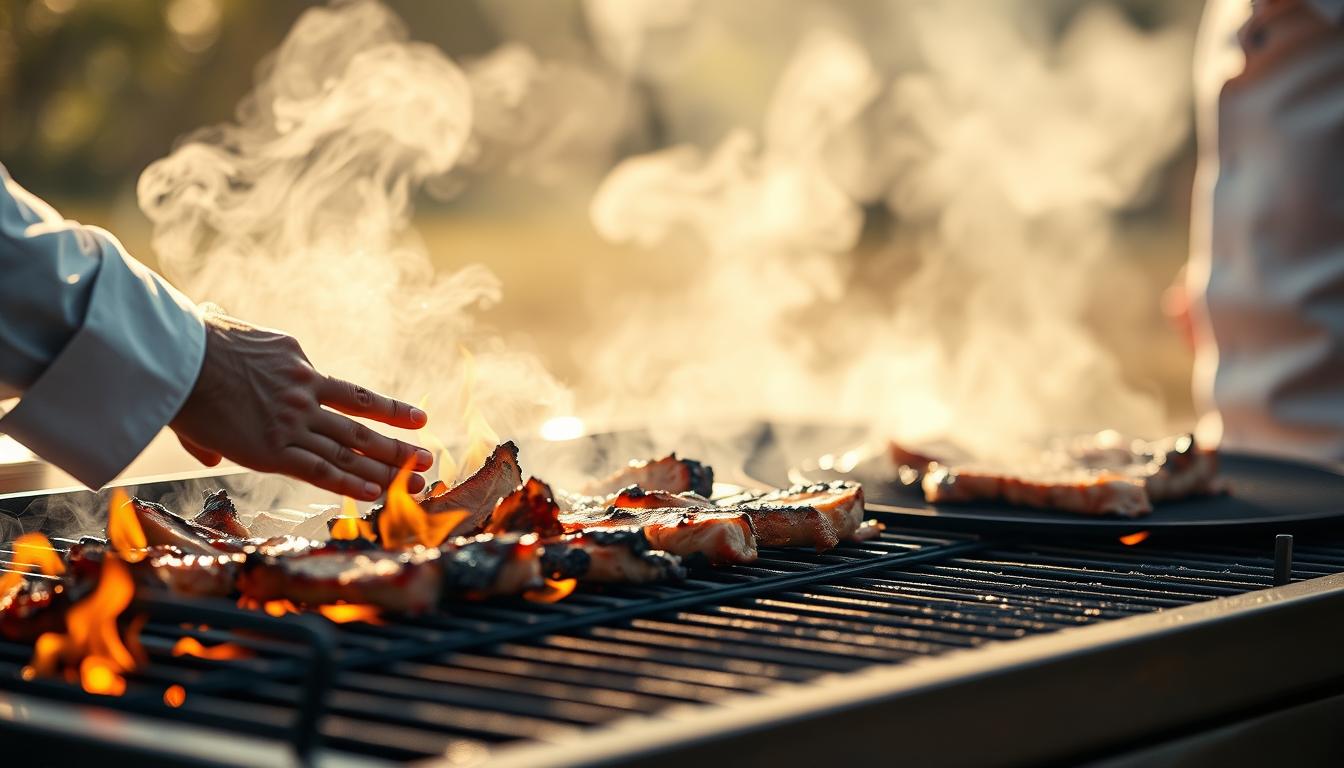
Direct heat places food directly over the flame or heat source, creating temperatures between 400-500°F. This method works like cooking on a stovetop burner – the heat hits the food immediately and cooks it fast.
Indirect heat positions food away from the flame, using the grill like an outdoor oven with temperatures typically ranging from 225-350°F. The heat circulates around the food rather than hitting it directly, allowing for slower, more even cooking.
When Direct Heat Works Best
Direct heat excels for thin cuts of meat and foods that cook quickly. This method creates the high temperatures needed for proper searing and caramelization.
Perfect candidates for direct heat include:
- Steaks and chops – anything under 1.5 inches thick that needs a crusty exterior.
- Burgers and sausages – ground meat products that cook through in under 15 minutes.
- Fish fillets – delicate proteins that benefit from quick cooking to prevent drying out.
- Vegetables – peppers, zucchini, and corn that need char marks and tender interiors.
- Kebabs – small pieces of meat and vegetables on skewers.
The two-zone grilling method lets you use both direct and indirect heat on the same grill by keeping coals or burners on one side only.
Direct Heat Temperature Control
Managing direct heat requires active monitoring since temperatures can climb quickly. Keep a spray bottle nearby for flare-ups and move food to cooler spots if needed.
Test your direct heat zone by holding your hand 5 inches above the grate. If you can only keep it there for 2-3 seconds, you have high heat perfect for searing.
When Indirect Heat Is Essential
Indirect heat becomes necessary for larger, thicker cuts that need time to cook through without burning the outside. This method prevents the exterior from overcooking while the interior reaches safe temperatures.
Foods that require indirect heat include:
- Whole chickens and turkeys – large birds need 1-3 hours at 325-350°F.
- Pork shoulders and briskets – tough cuts requiring 8-16 hours of low, slow cooking.
- Ribs – need 3-6 hours at 225-250°F to break down connective tissue.
- Thick roasts – anything over 2 inches thick benefits from indirect cooking.
- Delicate items – stuffed vegetables or fish that would fall apart over direct heat.
Using accurate BBQ thermometers becomes critical with indirect heat since cooking times vary based on outside temperature and wind conditions.
Pro Temperature Tip
Start thick cuts with 2-3 minutes of direct heat per side to create a flavorful crust, then move to indirect heat to finish cooking. This combination gives you the best of both methods.
Setting Up Your Grill for Both Methods
Creating zones on your grill allows you to switch between direct and indirect heat during the same cooking session. This flexibility helps you handle multiple types of food or use combination cooking techniques.
Charcoal Grill Setup
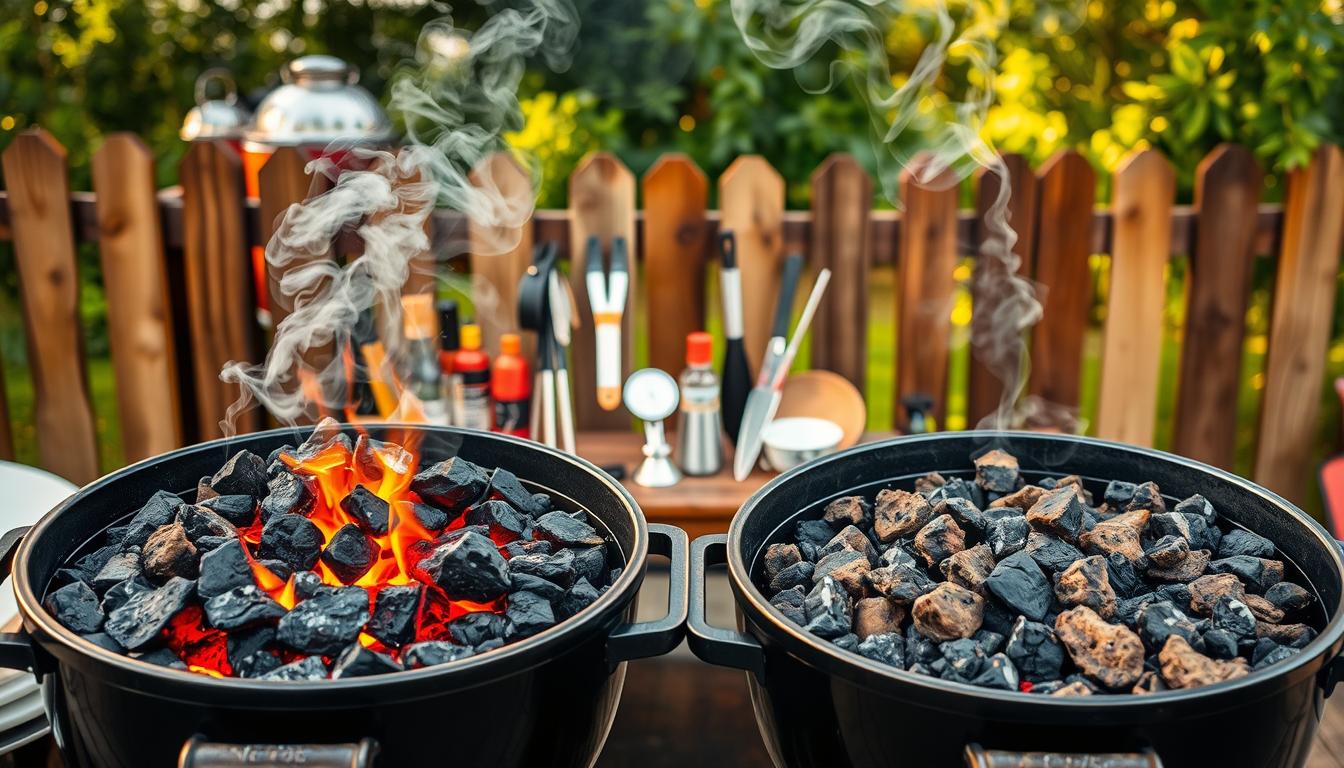
Push all your hot coals to one side of the grill, leaving the other side empty. The side with coals provides direct heat, while the empty side creates your indirect zone.
Add a drip pan filled with water under the indirect side to catch drippings and add moisture to the cooking environment. This setup works perfectly for controlling temperature on charcoal grills.
Gas Grill Setup
Turn on burners on one side of the grill while leaving the other side off. The lit side provides direct heat, while the unlit side serves as your indirect cooking zone.
Most gas grills heat evenly across the cooking surface, so you might need to adjust burner settings to create distinct temperature zones.
Combining Both Heat Methods
Many BBQ techniques use both direct and indirect heat during the cooking process. This combination approach gives you more control over texture and flavor development.
The reverse sear method starts thick steaks over indirect heat until they reach 10-15 degrees below target temperature, then finishes with direct heat for a perfect crust. This technique works especially well for steaks over 1.5 inches thick.
For chicken pieces, start skin-side down over direct heat for 3-4 minutes to crisp the skin, then move to indirect heat to cook through safely. This prevents the common problem of burnt skin and raw centers.
Proper airflow management becomes important when switching between heat methods, as it affects how quickly temperatures change in different zones.
Timing Your Heat Transitions
Plan your cooking timeline to use direct heat for searing at the beginning or end of the cooking process. Starting with indirect heat and finishing with direct heat works well for most combination methods.
Keep your essential BBQ tools nearby when switching between heat zones, including long-handled tongs and a reliable thermometer for monitoring progress.
Frequently Asked Questions
How do I know if my food needs direct or indirect heat?
Use direct heat for foods under 1 inch thick that cook in 20 minutes or less. Choose indirect heat for anything thicker or that needs more than 20 minutes of cooking time.
Can I switch between direct and indirect heat during cooking?
Yes, many BBQ techniques use both methods in the same session. Start with direct heat for searing, then move to indirect heat to finish cooking through safely.
What temperature should I use for indirect heat?
Most indirect cooking happens between 225-350°F depending on what you’re making. Low and slow barbecue uses 225-250°F, while roasting uses 325-350°F.
Why does my food burn over direct heat?
Direct heat creates high temperatures that can quickly burn food if left unattended. Keep cooking times short and move food to indirect zones if flare-ups occur.
Final Thoughts
Direct Vs Indirect Heat In BBQ When To Use Each Method depends on your food’s thickness, cooking time, and desired results. Master both techniques and you’ll handle any grilling challenge with confidence.
Start practicing with simple foods like burgers over direct heat and chicken thighs over indirect heat. Once you understand how each method works, you can combine them for restaurant-quality results in your backyard.

Ryan Conlon is a BBQ enthusiast and inspired chef on a journey through the smoky, savory world of outdoor cooking. Hailing from the heart of the Midwest, Ryan’s passion for grilling ignited during his early years, where family gatherings often revolved around the sizzle of the grill and the aroma of seasoned meats.