
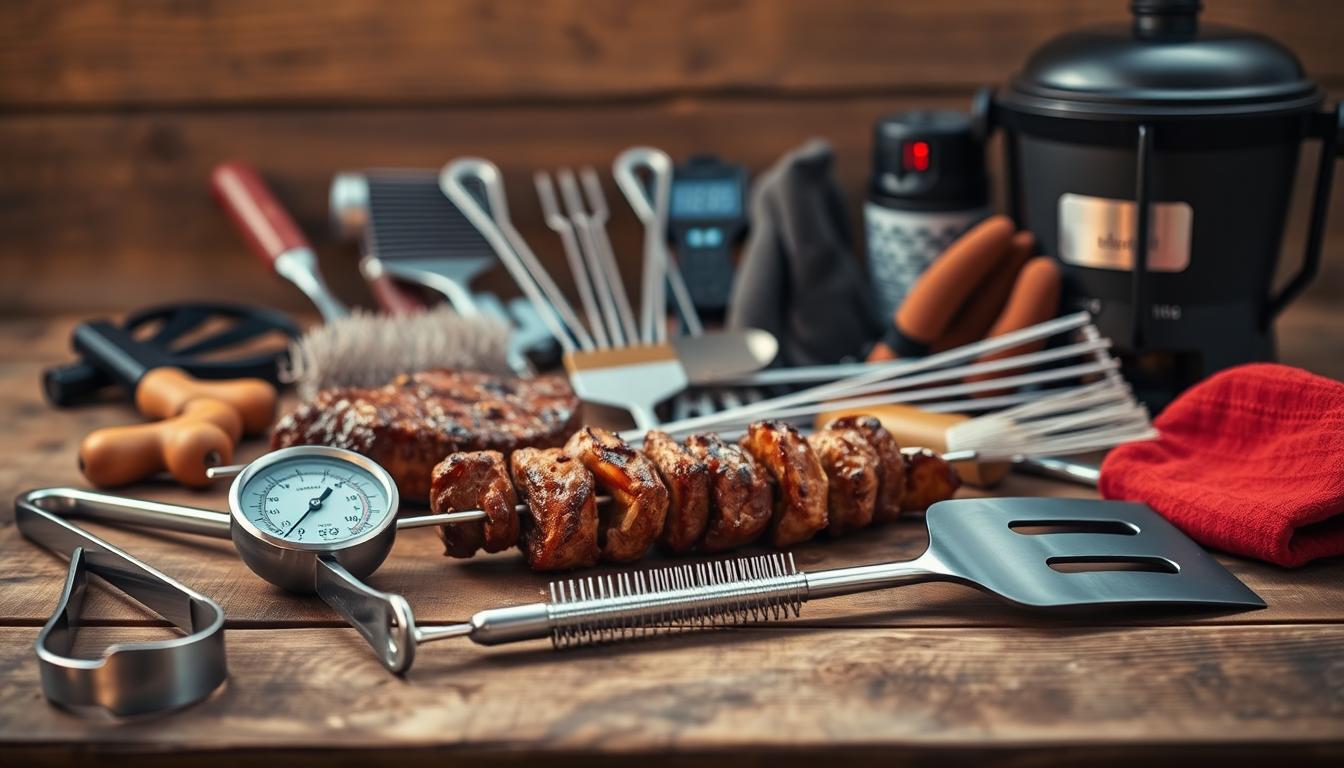
Essential BBQ Tools Every Backyard Cook Should Own can transform your grilling experience from frustrating guesswork to confident outdoor cooking. Having the right equipment makes the difference between burnt burgers and perfectly seared steaks.
Whether you’re firing up your first grill or upgrading your backyard setup, certain tools are absolutely necessary for safe and successful BBQ. These aren’t luxury items – they’re practical investments that will improve your results and make cooking outdoors much more enjoyable.
TL;DR
- A digital instant-read thermometer prevents overcooking and ensures food safety with readings in 2-3 seconds.
- Heat-resistant gloves rated to 932°F let you handle hot grates and move charcoal safely without burns.
- A chimney starter lights charcoal in 15-20 minutes without lighter fluid, creating even heat distribution.
- Long-handled tongs with 16-18 inch handles keep your hands away from flames while flipping food precisely.
Essential BBQ Tools Every Backyard Cook Should Own
Smart tool selection starts with understanding what problems each piece of equipment solves. The most important tools focus on temperature control, safety, and food handling – areas where the wrong approach can ruin your meal or cause injury.
Professional pitmasters rely on specific tools because they work consistently under real cooking conditions. Your backyard setup should mirror these proven approaches rather than relying on gimmicky gadgets that promise shortcuts.
Digital Instant-Read Thermometer
A quality digital thermometer takes the guesswork out of doneness and prevents foodborne illness. How to choose the right digital thermometer for grilling covers the technical details, but any model with 2-3 second readings and accuracy within 1°F will serve you well.
Look for thermometers with probe lengths of at least 4 inches to reach the center of thick cuts. Backlit displays help when cooking in low light conditions, and waterproof construction means easier cleanup after messy BBQ sessions.
Heat-Resistant Gloves
Thick leather or silicone gloves rated to at least 500°F protect your hands when moving grates, adjusting dampers, or handling hot cookware. Why heat-resistant gloves improve safety at the grill and smoker explains how proper gloves prevent the burns that send backyard cooks to urgent care.
Silicone gloves clean easily and grip wet surfaces better than leather. However, leather gloves last longer and feel more natural when handling tools and food.
Fire Management Tools
Controlling heat separates successful BBQ from charred disasters. These tools help you start fires cleanly and adjust temperatures throughout the cooking process.
Chimney Starter
A chimney starter lights charcoal evenly without chemical accelerants that can flavor your food. Why a chimney starter makes charcoal grilling easier and more consistent details the technique, but the basic process involves newspaper, charcoal, and 15-20 minutes of patience.
Choose models that hold 6-8 pounds of charcoal for standard kettle grills. The extra capacity means you won’t run short of coals during longer cooking sessions.
Grill Brush
Clean grates prevent sticking and eliminate leftover flavors from previous cooking sessions. Wire brushes work fastest, but brass or nylon bristles won’t leave metal fragments on your cooking surface.
Replace grill brushes annually or when bristles start falling out. Loose bristles can stick to food and cause serious internal injuries if swallowed.
Start Small and Build Your Collection
Buy the five most essential tools first, then add specialized equipment as you discover what types of BBQ you enjoy most. This approach prevents drawer clutter and wasted money on tools you’ll rarely use.
Food Handling Equipment
Moving food safely from prep area to grill to plate requires tools designed for high-heat cooking. Standard kitchen utensils often have handles too short for outdoor cooking or materials that melt near open flames.
Long-Handled Tongs
Tongs with 16-18 inch handles keep your hands away from heat while giving you precise control over food placement. Spring-loaded models reduce hand fatigue during long cooking sessions, and locking mechanisms make storage easier.
Avoid tongs with plastic or rubber grips that can melt. Stainless steel construction throughout ensures durability and easy cleaning after greasy BBQ sessions.
Spatula Set
Wide, thin spatulas slide under delicate fish fillets and burgers without breaking them apart. Look for models with beveled edges that cut cleanly under food rather than pushing it around the grate.
Perforated spatulas drain excess grease while solid versions work better for sauced items. Having both types covers all your flipping needs throughout different parts of the cooking process.
Preparation and Serving Tools
Food safety and presentation matter as much as cooking technique. These tools help you prep ingredients properly and serve finished dishes at their best.
Cutting Boards
Separate cutting boards for raw meat and vegetables prevent cross-contamination. Plastic boards clean more thoroughly than wood, but wooden boards last longer and don’t dull knife edges as quickly.
Color-coded systems help family members remember which board to use for each ingredient type. Replace boards when knife cuts become deep enough to harbor bacteria in hard-to-clean grooves.
Basting Brush
Silicone brushes apply sauces and marinades without shedding bristles into your food. They also withstand direct contact with hot grates better than natural fiber brushes.
Choose brushes with angled heads that reach into corners and curved surfaces. Dishwasher-safe construction means easier cleanup after sticky BBQ sauce applications.
Storage and Organization
Proper tool storage protects your investment and keeps essential items within reach during cooking. Weather-resistant storage prevents rust and extends tool life in outdoor environments.
- Tool hooks – Mount on grill side tables for immediate access to frequently used items.
- Magnetic strips – Hold small metal tools securely on grill surfaces.
- Storage bins – Protect tools from weather when not in use.
- Apron pockets – Keep thermometers and small tools on your person while cooking.
Why every griller should use a BBQ apron covers how the right apron combines tool storage with safety protection. Look for models with reinforced pockets that won’t tear under the weight of heavy tools.
Frequently Asked Questions
What’s the most important BBQ tool for beginners?
A digital instant-read thermometer is the most critical tool because it prevents overcooking and ensures food safety. Everything else can be improvised temporarily, but accurate temperature readings are essential for success.
How much should I spend on BBQ tools?
Budget $150-200 for essential tools that will last several years. This covers a good thermometer, tongs, spatula, gloves, and chimney starter from reputable manufacturers.
Can I use regular kitchen tools for BBQ?
Kitchen tools work for some BBQ tasks, but they’re often too short-handled for safe outdoor cooking. Heat-resistant materials and longer handles make BBQ-specific tools worth the investment.
Do I need different tools for gas versus charcoal grilling?
Most tools work with both fuel types, but charcoal grilling requires additional fire management tools like chimney starters and ash tools. Gas grillers can skip these but should have spare propane tanks.
Final Thoughts
Essential BBQ Tools Every Backyard Cook Should Own make the difference between frustrating cooking sessions and confident outdoor meals. Grill safety 101 reminds us that proper tools aren’t just about convenience – they’re about protecting yourself and your family.
Start with the five most important tools and add others as your skills and interests develop. Quality tools pay for themselves through better results and years of reliable service.


Ryan Conlon is a BBQ enthusiast and inspired chef on a journey through the smoky, savory world of outdoor cooking. Hailing from the heart of the Midwest, Ryan’s passion for grilling ignited during his early years, where family gatherings often revolved around the sizzle of the grill and the aroma of seasoned meats.