
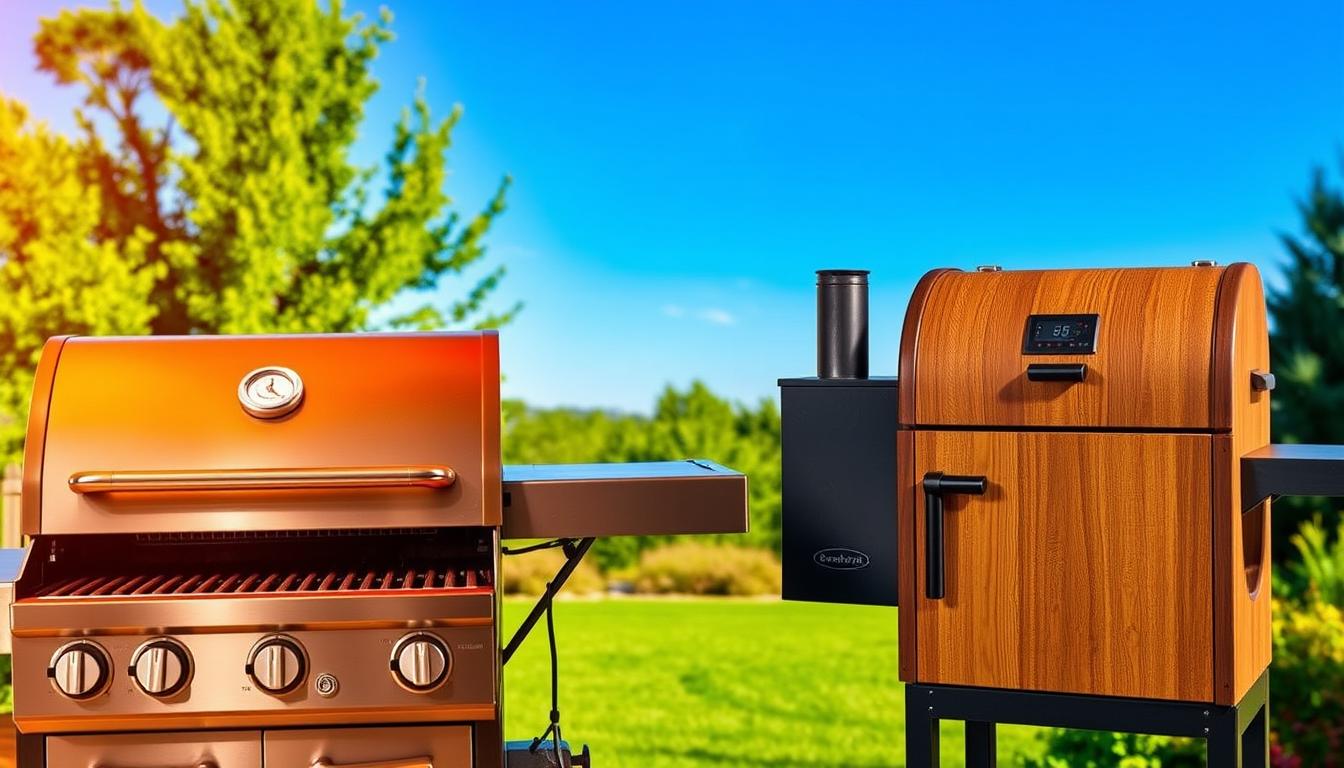
Gas Vs Pellet Grills present two distinct approaches to outdoor cooking, each offering unique advantages for backyard barbecue enthusiasts. While gas grills provide instant heat control and convenience, pellet grills deliver authentic wood-fired flavor with set-it-and-forget-it simplicity.
The choice between these two popular grilling systems often comes down to your cooking priorities, time availability, and flavor preferences. Understanding how each type performs in real-world cooking scenarios will help you make the right decision for your outdoor kitchen setup.
TL;DR
- Gas grills heat up in 10-15 minutes while pellet grills need 15-20 minutes to reach cooking temperature.
- Pellet grills maintain temperature within 5-10 degrees automatically, compared to 15-25 degree swings on gas grills.
- Wood pellets cost $1-2 per pound and burn 1-3 pounds per hour, while propane costs $15-20 per tank lasting 15-20 hours.
- Gas grills reach maximum temperatures of 500-700°F for searing, while most pellet grills max out at 450-500°F.
Gas Vs Pellet Grills: Core Differences
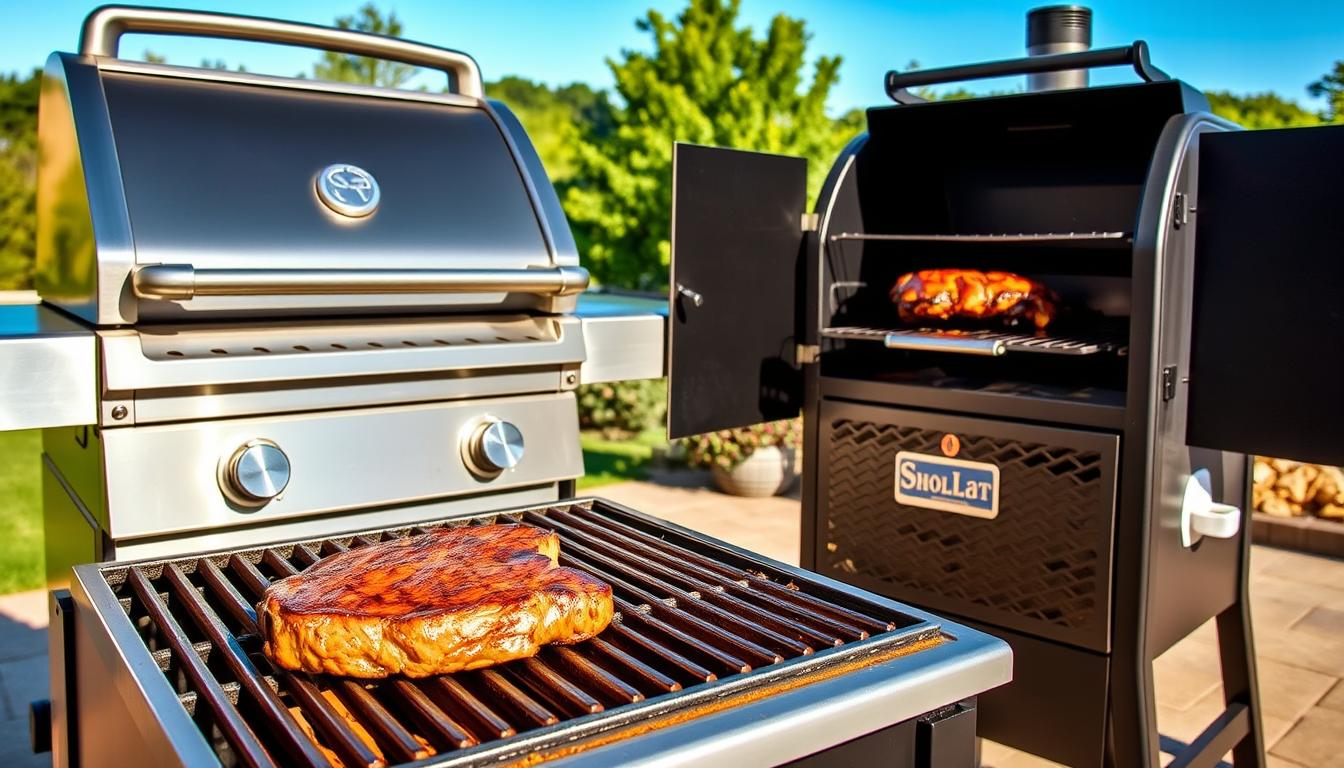
Gas grills use propane or natural gas burners to create direct heat, similar to your indoor stove. You turn a knob, ignite the burners, and have immediate temperature control across different zones of the cooking surface.
Pellet grills burn compressed wood pellets in a firebox, using an electric auger to feed pellets and fans to circulate heat and smoke. A digital controller maintains your set temperature by adjusting pellet feed rates automatically.
Fuel Systems and Startup
Gas grills connect to either portable propane tanks or permanent natural gas lines. The startup process involves opening the gas valve, turning on burners, and pressing an ignition button for instant flame.
Pellet grills require electricity to power the auger, fans, and controller. You fill the hopper with pellets, set your target temperature, and wait for the startup sequence to complete as the firepot ignites the first pellets.
Temperature Control and Cooking Performance
Gas grills excel at high-heat searing and quick temperature adjustments. You can instantly increase or decrease heat by turning control knobs, making them perfect for foods that need varied cooking zones or frequent temperature changes.
Pellet grills shine in low-and-slow cooking with exceptional temperature stability. The digital controller maintains consistent heat levels automatically, making them ideal for smoking brisket, ribs, or other foods requiring hours of steady cooking.
Heat Range Capabilities
- Gas grills – typically reach 200°F to 700°F with instant adjustability.
- Pellet grills – usually operate between 180°F to 500°F with gradual changes.
- Searing performance – gas grills create better high-heat sear marks.
- Low temperature smoking – pellet grills maintain 225°F more consistently.
Flavor Profile Comparison
Gas grills produce clean-burning flames that don’t add much flavor beyond what comes from fat drippings hitting the heat plates. The taste comes primarily from proper seasoning and the Maillard reaction from high-heat cooking.
Pellet grills infuse food with natural wood smoke flavor throughout the cooking process. Different pellet types like hickory, apple, cherry, or oak create distinct flavor profiles that penetrate the meat during longer cooking sessions.
Smoke Production
Gas grills can add smoke flavor using smoker boxes or foil packets filled with wood chips, but the smoke production is limited and requires manual monitoring. The high heat often burns through wood chips quickly without generating much flavor.
Pellet grills produce consistent smoke automatically as part of their normal operation. The controlled combustion creates thin blue smoke that provides authentic barbecue flavor without the bitter taste of thick white smoke.
Maximize Flavor on Either Grill
For gas grills, use a two-zone setup with wood chips in foil pouches placed over direct heat. On pellet grills, experiment with different wood pellet blends to find your preferred flavor profile.
Operating Costs and Fuel Efficiency
Gas grills typically cost less to operate per cooking session. A 20-pound propane tank costs $15-20 and provides 15-20 hours of cooking time at medium heat settings.
Pellet grills consume 1-3 pounds of pellets per hour depending on temperature settings and outside conditions. Quality wood pellets cost $1-2 per pound, making the fuel cost higher but still reasonable for most users.
Long-term Fuel Expenses
- Propane costs – approximately $1 per hour of cooking time.
- Pellet costs – roughly $2-4 per hour depending on temperature.
- Natural gas – cheapest option at $0.50-0.75 per hour (requires gas line).
- Electricity – pellet grills add $0.25-0.50 per cook to your electric bill.
Convenience and User Experience
Gas grills offer the ultimate in convenience for quick weeknight cooking. No preheating time, instant temperature control, and easy cleanup make them perfect for busy schedules and spontaneous grilling sessions.
Pellet grills provide hands-off cooking convenience once they reach temperature. You can set your desired temperature and walk away, making them excellent for long smoking sessions or entertaining while food cooks unattended.
Maintenance Requirements
Gas grills need regular cleaning of grates, drip pans, and grease management systems. Burner tubes should be checked annually for spider webs or debris that can block gas flow.
Pellet grills require more frequent cleaning due to ash production from burning pellets. The firepot needs emptying after every few cooks, and the entire system benefits from deep cleaning every 20-30 cooking sessions.
Weather Performance and Reliability
Gas grills perform consistently in most weather conditions since they don’t rely on electricity. Cold weather may require longer preheating times, but operation remains reliable even in winter conditions.
Pellet grills can struggle in very cold, windy, or wet conditions. The electronic components need protection from moisture, and cold weather increases pellet consumption significantly while making temperature maintenance more challenging.
Portability Considerations
Portable gas grills are readily available for tailgating, camping, or moving around your property. Small propane tanks make them completely self-contained for outdoor adventures.
Pellet grills typically require electrical outlets, limiting their portability. Some manufacturers offer battery-powered units, but these add weight and complexity while reducing cooking time per charge.
Articles You May Like
Frequently Asked Questions
Can you get good sear marks on a pellet grill?
Most pellet grills max out at 450-500°F, which creates decent searing but not as intense as gas grills reaching 600-700°F. Some newer pellet models include direct flame searing features for better browning.
Do pellet grills work without electricity?
No, pellet grills require electricity to power the auger, fans, and digital controller. Power outages will shut down the grill completely, unlike gas grills which operate independently.
Which type cooks food faster?
Gas grills cook most foods faster due to higher temperatures and direct heat transfer. Pellet grills excel at low-and-slow cooking but take longer for quick grilling tasks.
Are wood pellets safe to burn in any weather?
Wood pellets can absorb moisture in humid conditions, causing poor combustion and potential auger jams. Store pellets in dry locations and avoid using them after exposure to rain or high humidity.
Final Thoughts
Gas Vs Pellet Grills each serve different cooking styles and preferences, with neither being universally superior to the other. Gas grills work better for quick, high-heat cooking and maximum convenience, while pellet grills excel at smoking and consistent low-temperature cooking.
Consider your typical cooking patterns, flavor preferences, and time availability when making this decision. Many serious grill enthusiasts eventually own both types to cover all their outdoor cooking needs.

Ryan Conlon is a BBQ enthusiast and inspired chef on a journey through the smoky, savory world of outdoor cooking. Hailing from the heart of the Midwest, Ryan’s passion for grilling ignited during his early years, where family gatherings often revolved around the sizzle of the grill and the aroma of seasoned meats.