
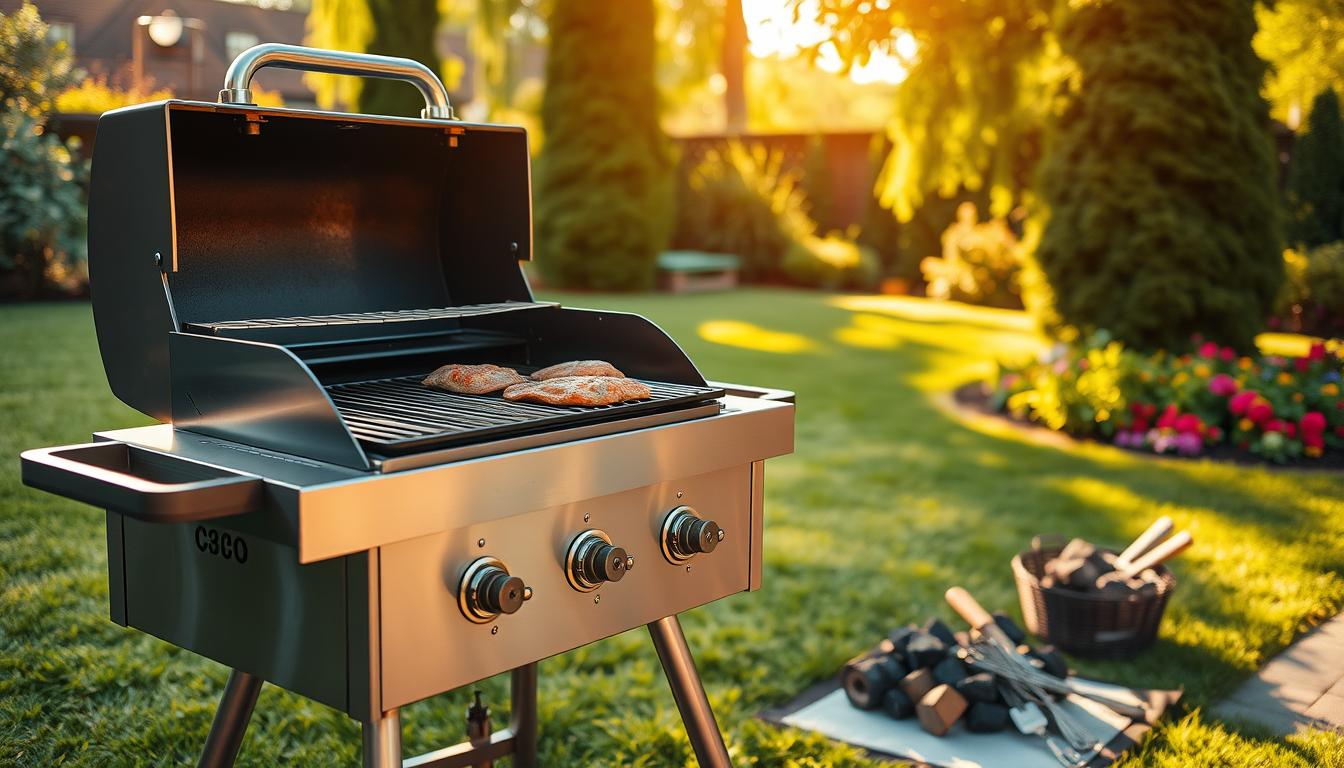
How To Choose The Right Charcoal Grill For Your Backyard starts with understanding your cooking style and space requirements. The perfect charcoal grill balances size, features, and budget while delivering that authentic smoky flavor you can’t get from gas grills.
Whether you’re grilling for two or hosting backyard parties, the right charcoal grill becomes the centerpiece of outdoor cooking adventures. Finding your ideal match means considering everything from cooking surface area to heat control features.
TL;DR
- Calculate 72 square inches of cooking space per person you typically cook for.
- Kettle grills under $200 work great for beginners, while kamado grills cost $800-2000+ but last decades.
- Look for adjustable air vents on both top and bottom for precise temperature control.
- Porcelain-coated cooking grates resist rust and clean easier than basic steel grates.
How To Choose The Right Charcoal Grill For Your Backyard
Your backyard size and cooking needs determine which charcoal grill type works best. Small patios suit compact kettle grills, while larger spaces can accommodate kamado or barrel-style grills.
Consider how often you’ll grill and for how many people. Weekend warriors cooking for 2-4 people need different features than hosts throwing regular parties for 10+ guests.
Cooking Surface Area
Measure your typical cooking needs to determine the right grill size. A good rule is 72 square inches of cooking space per person you regularly cook for.
- Small grills (200-300 sq in) – Perfect for 2-4 people, apartment balconies, or camping trips.
- Medium grills (350-500 sq in) – Ideal for families of 4-6 or small gatherings.
- Large grills (600+ sq in) – Great for entertaining groups of 8 or more people.
Types of Charcoal Grills
Each charcoal grill style offers different advantages for backyard cooking. Understanding these differences helps you pick the right match for your needs and budget.
Kettle Grills
The classic dome-shaped design remains popular for good reason. Kettle grills offer excellent heat circulation and work well for both direct and indirect cooking methods.
- Price range – $50 to $400 for quality models
- Best for – Beginners and versatile everyday grilling
- Pros – Affordable, easy to use, replacement parts available
- Cons – Limited cooking space, basic temperature control
Kamado Grills
These egg-shaped ceramic grills excel at heat retention and temperature control. Kamado grills can reach high temperatures for searing or maintain low heat for hours of slow cooking.
- Price range – $800 to $3000+ for premium models
- Best for – Serious cooks who want maximum versatility
- Pros – Excellent heat retention, precise temperature control, lifetime durability
- Cons – Heavy weight, high initial cost, learning curve
Barrel and Offset Smokers
These horizontal grills provide large cooking surfaces and excel at low-and-slow barbecue. The design allows for different temperature zones across the cooking surface.
- Price range – $200 to $1500+ depending on size and features
- Best for – Large groups and serious barbecue enthusiasts
- Pros – Huge cooking capacity, great for smoking, impressive appearance
- Cons – Takes up significant space, harder temperature control, fuel-hungry
Essential Features to Consider
Smart features make charcoal grilling easier and more enjoyable. Focus on elements that improve heat control, cooking convenience, and grill longevity.
Air Vent System
Quality air vents give you precise temperature control by managing airflow to the charcoal. Look for grills with adjustable vents on both the bottom and top.
Bottom vents control the oxygen feeding your fire, while top vents manage heat and smoke flow. Grills with poorly designed vents make temperature control frustrating and inconsistent.
Cooking Grate Materials
The cooking surface material affects both food quality and maintenance requirements. Different materials offer various benefits for heat retention and cleaning ease.
- Porcelain-coated steel – Easy to clean, rust-resistant, even heat distribution
- Cast iron – Excellent heat retention and searing, requires seasoning maintenance
- Stainless steel – Durable and rust-proof but can have hot spots
- Chrome-plated – Budget option that works fine but may rust over time
Budget Planning Tip
Set aside 20-30% of your grill budget for essential accessories like a chimney starter, grill cover, and quality charcoal. These items significantly improve your grilling experience and protect your investment.
Size and Space Planning
Measure your available space before shopping to avoid buying a grill that overwhelms your patio or deck. Consider clearance requirements for safety and local fire codes.
Most areas require at least 10 feet of clearance from structures, and many HOAs have specific rules about grill placement. Check these requirements early in your planning process.
Storage and Mobility
Think about where you’ll store your grill during bad weather or off-season periods. Some grills include wheels for easy movement, while others stay permanently positioned.
Heavier grills like kamados need stable, level surfaces and aren’t easy to relocate once positioned. Portable grills offer flexibility but may sacrifice cooking capacity or features.
Budget Considerations
Quality charcoal grills range from under $100 to several thousand dollars. Your budget determines which features and build quality you can access, but good grilling is possible at any price point.
Entry-level grills around $100-200 work fine for occasional use and learning basic techniques. Mid-range options ($300-800) offer better materials and features for regular grilling, while premium grills ($1000+) provide professional-level performance and decades of use.
Long-term Value
Consider the total cost of ownership, including replacement parts, covers, and accessories. Well-built charcoal grills last many years with proper care, making them better long-term investments than cheap models that need frequent replacement.
Factor in ongoing costs like charcoal, lighter fluid, and maintenance supplies when budgeting for your new grill. These operating costs add up over time, especially if you grill frequently.
Maintenance and Durability
Look for grills with removable ash pans and easy-to-clean cooking grates. These features make routine maintenance much simpler and help extend your grill’s lifespan.
Check the warranty coverage and availability of replacement parts. Established brands like Weber typically offer better long-term support than unknown manufacturers, which matters for items you’ll use for years.
Weather Resistance
Choose grills with weather-resistant finishes if you plan to leave them outdoors year-round. Powder-coated steel and porcelain finishes handle outdoor conditions better than basic paint or chrome.
Invest in a quality grill cover to protect your investment from rain, snow, and UV damage. A good cover significantly extends grill life and keeps it ready for immediate use.
Articles You May Like
Frequently Asked Questions
What size charcoal grill do I need for a family of four?
A grill with 350-400 square inches of cooking space works well for most families of four. This size handles regular meals plus occasional entertaining without being overwhelming to manage.
Are expensive charcoal grills worth the extra cost?
Premium grills offer better materials, precise temperature control, and longer lifespans that justify higher prices for frequent users. Occasional grillers can achieve great results with mid-range options around $200-400.
How much clearance do I need around a charcoal grill?
Most local codes require 10 feet of clearance from structures, and many areas have additional restrictions. Check your local fire department or HOA rules before placing your grill.
What’s the difference between kettle and kamado grills?
Kettle grills are affordable and simple to use, while kamado grills offer superior heat retention and temperature control at a much higher price. Kamados excel at both high-heat searing and low-temperature smoking.
Final Thoughts
How To Choose The Right Charcoal Grill For Your Backyard comes down to matching your needs, space, and budget with the right features and size. The perfect grill makes outdoor cooking enjoyable rather than frustrating.
Start by measuring your space and defining your typical cooking needs, then explore grills that fit those parameters. Take time to read reviews and see grills in person when possible – this investment will serve you for many years of great outdoor cooking.


Ryan Conlon is a BBQ enthusiast and inspired chef on a journey through the smoky, savory world of outdoor cooking. Hailing from the heart of the Midwest, Ryan’s passion for grilling ignited during his early years, where family gatherings often revolved around the sizzle of the grill and the aroma of seasoned meats.