
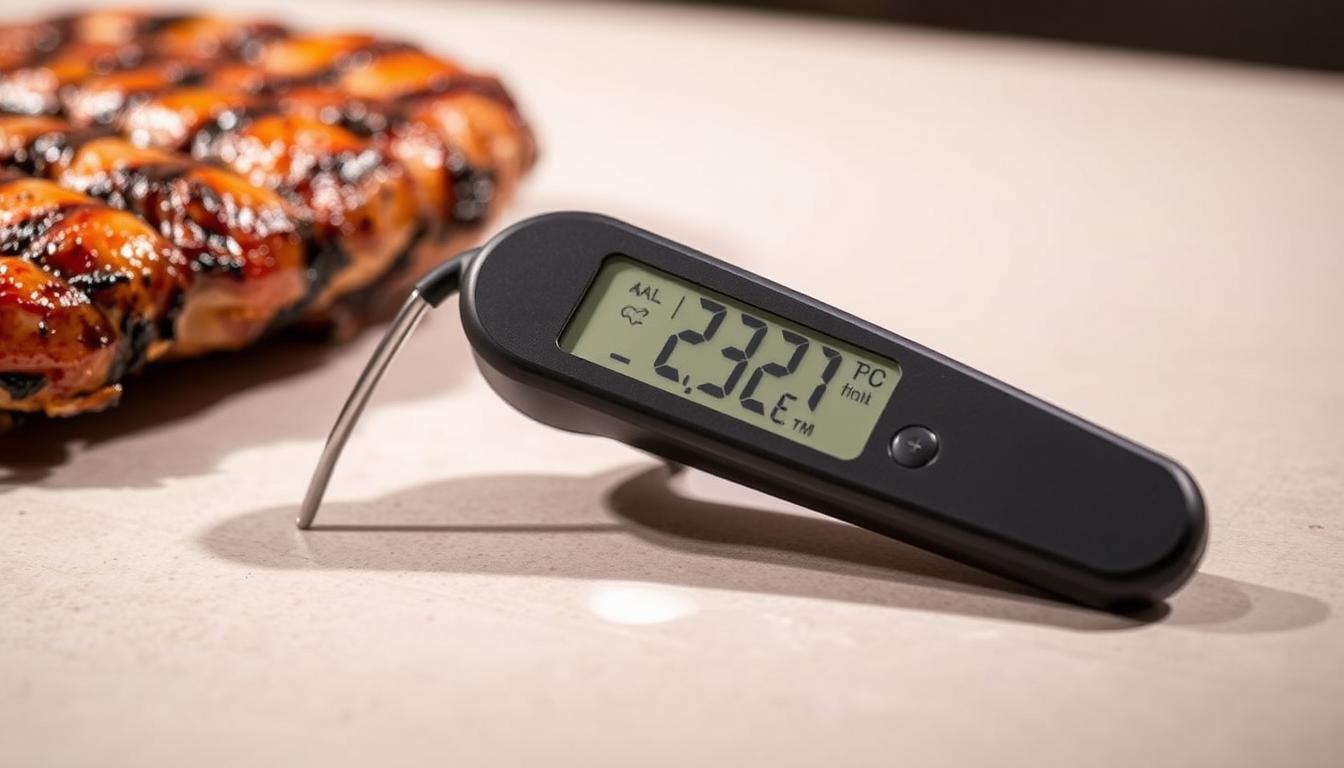
How To Choose The Right Digital Thermometer For Grilling starts with understanding that accurate temperature readings make the difference between perfectly cooked meat and disappointing results. Digital thermometers take the guesswork out of grilling by giving you precise internal temperatures that ensure food safety and optimal texture.
The right digital thermometer saves you from overcooking expensive cuts of meat and helps you achieve consistent results every time you fire up the grill. With dozens of models available, knowing which features matter most will help you pick a thermometer that fits your grilling style and budget.
TL;DR
- Instant-read thermometers give temperature readings in 2-4 seconds for quick checks during grilling.
- Probe thermometers with wireless connectivity let you monitor meat temperature from up to 300 feet away.
- Look for thermometers with temperature ranges of at least 32°F to 572°F to handle all grilling needs.
- Accuracy within ±1°F ensures your meat reaches safe internal temperatures without overcooking.
How To Choose The Right Digital Thermometer For Grilling
Digital thermometers for grilling fall into two main categories that serve different purposes during the cooking process. Instant-read thermometers give you quick temperature checks when you insert the probe into meat, while leave-in probe thermometers monitor temperature continuously throughout the cooking process.
Your choice depends on your grilling habits and the types of food you cook most often. Quick-cooking items like burgers and chicken breasts work well with instant-read models, while larger cuts like whole chickens or roasts benefit from continuous monitoring with probe thermometers.
Types of Digital Thermometers
Instant-Read Thermometers
Instant-read thermometers excel at quick temperature checks during active grilling sessions. These handheld devices give you readings in 2-4 seconds when you insert the probe into the thickest part of the meat.
- Thermocouple models – fastest response time at 1-2 seconds with temperature ranges up to 700°F.
- Thermistor models – slightly slower at 3-4 seconds but often more accurate and affordable.
- Folding probe designs – compact storage with protective cases for easy portability.
Leave-In Probe Thermometers
Leave-in probe thermometers stay in the meat throughout cooking and alert you when target temperatures are reached. Many models offer wireless connectivity so you can monitor progress from inside your house.
- Single probe models – monitor one piece of meat with basic temperature alerts.
- Multi-probe systems – track up to 8 different items simultaneously with individual alarms.
- Wireless models – send temperature data to your smartphone or dedicated receiver unit.
Key Features to Consider
Accuracy and Speed
Look for thermometers with accuracy ratings of ±1°F or better to ensure food safety and quality results. Speed matters during active grilling – instant-read models should give readings within 4 seconds to minimize heat loss from opening the grill lid.
Professional-grade thermometers often include calibration features that let you adjust readings for long-term accuracy. This becomes important after months of regular use when sensors may drift slightly from their original calibration.
Temperature Range
A good grilling thermometer should handle temperatures from at least 32°F to 572°F to cover everything from cold food storage to high-heat searing. Some premium models extend ranges up to 700°F or higher for extreme grilling applications.
Consider the lowest temperatures you’ll measure – if you plan to use the thermometer for food safety checks on refrigerated items, make sure it reads accurately in the 32-40°F range.
Probe Length Matters
Choose thermometers with probes at least 4-5 inches long to reach the center of thick roasts and whole birds safely. Longer probes also keep your hands further from hot grill grates.
Display and Interface
Large, backlit displays make temperature readings easy to see in dim lighting or bright sunlight. Digital displays should show temperatures clearly in both Fahrenheit and Celsius with the ability to switch between units.
Some models include preset temperature targets for different types of meat and doneness levels. While these presets provide helpful guidance, understanding proper internal temperatures yourself gives you more control over results.
Wireless and Smart Features
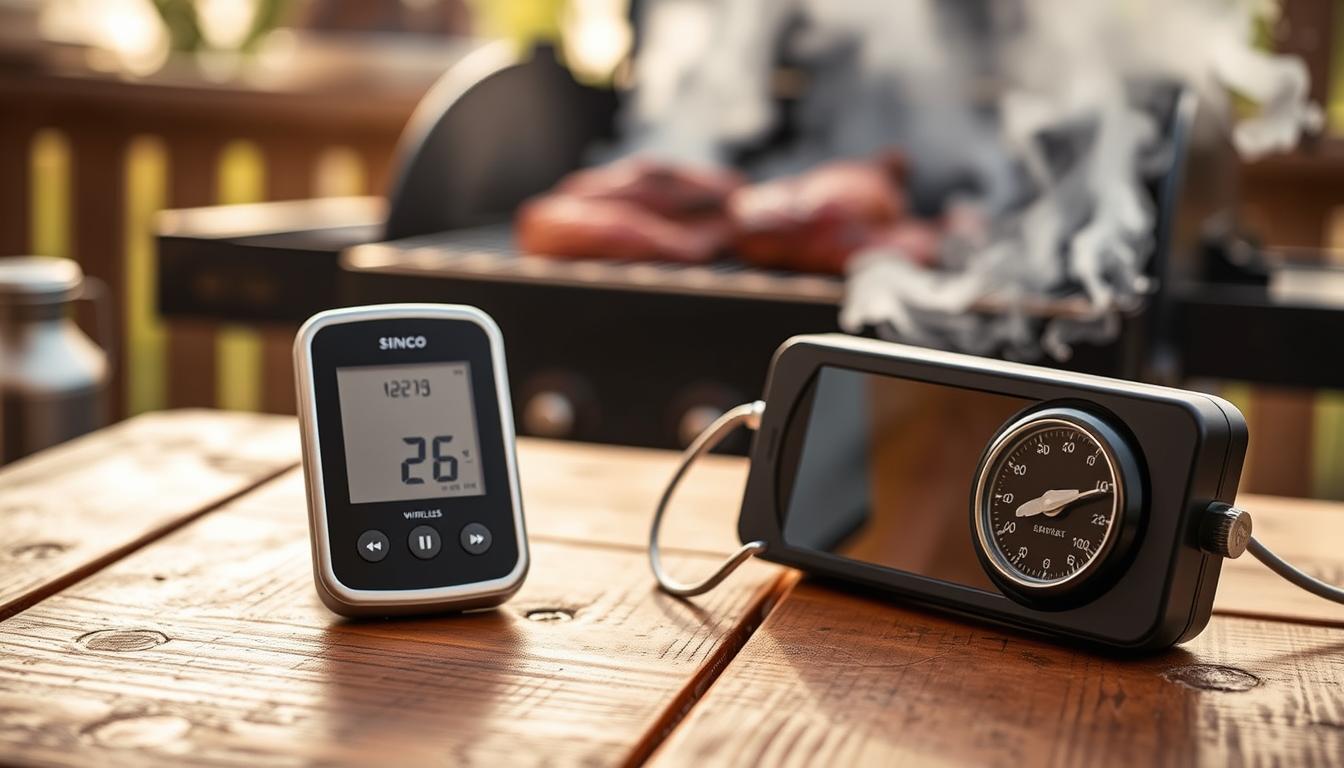
Wireless connectivity transforms how you monitor long cooking sessions by letting you track temperatures from anywhere in your house. Basic wireless models use dedicated receiver units with ranges of 100-300 feet, while smart thermometers connect to your smartphone via Bluetooth or WiFi.
Smart thermometers often include additional features like temperature graphs, cooking timers, and guided cooking programs. These apps can send push notifications when meat reaches target temperatures or if grill temperatures go outside set ranges.
Popular Wireless Models
- ThermoWorks Signals – 4-probe system with 95-hour battery life and smartphone connectivity.
- Weber iGrill – connects to Weber grills with up to 4 probes and detailed smartphone app.
- Meater Plus – completely wireless single probe with 165-foot Bluetooth range.
Build Quality and Durability
Grilling thermometers face heat, steam, and outdoor conditions that can damage sensitive electronics. Look for models with water-resistant ratings (IPX4 or higher) that protect against splashing and light rain.
Probe construction affects both accuracy and longevity – stainless steel probes resist corrosion and clean easily, while plastic components should feel solid without flex or cheap materials. The connection between probe and cable represents a common failure point, so inspect this joint carefully before purchasing.
Budget Considerations
Digital thermometers range from $15 basic instant-read models to $200+ professional wireless systems. Your budget should align with how often you grill and the types of food you cook most frequently.
Basic instant-read thermometers under $30 work well for occasional grilling and simple temperature checks. Mid-range models ($50-100) add features like faster response times, better accuracy, and wireless connectivity. Premium systems over $150 typically include multiple probes, advanced smartphone apps, and commercial-grade build quality.
Consider the cost per use over time – if you grill weekly, investing in a higher-quality thermometer pays off through better cooking results and longer device life. Understanding why BBQ thermometers matter helps justify the investment in quality temperature monitoring equipment.
Maintenance and Care
Proper care extends thermometer life and maintains accuracy over time. Clean probes with warm soapy water after each use, avoiding harsh chemicals that might damage sensors or coatings.
Store instant-read thermometers in protective cases to prevent probe damage during transport. For wireless models, replace batteries according to manufacturer recommendations – low battery levels can affect accuracy and connection reliability.
Frequently Asked Questions
How accurate should a grilling thermometer be?
Look for thermometers with accuracy within ±1°F for food safety and consistent cooking results. This accuracy level ensures you hit target internal temperatures without overcooking.
What’s the difference between instant-read and probe thermometers?
Instant-read thermometers give quick temperature checks in 2-4 seconds when inserted into food. Probe thermometers stay in the meat throughout cooking and monitor temperature continuously.
Do I need wireless connectivity on my grill thermometer?
Wireless features help with long cooking sessions where you want to monitor temperatures from inside your house. For quick grilling sessions under an hour, basic instant-read models work fine.
How long should a digital grill thermometer last?
Quality digital thermometers typically last 3-5 years with regular use and proper care. Battery-powered models may need battery replacement every 6-12 months depending on usage.
Can I use a digital thermometer for both grilling and indoor cooking?
Yes, most digital thermometers work for all cooking methods including grilling, roasting, and stovetop cooking. Check the temperature range to ensure it covers your needs.
Final Thoughts
How To Choose The Right Digital Thermometer For Grilling comes down to matching features with your cooking style and budget. Instant-read models work great for quick grilling sessions, while wireless probe thermometers excel at long smoking and roasting projects.
Start with a quality instant-read thermometer if you’re new to temperature monitoring, then consider adding wireless capabilities as your grilling skills develop. The investment in accurate temperature monitoring pays off through better food safety and consistently delicious results every time you cook outdoors.


Ryan Conlon is a BBQ enthusiast and inspired chef on a journey through the smoky, savory world of outdoor cooking. Hailing from the heart of the Midwest, Ryan’s passion for grilling ignited during his early years, where family gatherings often revolved around the sizzle of the grill and the aroma of seasoned meats.