
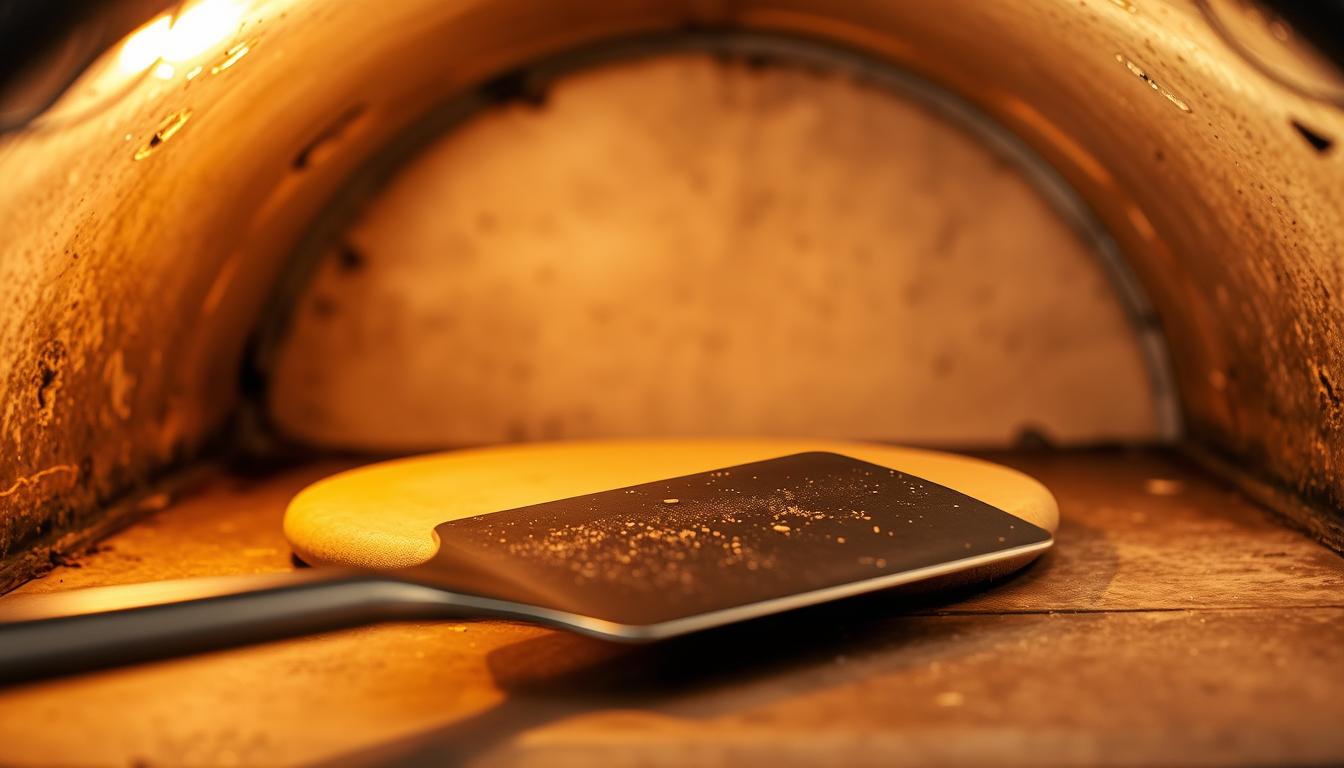
How To Clean A Pizza Oven Without Damaging The Stone requires the right approach to maintain your oven’s performance while protecting its most delicate component. The pizza stone is the heart of your oven, and using harsh chemicals or abrasive tools can crack or weaken it permanently.
Proper cleaning extends your pizza oven’s life and keeps it producing restaurant-quality results. With the right techniques, you can remove grease, food residue, and ash while preserving the stone’s integrity.
TL;DR
- Never use soap or detergent on pizza stones – they absorb chemicals and can crack from thermal shock.
- Let the oven cool for 2-3 hours before cleaning to prevent burns and stone damage.
- Use only a plastic scraper or wooden spatula to remove stuck food debris.
- Clean after every 5-10 uses or when you notice heavy buildup affecting flavor.
How To Clean A Pizza Oven Without Damaging The Stone
The key to safe pizza oven cleaning starts with patience and the right tools. Your stone needs time to cool gradually – rushing this process can cause thermal shock and permanent cracks.
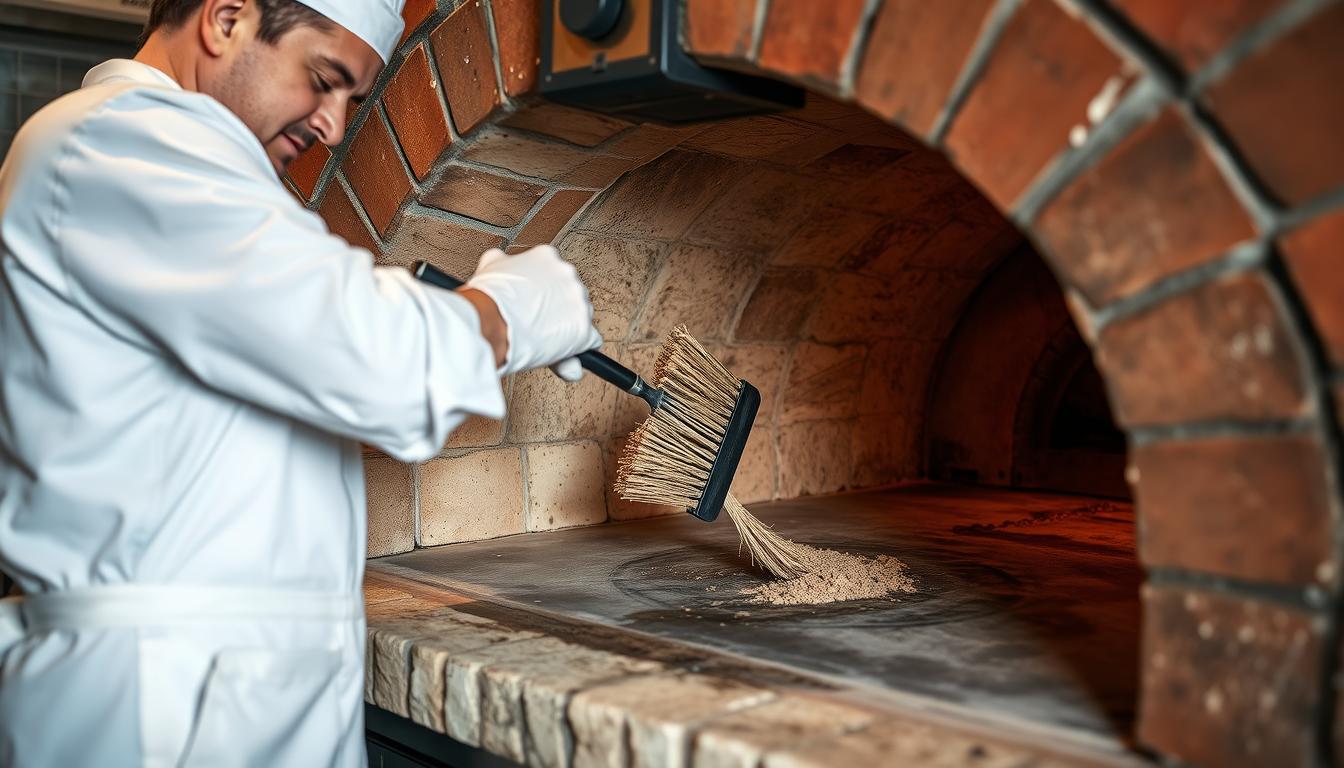
Start by removing all loose ash and debris with a long-handled brush or scraper while the oven is still slightly warm. This makes the job easier since stuck food hasn’t had time to harden completely.
Essential Tools You’ll Need
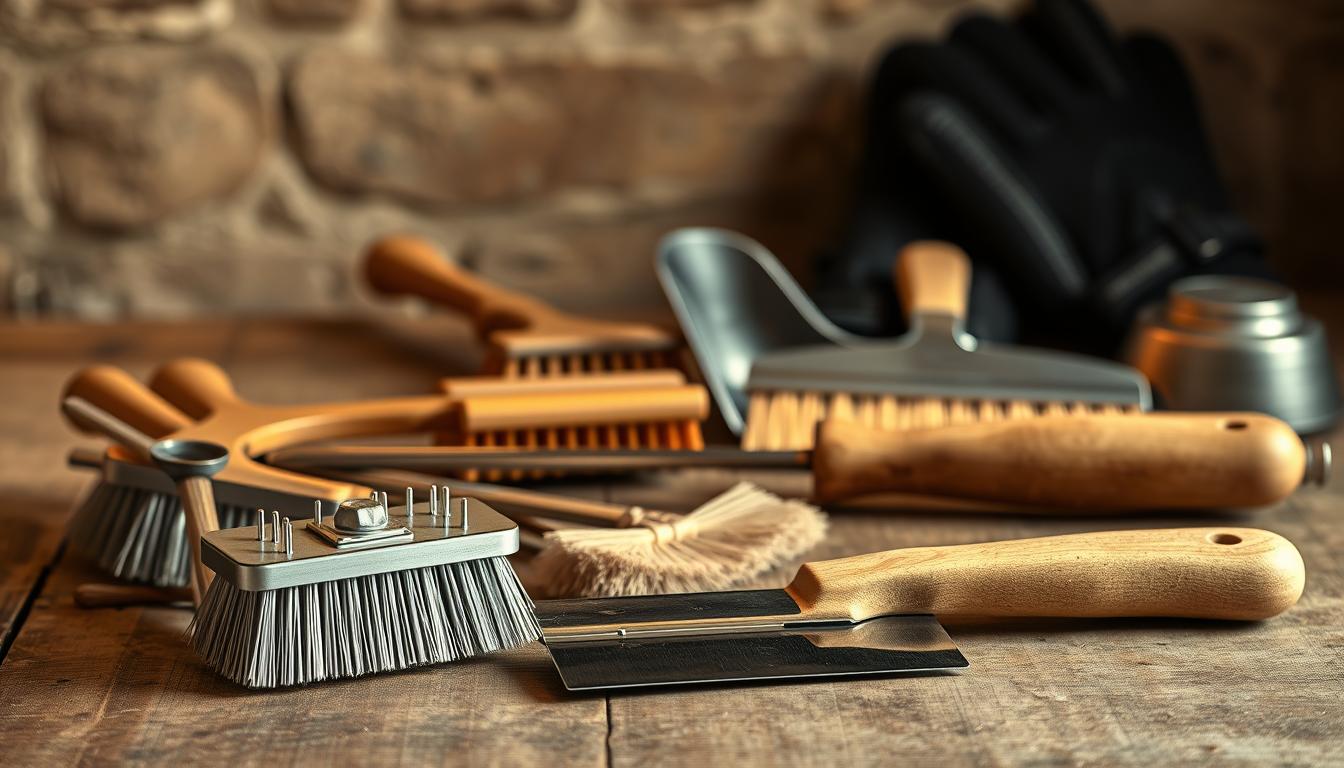
- Plastic scraper – removes food without scratching the stone surface.
- Natural bristle brush – sweeps away ash and loose debris safely.
- Microfiber cloth – wipes down surfaces without leaving lint.
- Wooden spatula – dislodges stubborn food particles gently.
- Vacuum with hose attachment – removes fine ash and crumbs.
Step-by-Step Cleaning Process
Follow this sequence every time you clean your pizza oven to avoid damage and get the best results. Consistency prevents buildup that becomes harder to remove over time.
- Cool down period. Wait 2-3 hours after cooking before starting any cleaning work.
- Remove loose debris. Use your brush to sweep out ash, crumbs, and food particles.
- Scrape stuck food. Gently work your plastic scraper across problem areas at a shallow angle.
- Vacuum thoroughly. Remove all loose particles from the oven floor and walls.
- Wipe exterior surfaces. Clean the outside with a damp microfiber cloth.
What Never to Use on Pizza Stones
These common household cleaners and tools will damage your stone permanently. Pizza stones are porous and absorb whatever you put on them, affecting future cooking.
- Soap or detergent – absorbs into the stone and creates off-flavors.
- Steel wool or metal scrapers – scratches and weakens the surface.
- Chemical cleaners – penetrates the stone and can release toxic fumes when heated.
- Soaking in water – can cause cracking when the stone heats up again.
Pro Cleaning Tip
Season your clean stone lightly with olive oil after cleaning to maintain its non-stick properties. Heat the oven to 200°F for 10 minutes to help the oil penetrate.
Dealing with Stubborn Stains and Buildup
Some stains and food residue require extra attention without resorting to harsh methods. These techniques work on even the most stubborn buildup.
For Grease Stains
Sprinkle coarse salt over grease spots and let it sit for 15 minutes. The salt absorbs the grease, making it easier to scrape away with your plastic tool.
For Burnt Food Residue
Heat your oven to 500°F for 30 minutes to carbonize stuck food, then let it cool and scrape away the charred bits. This method turns stubborn residue into ash that brushes away easily.
Regular Maintenance Schedule
Consistent cleaning prevents major buildup and keeps your oven performing at its best. Most home users can follow a simple schedule based on usage frequency.
- After each use – brush out loose ash and debris while slightly warm.
- Every 5 uses – complete scraping and vacuuming of all surfaces.
- Monthly – deep clean including exterior and door surfaces.
- Seasonally – inspect for cracks and perform any needed repairs.
Regular maintenance also includes checking your wood-fired pizza oven year-round care routine to prevent weather-related damage.
Signs Your Stone Needs Professional Help
Sometimes cleaning isn’t enough and you need to consider replacement or professional restoration. Watch for these warning signs during your cleaning routine.
- Deep cracks – especially those that go all the way through the stone.
- Flaking or crumbling – indicates the stone is breaking down structurally.
- Permanent odors – suggests deep contamination that cleaning can’t fix.
- Uneven heating – cracks can create hot spots that burn food.
Remember that proper BBQ tools and accessories make cleaning easier and more effective.
Frequently Asked Questions
Can I use baking soda to clean my pizza stone?
No, avoid baking soda as it can absorb into the porous stone and affect the taste of future pizzas. Stick to mechanical cleaning methods only.
How often should I deep clean my pizza oven?
Deep clean every 5-10 uses or when you notice food debris affecting the flavor of your pizzas. Light maintenance after each use prevents heavy buildup.
Is it normal for my pizza stone to change color over time?
Yes, pizza stones naturally darken with use as they absorb oils and develop seasoning. This darkening actually improves non-stick properties and flavor.
What should I do if my stone cracks during cleaning?
Stop using a cracked stone immediately as it can break apart during cooking. Small surface cracks might be okay, but deep cracks require replacement for safety.
Can I clean my pizza stone in the dishwasher?
Never put a pizza stone in the dishwasher. The detergent will absorb into the stone and the thermal shock from hot water can cause cracking.
Final Thoughts
How To Clean A Pizza Oven Without Damaging The Stone comes down to using gentle methods and the right tools consistently. Patience during the cooling process and avoiding harsh chemicals protects your investment for years of great cooking.
Start with basic brush and scraper maintenance after your next pizza session and build the habit from there. Your stone will develop better seasoning and your pizzas will taste even better.

Ryan Conlon is a BBQ enthusiast and inspired chef on a journey through the smoky, savory world of outdoor cooking. Hailing from the heart of the Midwest, Ryan’s passion for grilling ignited during his early years, where family gatherings often revolved around the sizzle of the grill and the aroma of seasoned meats.