
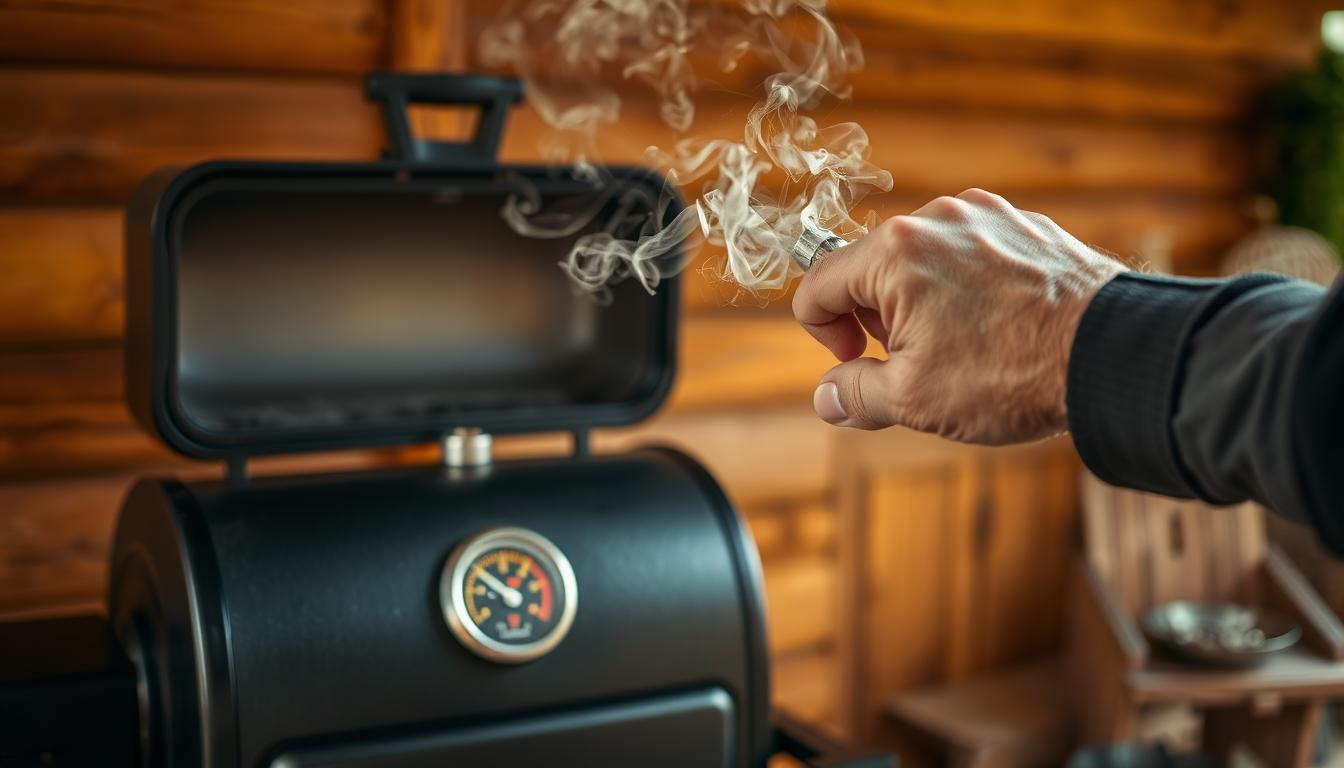
How To Control Temperature On A Charcoal Smoker requires understanding the key factors that affect heat levels in your cooking chamber. Most beginners struggle with temperature swings, but mastering airflow, fuel management, and damper adjustments makes consistent smoking possible.
Temperature control separates good BBQ from great BBQ – without it, you’ll end up with dried-out brisket or undercooked ribs. The good news is that once you learn the basics, maintaining steady temperatures becomes second nature.
TL;DR
- Keep intake dampers 25-50% open and exhaust dampers 75-100% open for steady 225-250°F temperatures.
- Add 6-8 unlit charcoal briquettes every 45-60 minutes to maintain consistent heat levels.
- Place a water pan above the fire box to stabilize temperatures and add moisture to your cooking chamber.
- Allow 30-45 minutes for temperature adjustments to take effect before making additional changes.
How To Control Temperature On A Charcoal Smoker
Temperature control in a charcoal smoker depends on managing three main elements: airflow, fuel quantity, and heat distribution. Your smoker works like a controlled fire where oxygen feeds combustion and exhaust removes heat and smoke.
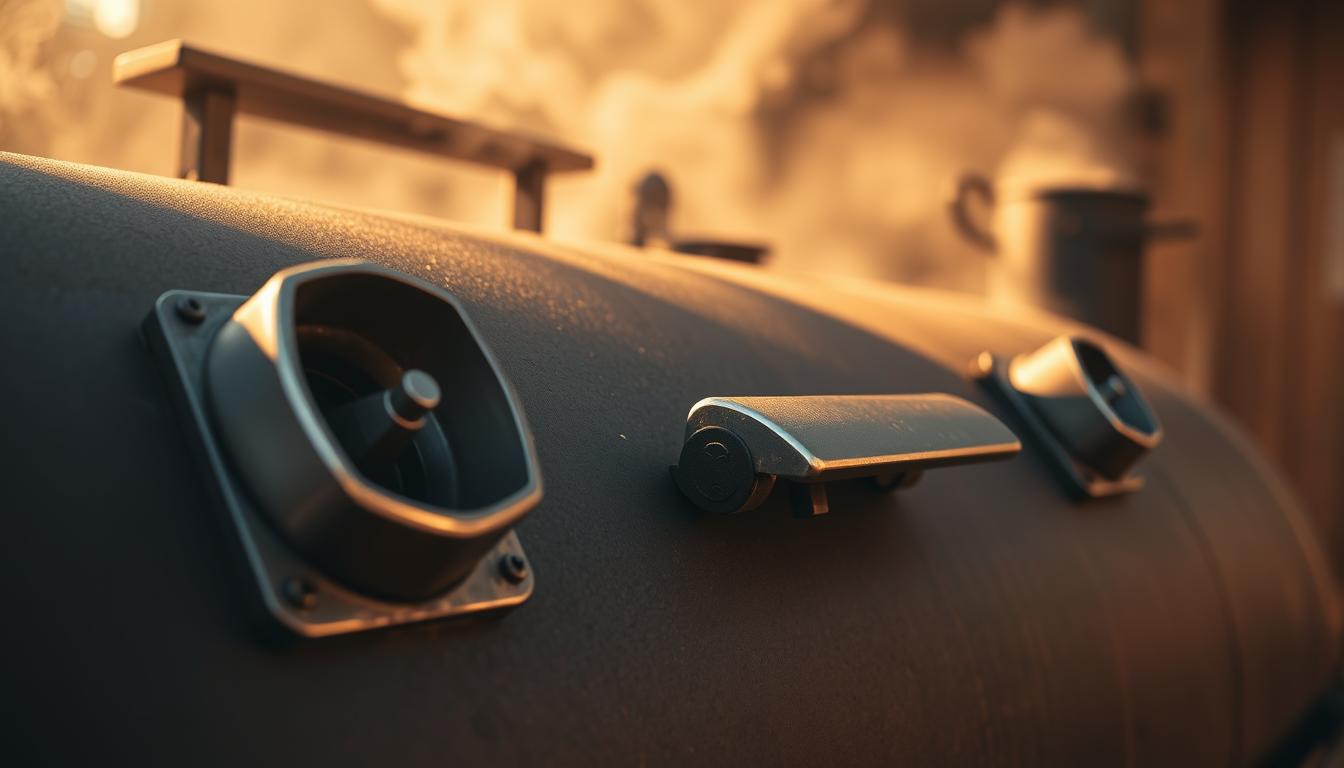
The intake damper (usually at the bottom) controls oxygen flow to your charcoal, while the exhaust damper (at the top) controls how heat and smoke exit the chamber. Proper airflow creates the draft needed for consistent burning and prevents temperature spikes or drops.
Understanding Your Smoker’s Damper System
The intake damper acts as your primary temperature control – more air means hotter fire, less air means cooler fire. Start with the intake damper about 25% open for low and slow cooking between 225-250°F.
Your exhaust damper should stay mostly open (75-100%) during cooking to maintain proper airflow. Closing it too much creates back pressure that can snuff out your fire or cause uneven burning.
Damper Adjustment Guidelines
- Too Hot (Above 275°F) – Close intake damper by 10-15% and wait 15 minutes before adjusting again.
- Too Cold (Below 200°F) – Open intake damper by 10-15% and add 3-4 lit charcoal pieces if needed.
- Temperature Climbing Fast – Partially close intake damper and remove some unburned charcoal if possible.
- Fire Going Out – Open both dampers fully and add lit charcoal to restart combustion.
Setting Up Your Charcoal for Long Burns
The minion method works best for maintaining steady temperatures over 8-12 hours of cooking. Fill your firebox with unlit charcoal, then add 15-20 lit briquettes to one side to start the burn.
This setup creates a slow, controlled burn that spreads gradually through your fuel bed. Using a chimney starter ensures your initial charcoal lights evenly and gets your smoker to temperature faster.
Fuel Management During Long Cooks
- Monitor fuel levels every 2 hours. Look for areas where charcoal has burned down completely.
- Add unlit charcoal to extend burn time. Place 6-8 briquettes next to active coals – they’ll ignite gradually.
- Add lit charcoal for quick heat boosts. Use this method when temperatures drop below 200°F.
- Maintain consistent fuel bed depth. Keep 2-3 inches of charcoal in your firebox throughout the cook.
Using Water Pans for Temperature Stability
A water pan placed above your fire box acts as a heat sink that moderates temperature swings. The water absorbs excess heat when temperatures rise and releases it when they drop, creating more stable cooking conditions.
Fill a disposable aluminum pan with hot water and place it on the cooking grate closest to your firebox. The steam also adds moisture to prevent your meat from drying out during long cooks.
Temperature Patience Pays Off
Wait 30-45 minutes after making damper adjustments before changing anything else. Charcoal smokers respond slowly to airflow changes, and impatience leads to temperature roller coasters that ruin your cook.
Reading Temperature Trends Instead of Instant Readings
Don’t chase every 10-degree temperature swing – focus on trends over 30-60 minute periods. Accurate thermometers help you track these patterns and make better decisions about when adjustments are needed.
Place your thermometer probe at grate level where your meat sits, not at the dome level where many built-in gauges read. Dome temperatures run 25-50°F higher than cooking temperatures.
Common Temperature Problems and Solutions
- Temperature spikes after adding fuel – Close intake damper temporarily until new charcoal settles into a steady burn.
- Gradual temperature drop over 2-3 hours – Normal charcoal consumption – add 6-8 unlit briquettes.
- Wild temperature swings – Usually caused by wind affecting airflow – use windbreaks around your smoker.
- Can’t reach target temperature – Check for ash buildup blocking airflow or insufficient initial charcoal quantity.
Weather Considerations for Temperature Control
Cold weather requires more fuel and wider damper openings to maintain target temperatures. Wind affects airflow patterns, so position your smoker to minimize crosswinds hitting the intake damper.
Rain and high humidity slow charcoal burning and require more aggressive airflow management. Proper smoker storage prevents moisture damage that can affect temperature control during cooking.
Maintaining Consistent Heat Distribution
Hot spots develop in areas closest to your firebox, while cooler zones form at the opposite end of your cooking chamber. Rotate your meat every 2-3 hours to ensure even cooking, or use these temperature differences strategically.
Place larger cuts that need more cooking time near the firebox, and move smaller items to cooler areas. Quality BBQ tools make these adjustments easier without losing too much heat from opening the cooking chamber.
Frequently Asked Questions
How long does it take to stabilize temperature in a charcoal smoker?
Most charcoal smokers need 30-45 minutes to reach and stabilize at your target temperature after lighting. Allow another 15-30 minutes after making damper adjustments before checking results.
Should I keep adding wood chips throughout the entire cook?
Add wood chips only during the first 3-4 hours when meat absorbs smoke flavor most readily. Adding wood later in the cook can create bitter flavors without improving taste.
What’s the ideal temperature range for low and slow BBQ?
Maintain temperatures between 225-250°F for most BBQ cuts like brisket, pork shoulder, and ribs. This range breaks down tough connective tissue while keeping meat moist.
How often should I check and adjust my smoker temperature?
Check temperatures every 30-60 minutes but only make adjustments when temperatures stay outside your target range for more than 30 minutes. Frequent changes create temperature instability.
Can I use lump charcoal instead of briquettes for temperature control?
Lump charcoal burns hotter and faster than briquettes, making temperature control more challenging for beginners. Briquettes provide more consistent, predictable heat for learning proper smoker management.
Final Thoughts
How To Control Temperature On A Charcoal Smoker becomes easier with practice and patience – most problems come from making adjustments too quickly or too often. Master the basics of airflow management and fuel addition before trying advanced techniques.
Start with simple cooks like pork shoulder that forgive temperature variations, then work up to more demanding cuts as your skills improve. Consistent practice builds the intuition needed for championship-level BBQ.

Ryan Conlon is a BBQ enthusiast and inspired chef on a journey through the smoky, savory world of outdoor cooking. Hailing from the heart of the Midwest, Ryan’s passion for grilling ignited during his early years, where family gatherings often revolved around the sizzle of the grill and the aroma of seasoned meats.