
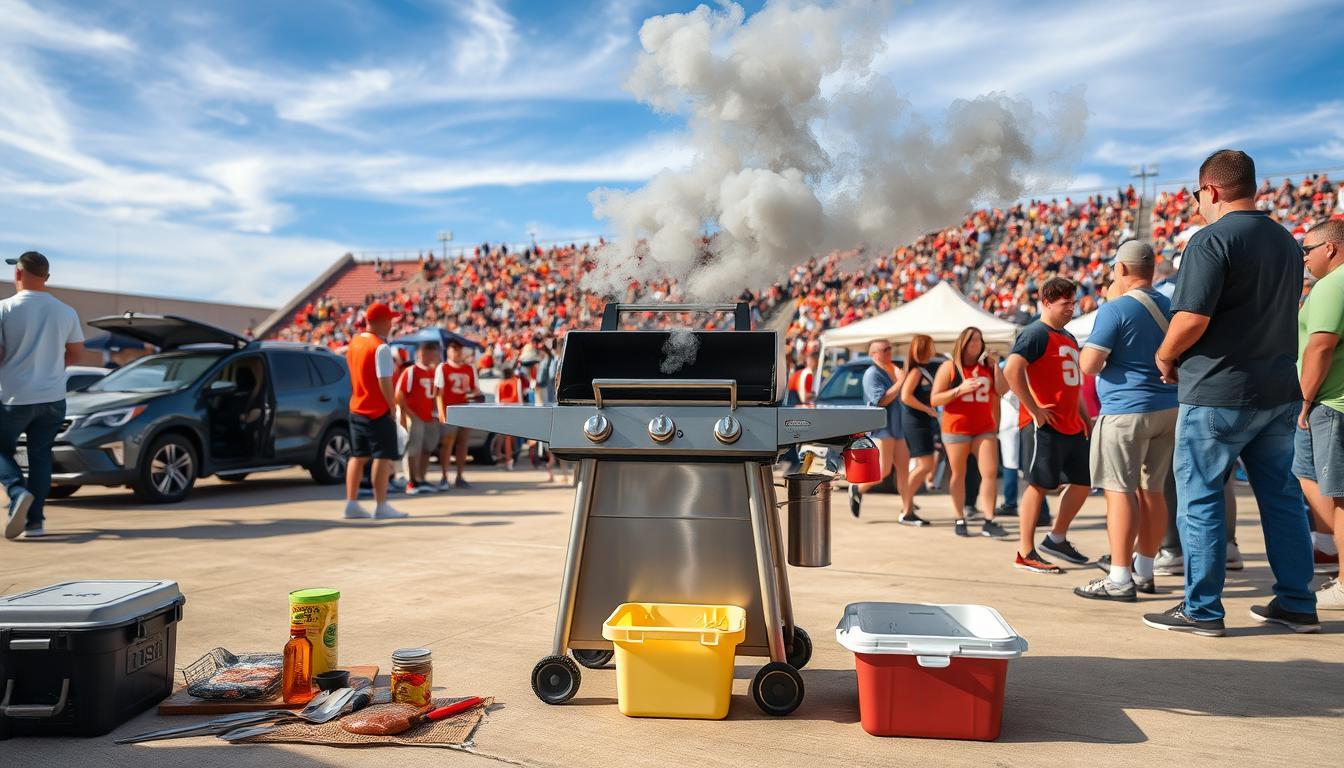
How To Grill At A Stadium Tailgate Without Breaking The Rules starts with understanding that every venue has specific policies about open flames, fuel types, and cooking equipment. Most stadiums allow grilling in designated parking areas, but the rules vary widely between locations and can change based on fire restrictions or special events.
The key to successful stadium tailgating is doing your homework before game day and bringing backup plans for different scenarios. Smart tailgaters know that following the rules keeps everyone safe and ensures you can keep coming back for future games.
TL;DR
- Call the stadium directly 24-48 hours before your tailgate to confirm current grilling policies and any temporary restrictions.
- Bring a 10-foot clearance zone around your grill and keep a fire extinguisher within arm’s reach at all times.
- Pack propane as your primary fuel since 89% of stadiums ban charcoal grills due to fire safety concerns.
- Download the venue’s tailgating app or check their website for real-time updates on permitted equipment and restricted areas.
How To Grill At A Stadium Tailgate Without Breaking The Rules
Stadium grilling rules exist for good reasons – fire safety, crowd control, and property protection. Most venues publish their tailgating guidelines online, but policies can change due to weather conditions, construction work, or local fire bans.
The smartest approach is treating these rules as your foundation for planning rather than obstacles to work around. When you follow the guidelines, security staff and venue management see you as a responsible fan rather than a potential problem.
Research Your Venue’s Specific Policies
Every stadium operates under different rules based on local fire codes, insurance requirements, and venue management decisions. Some allow any type of grill while others restrict you to specific fuel types or cooking methods.
Start your research at the stadium’s official website, which typically has a dedicated tailgating section with current rules. Social media pages often post updates about temporary restrictions or rule changes for specific game days.
Essential Information to Gather
- Permitted grill types – propane, electric, charcoal, or restrictions on each
- Fuel storage limits – maximum tank sizes and quantity allowed per vehicle
- Setup requirements – clearance distances from vehicles and other tailgaters
- Time restrictions – when you can start grilling and mandatory shutdown times
- Prohibited areas – zones where no cooking equipment is allowed
Contact the stadium’s guest services department if the website doesn’t answer your specific questions. Many venues have dedicated tailgating coordinators who can clarify confusing policies or explain recent changes.
Choose the Right Equipment for Stadium Rules
Propane grills offer your best bet for compliance since most stadiums prefer them over charcoal or wood-burning equipment. Gas grills produce less smoke, generate fewer sparks, and give you instant temperature control that security staff appreciate.
Portable electric grills work well if the parking area has power access, but check if the venue allows extension cords or if you need to stay within reach of existing outlets. Some stadiums provide charging stations specifically for tailgating equipment.
Stadium-Friendly Grill Features
- Adjustable legs – keeps the grill stable on uneven parking lot surfaces
- Built-in thermometer – helps maintain safe cooking temperatures without guesswork
- Grease management system – prevents flare-ups that might violate fire safety rules
- Quick disconnect fittings – allows fast fuel line removal if security requests it
Avoid modified or homemade grilling equipment that might not meet safety standards. Stadium security can shut down any cooking operation they consider unsafe, even if your equipment worked fine at home.
Pack a Backup Cooking Plan
Bring sandwich supplies and pre-cooked items in case weather or venue restrictions force you to skip grilling. Having alternatives keeps your group fed regardless of what happens with your main cooking plans.
Safety Requirements and Best Practices
Stadium fire safety rules typically require specific clearances around your cooking area and immediate access to fire suppression equipment. Most venues mandate at least 10 feet of clear space between your grill and any vehicles, tents, or other tailgating setups.
Keep your fire extinguisher visible and easily accessible rather than buried in your gear pile. Security staff often check for proper safety equipment during their rounds, and having everything properly positioned shows you take the rules seriously.
Common Safety Violations to Avoid
- Grilling under canopies or tents. Most stadiums prohibit cooking under any overhead cover due to fire risk.
- Leaving grills unattended. Someone must stay within arm’s reach of active cooking equipment at all times.
- Improper fuel storage. Keep spare propane tanks upright and away from heat sources according to venue guidelines.
- Blocking emergency access. Never position your setup where it could interfere with emergency vehicle movement.
Many stadiums require you to demonstrate that you can quickly shut down your operation if requested by security or emergency personnel. Practice your shutdown procedure before game day so you can comply immediately if needed.
Navigate Parking Lot Logistics
Stadium parking lots present unique challenges with tight spaces, heavy foot traffic, and vehicles constantly moving in and out. How to set up the perfect tailgating space becomes more complex when you’re working within venue-specific constraints rather than choosing your own location.
Arrive early to secure a spot that meets all the spacing requirements for your grilling setup. Prime locations near the stadium often fill up hours before kickoff, and late arrivals might find themselves in areas where grilling isn’t permitted.
Smart Positioning Strategies
- Corner spots – provide extra clearance space and reduce conflicts with neighboring tailgaters
- Areas with concrete surfaces – offer better stability and easier cleanup than asphalt or gravel
- Away from main walkways – reduces interruptions and keeps your setup clear of heavy foot traffic
- Near water sources – provides easy cleanup access and emergency water if needed
Consider wind direction when positioning your grill to avoid sending smoke toward other tailgaters or the main pedestrian areas. Being considerate about smoke placement prevents complaints that might bring unwanted security attention.
Handle Rule Enforcement and Security
Stadium security staff patrol tailgating areas regularly and have authority to shut down operations that violate venue policies. Approach these interactions with cooperation rather than confrontation – arguing with security never improves your situation.
If security asks you to modify your setup, respond immediately and ask for clarification about what changes they need. Most officers are willing to explain the specific rule you’re violating and suggest ways to fix the problem.
Professional Response Strategies
- Acknowledge requests immediately – shows respect for their authority and venue policies
- Ask specific questions – helps you understand exactly what needs to change
- Offer solutions – demonstrates your willingness to comply rather than just complain
- Thank them for the guidance – maintains a positive relationship for future interactions
Remember that security staff deal with dozens of tailgating groups every game day, and their primary concern is keeping everyone safe. Tailgating safety tips become even more important in the controlled environment of stadium lots where one incident can affect hundreds of people.
Plan for Weather and Emergency Situations
Stadium venues often implement stricter rules during high wind conditions, extreme heat, or drought situations that increase fire risk. These emergency restrictions can go into effect with little notice, sometimes right before game time.
Check weather forecasts and any fire restriction announcements from local authorities in the days leading up to your tailgate. Some stadiums post real-time updates on their social media accounts when conditions force rule changes.
Weather Contingency Planning
- High winds – pack wind guards and be prepared to shut down if gusts exceed safe limits
- Rain – ensure your electrical equipment stays dry and have covered storage for fuel
- Extreme heat – monitor propane tank temperatures and provide extra ventilation around your setup
- Fire restrictions – have non-cooking meal alternatives ready in case all grilling gets banned
Some venues provide covered pavilions or indoor spaces for tailgating when weather makes outdoor cooking unsafe. Research these alternatives in advance so you know your options if conditions change.
Frequently Asked Questions
Can I bring charcoal to a stadium tailgate?
Most stadiums prohibit charcoal grills due to fire safety concerns, but rules vary by venue. Always check the specific stadium’s tailgating policy before packing charcoal, as violations can result in immediate shutdown of your tailgating operation.
What happens if security shuts down my grill?
Cooperate immediately and ask what changes they need to see before you can resume cooking. Most security staff will work with you to find a compliant solution rather than ban your tailgating entirely, as long as you respond professionally to their requests.
Do I need a fire extinguisher for stadium tailgating?
Many stadiums require fire extinguishers within immediate reach of any active grilling equipment. Check your venue’s specific requirements, but bringing a properly rated extinguisher is always a smart safety practice regardless of the rules.
How early can I start grilling before kickoff?
Grilling start times vary by stadium, typically ranging from 3-5 hours before kickoff for regular games. Some venues have different rules for night games, playoff games, or special events, so confirm the schedule for your specific game day.
Final Thoughts
How To Grill At A Stadium Tailgate Without Breaking The Rules comes down to preparation, respect for venue policies, and smart equipment choices that work within the constraints. The most successful stadium tailgaters treat rule compliance as part of their game day strategy rather than an inconvenience.
Start planning your approach weeks before game day, and always have backup options ready in case conditions or rules change. Following the guidelines keeps your tailgating privileges intact and ensures everyone can enjoy safe, fun pre-game celebrations.

Ryan Conlon is a BBQ enthusiast and inspired chef on a journey through the smoky, savory world of outdoor cooking. Hailing from the heart of the Midwest, Ryan’s passion for grilling ignited during his early years, where family gatherings often revolved around the sizzle of the grill and the aroma of seasoned meats.