
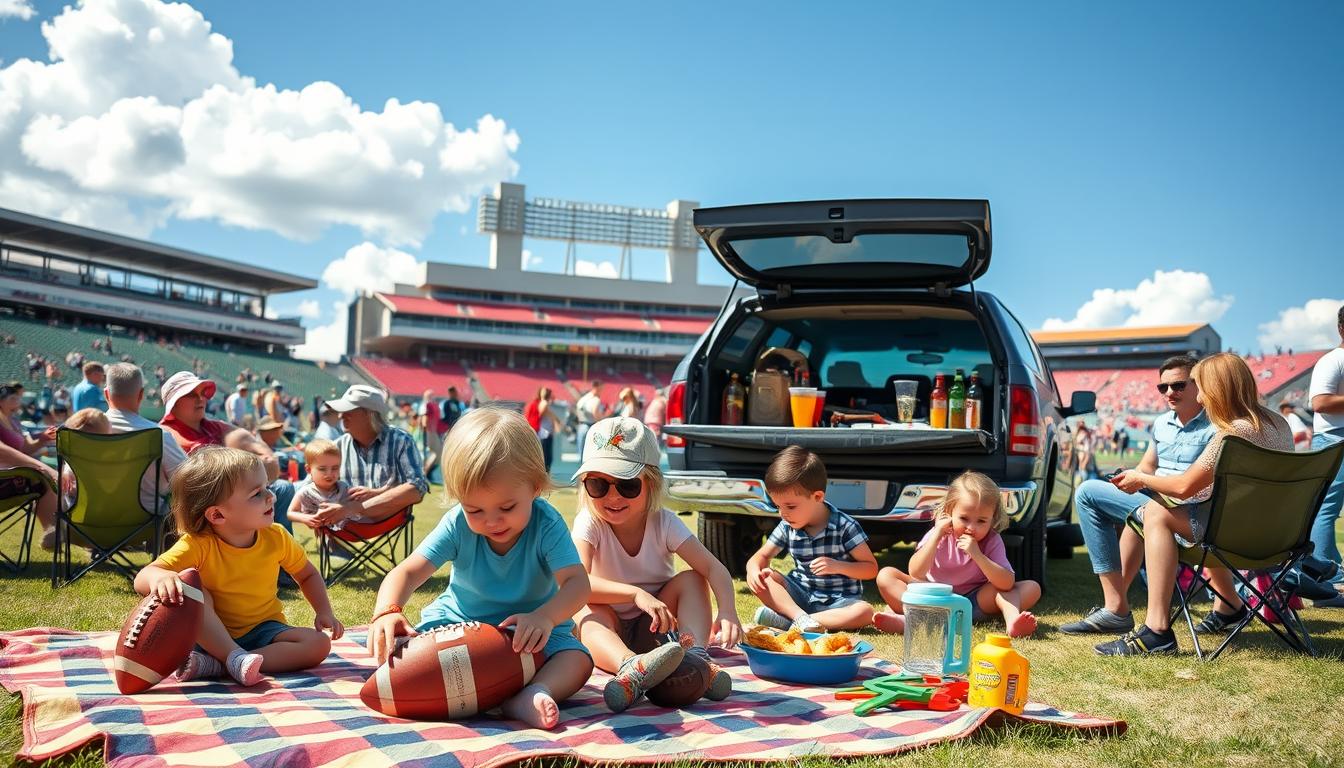
How To Host A Kid Friendly Tailgate requires balancing adult fun with child safety and entertainment. The key is creating zones that work for everyone while keeping young fans engaged throughout the entire pre-game experience.
Planning a family tailgate means thinking beyond just food and drinks. You need activities that capture kids’ attention, snacks they’ll actually eat, and a setup that keeps everyone comfortable and contained.
TL;DR
- Set up a dedicated 10×10 foot kids’ zone with soft ground coverings and clear boundaries.
- Pack 3-4 simple games that require minimal setup like cornhole, sidewalk chalk, and a football toss.
- Bring kid-friendly snacks in individual portions – think mini sandwiches, fruit pouches, and crackers.
- Arrive 2 hours early to claim space and set up before crowds make movement difficult.
How To Host A Kid Friendly Tailgate Successfully
Creating a successful family tailgate starts with designated spaces that work for both kids and adults. Think of your tailgate area as having different zones – one for cooking and adult socializing, and another specifically designed for children’s activities and play.
The secret is planning activities that don’t require constant adult supervision while still being engaging enough to hold kids’ attention for extended periods. This frees up parents to enjoy the social aspects of tailgating while keeping children safe and entertained.
Essential Games and Activities for Young Fans
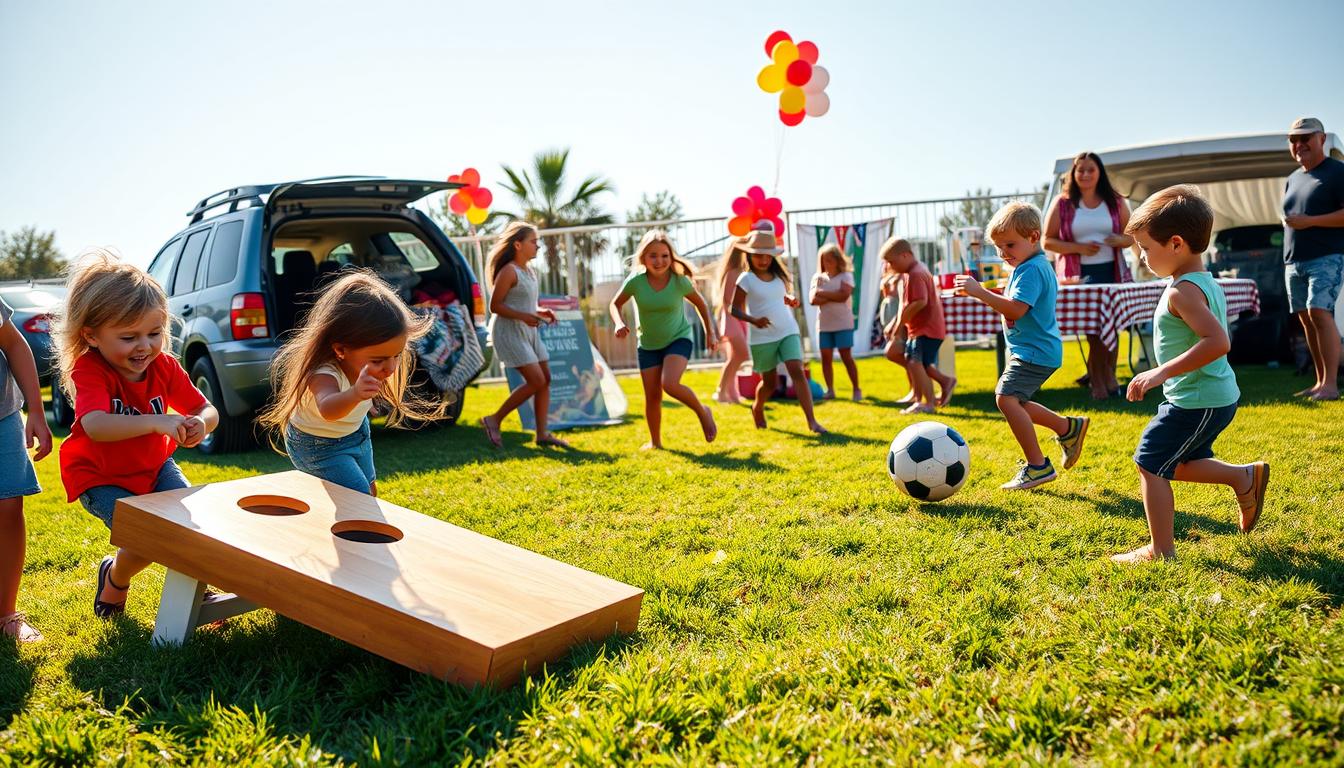
Simple games work best because they’re easy to transport and don’t require complicated rules or extensive setup time. Focus on activities that multiple kids can enjoy together regardless of age differences.
- Cornhole – Perfect for kids 5 and up, teaches hand-eye coordination, and adults can join in easily.
- Sidewalk chalk – Creates a quiet activity zone and works on any paved surface near your vehicle.
- Football toss – Use a soft foam football to prevent injuries and property damage.
- Bubble station – Bring battery-powered bubble machines for instant entertainment that requires zero skill.
- Coloring books and crayons – Essential backup for when active games lose their appeal.
Set up games in a specific order based on energy levels. Start with high-energy activities like football toss when kids first arrive, then transition to calmer activities like coloring as the day progresses and they get tired.
Creating Safe Play Boundaries
Use portable fencing, rope, or even just blankets to create clear visual boundaries for your kids’ zone. This helps children understand where they can play freely and gives parents peace of mind about their location.
Position the play area away from grills, parking areas, and heavy foot traffic. The space between vehicles often works well because it provides natural boundaries while keeping kids visible from your main tailgate setup.
Kid-Approved Tailgate Snacks That Actually Work
Forget elaborate kid menus – simple, familiar foods work best in outdoor settings where kids are distracted and excited. Focus on items that travel well, don’t require heating, and can be eaten with minimal cleanup.
- Mini sandwiches – Cut regular sandwiches into quarters for easier handling and less waste.
- String cheese and crackers – Individual portions that don’t require refrigeration for short periods.
- Apple slices with caramel dip cups – Satisfies sweet cravings while providing actual nutrition.
- Granola bars – Easy to unwrap, filling, and most kids will eat them without complaints.
- Juice boxes and water bottles – Skip sodas and energy drinks that will make kids hyper then crash.
Pack snacks in individual portions using small containers or bags labeled with each child’s name. This prevents arguments over food and makes it easy for kids to grab what they want without digging through communal containers.
Pack Emergency Snacks
Always bring 50% more snacks than you think you’ll need. Kids eat more when they’re excited and active, and having extra prevents meltdowns when their favorites run out.
Drinks and Hydration Strategy
Dehydration happens fast during outdoor events, especially when kids are running around in potentially hot weather. Plan for each child to drink 16-20 ounces of fluid per hour during active play.
Freeze water bottles the night before – they’ll act as ice packs for your cooler and gradually thaw into cold drinking water throughout the day. This eliminates the need to pack separate ice while ensuring cold drinks stay available.
Smart Setup for Family Comfort
Your physical setup makes the difference between a stressful experience and a fun family day. Think about sight lines, safety, and comfort when arranging your tailgate space.
- Claim extra space. Request spots with room for kids to move around safely without interfering with neighboring tailgates.
- Set up shade first. Pop-up canopies or umbrellas prevent sunburn and give kids a retreat space when they get overwhelmed.
- Create a changing station. Bring a small table and supplies for quick cleanup of spills, dirt, and minor injuries.
- Pack comfort items. Folding chairs sized for kids, small blankets, and even a few pillows make the space feel welcoming.
Position your grill and cooking area at least 10 feet away from the kids’ play zone. This creates a safety buffer while still allowing you to supervise both areas from a central location.
Weather Contingency Planning
Kids are less adaptable to weather changes than adults, so pack for conditions that might develop throughout the day. Bring layers, rain gear, and sun protection even if the forecast looks perfect.
Have a backup indoor activity plan ready in case weather forces everyone into vehicles. Download kids’ movies or games onto a tablet, and pack headphones to prevent noise from disturbing other tailgaters who might also be seeking shelter.
Managing Multiple Kids and Ages
Mixed age groups require different strategies than single-age activities. Older kids can help supervise younger ones, but they also need their own engaging activities to prevent boredom and attitude problems.
Assign older kids specific helper roles like setting up games, distributing snacks, or helping younger children with activities. This gives them responsibility while keeping them engaged in the group dynamic rather than wandering off or getting into trouble.
Nap and Quiet Time Solutions
Younger kids will need downtime during long tailgate sessions. Set up a quiet zone with comfortable seating where tired children can rest without missing the action entirely.
Bring a wagon or stroller even for kids who normally walk everywhere. Tired children become cranky children, and having a way to transport them comfortably prevents meltdowns that can ruin the experience for everyone.
Frequently Asked Questions
What age is appropriate for kids to start tailgating?
Most kids can enjoy tailgating starting around age 3-4 when they can follow basic safety rules and stay engaged with simple activities. Younger children can attend but require more intensive supervision.
How do you handle bathroom needs during tailgating with kids?
Scout restroom locations when you arrive and walk kids to them before they become urgent needs. Bring hand sanitizer and tissues since stadium facilities can run out of supplies during busy events.
Should kids wear team colors or regular clothes to tailgates?
Team colors help kids feel part of the experience and make them easier to spot in crowds. Choose comfortable, washable fan gear since kids will likely get dirty during outdoor play.
How early should families arrive for tailgating?
Arrive at least 2 hours before kickoff to secure good parking, set up your space, and allow time for kids to play and eat without feeling rushed before entering the stadium.
Final Thoughts
How To Host A Kid Friendly Tailgate comes down to preparation, realistic expectations, and creating an environment where both kids and adults can have fun safely. The extra planning required pays off when you see children enjoying their first game day traditions.
Start with one simple tailgate this season and build your family’s traditions from there. Getting the basics right creates memories that will last long after the final whistle blows.

Ryan Conlon is a BBQ enthusiast and inspired chef on a journey through the smoky, savory world of outdoor cooking. Hailing from the heart of the Midwest, Ryan’s passion for grilling ignited during his early years, where family gatherings often revolved around the sizzle of the grill and the aroma of seasoned meats.