
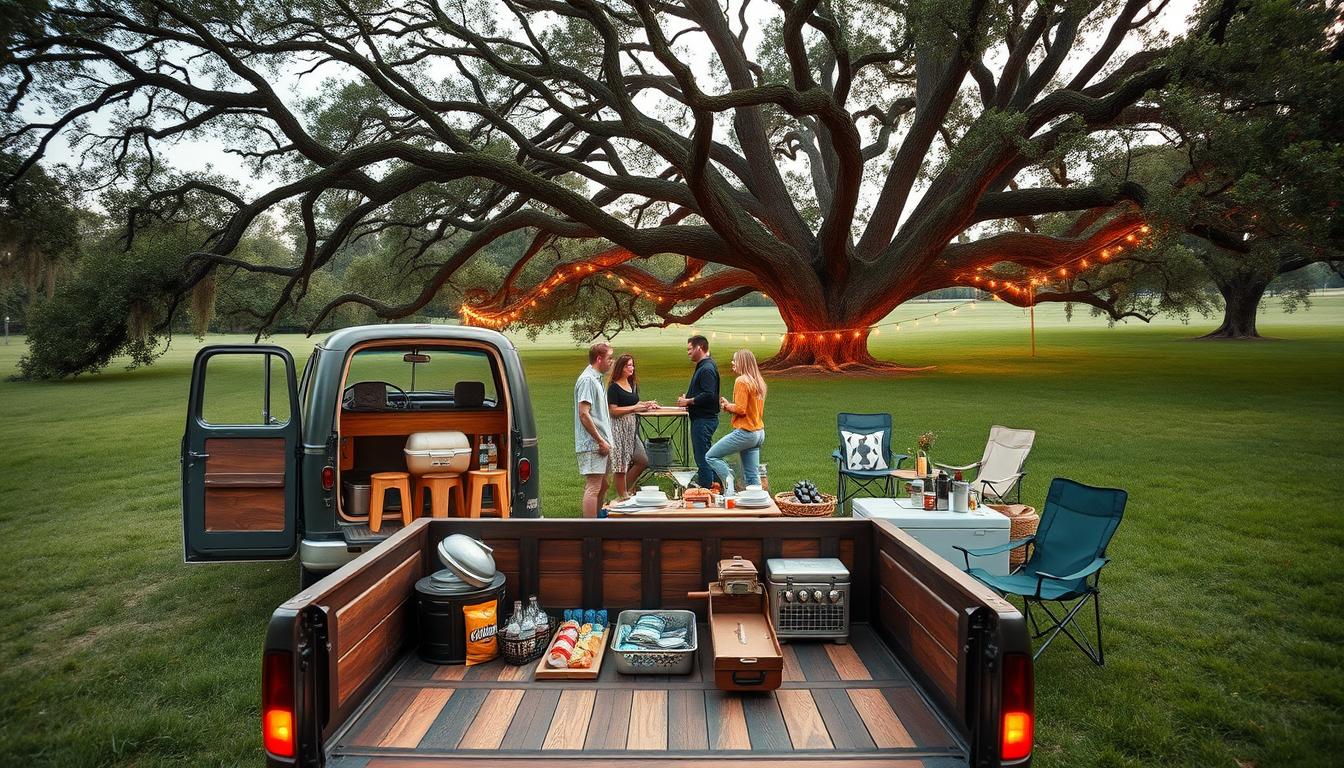
How To Set Up The Perfect Tailgating Space requires strategic planning that goes beyond just throwing a grill in your parking spot. The difference between a cramped, chaotic tailgate and a smooth, enjoyable pre-game experience comes down to thoughtful layout design that maximizes your available space while keeping everyone comfortable and the party flowing smoothly.
A well-organized tailgating setup creates natural traffic patterns, designated zones for different activities, and easy access to food, drinks, and games. Whether you’re working with a compact car space or sprawling RV setup, the right layout turns any parking spot into the perfect pre-game headquarters.
TL;DR
- Position your grill 10 feet away from seating areas and vehicle doors for safety and smoke management.
- Create a triangle layout with grill, food prep station, and coolers within 6 feet of each other for efficient cooking workflow.
- Reserve 4×6 feet of clear space for games and movement – this prevents crowding and keeps activities separate from food areas.
- Set up a dedicated trash and recycling station at least 8 feet from food prep to maintain cleanliness without constant cleanup trips.
How To Set Up The Perfect Tailgating Space
Start by surveying your parking spot and identifying the boundaries you’ll work within. Most standard parking spaces measure 9 feet wide by 18 feet long, though tailgating areas often provide more room. Take note of nearby obstacles like light poles, other vehicles, and traffic patterns that might affect your layout.
The key to any successful tailgate layout is creating distinct zones that serve specific purposes without interfering with each other. This zoning approach prevents the common problem of people crowding around the grill while you’re trying to cook, or games interfering with food service.
Essential Zone Planning
Your tailgate space should include five core zones arranged for maximum efficiency and comfort:
- Cooking Zone – Grill, prep surfaces, and cooking utensils positioned for easy access and safety.
- Food Service Zone – Tables, serving dishes, and coolers arranged for smooth food distribution.
- Seating Zone – Chairs and tables positioned for conversation and comfort while staying clear of high-traffic areas.
- Activity Zone – Open space for games and movement without interfering with food preparation.
- Storage Zone – Organized area for gear, trash, and supplies that keeps clutter away from main activities.
Traffic Flow and Movement Patterns
Good traffic flow prevents bottlenecks and keeps your tailgate running smoothly throughout the day. Position high-traffic items like coolers and restrooms access routes where people can reach them without disrupting ongoing activities.
Create clear pathways between zones by leaving at least 3 feet of walking space between major elements. This prevents people from having to squeeze behind someone grilling or step over coolers to reach their seats.
Strategic Equipment Placement
Your grill should anchor the cooking zone but never block access to your vehicle or create a barrier between different areas. Position it where prevailing winds will carry smoke away from seating areas, typically 10-15 feet from where people will be sitting and eating.
Coolers work best when positioned between the cooking and seating zones, making them accessible to both the cook and guests without constant movement. Place your main beverage cooler closest to seating, with the food cooler near your prep area.
Seating Arrangements That Work
Comfortable seating arrangements encourage people to stay and enjoy the tailgate rather than wandering off or standing awkwardly. Arrange chairs in conversational clusters of 4-6 people rather than long rows that make conversation difficult.
Position seating to face away from direct sun when possible, and ensure everyone has a clear view of any TVs or entertainment areas you’ve set up. Leave enough space behind each chair for people to get up easily without disturbing others.
Table Configuration
Use multiple smaller tables rather than one large table when space allows. This creates more flexible serving options and prevents everyone from crowding around a single food station. A 6-foot table works well for food service, while smaller card tables are perfect for individual groups or games.
Position tables at comfortable heights – standard 29-30 inch dining height for eating, or slightly lower 26-28 inch height if you’re using camping chairs. This height difference matters more than many people realize for long-term comfort.
Wind Direction Matters
Always check wind direction before setting up your grill and seating areas. Position seating upwind from your grill so smoke doesn’t blow directly at your guests throughout the day.
Storage and Organization Systems
Efficient storage keeps your tailgate looking clean and makes everything easy to find when you need it. Use clear plastic bins to organize supplies by category – one for condiments and seasonings, another for serving utensils, and a third for games and entertainment items.
Create a designated staging area near your vehicle where you can keep backup supplies and personal items that aren’t needed immediately. This prevents your main tailgate area from becoming cluttered with coolers, bags, and equipment that people brought but aren’t actively using.
Trash Management Strategy
Position trash and recycling containers where they’re easily accessible but not in the middle of your main activity areas. Tailgating safety includes proper waste management, so secure your containers to prevent them from blowing over or attracting unwanted attention from wildlife.
Use separate containers for different types of waste – one for general trash, another for recyclables, and a third for food scraps if you’re in an area where composting is available. Label these clearly so guests know where everything goes.
Weather-Adaptive Layouts
Your perfect layout needs to work regardless of weather conditions. On sunny days, create shaded areas using pop-up canopies or your vehicle as a windbreak. Position these shade structures to cover seating areas during the hottest parts of the day.
For windy conditions, anchor everything that could blow around and position lightweight items like napkins and paper goods in protected areas. Weather-proof tailgating strategies help you adapt your setup to changing conditions without completely reorganizing your space.
Backup Plans
Always have a backup plan for sudden weather changes. Know which items need to be secured or moved quickly, and designate someone to help if conditions deteriorate. This might mean having a secondary setup area closer to your vehicle or under available shelter.
Pack items in reverse order of when you’ll need them, so essential backup supplies are easily accessible. This includes emergency shelter, extra tarps, and weather protection for your electronics and food.
Technology and Entertainment Integration
Modern tailgates often include TVs, speakers, and other electronic equipment that needs power and protection. Position these items where they’re visible and audible to your group without blocking natural conversation or interfering with food preparation.
Run power cords safely along the edges of your space rather than across walking areas where people might trip. Use surge protectors and weatherproof covers for all electronic equipment, even on clear days.
Game Area Design
Designate specific areas for different types of games to prevent conflicts and ensure everyone can participate safely. Classic tailgate games require different amounts of space, so plan accordingly when laying out your activity zones.
Cornhole requires about 8×3 feet of clear space, while a simple football toss needs at least 10 feet of length. Position these areas away from food preparation and seating to prevent accidents and keep games from disrupting other activities.
Frequently Asked Questions
How much space do I need for a comfortable tailgate setup?
A minimum of 12×20 feet works for basic tailgating with 4-6 people, but 15×25 feet provides much better comfort and flow. This allows proper spacing between cooking, seating, and activity areas.
Should I set up the same way every time?
Consistency helps with efficiency, but adapt your layout based on wind direction, sun position, and the specific parking spot you get. The core zone concept stays the same while specific positioning changes.
How do I handle setup when arriving late to busy tailgating areas?
Focus on a compact, vertical setup using your vehicle as an anchor point. Prioritize essential zones – cooking, seating, and storage – and skip space-intensive games or elaborate layouts.
What’s the biggest layout mistake people make?
Placing the grill too close to seating areas or vehicle doors. This creates smoke problems, safety issues, and makes it difficult for the cook to work effectively while others try to access their cars.
Final Thoughts
How To Set Up The Perfect Tailgating Space comes down to thoughtful planning that prioritizes safety, comfort, and natural flow between different activities. The best layouts feel effortless because every element has been positioned with purpose and consideration for how people actually move and interact during a tailgate.
Start with the zone approach for your next tailgate and adjust based on what works best for your group and typical parking situations. A well-designed layout transforms any parking spot into the kind of tailgate people remember and want to attend again.


Ryan Conlon is a BBQ enthusiast and inspired chef on a journey through the smoky, savory world of outdoor cooking. Hailing from the heart of the Midwest, Ryan’s passion for grilling ignited during his early years, where family gatherings often revolved around the sizzle of the grill and the aroma of seasoned meats.