
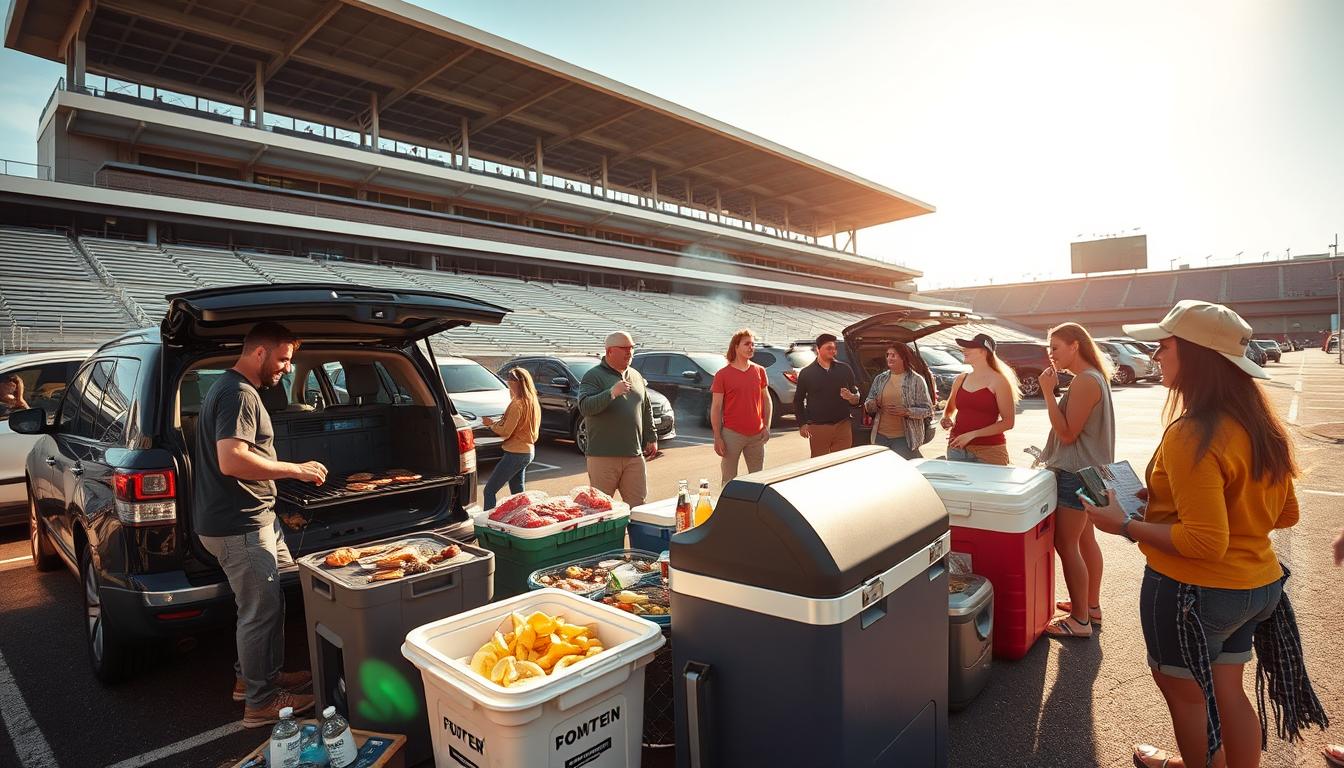
How To Transition From Tailgate To Kickoff Smoothly And On Time requires careful planning and teamwork to avoid the mad rush that leaves gear scattered and friends separated. The key is creating a clear timeline and delegating specific tasks so everyone knows their role when it’s time to pack up and head to the stadium.
Many tailgating groups struggle with this transition because they focus all their energy on the party setup without planning the breakdown. Smart tailgaters build their entire event around a smooth exit strategy that gets everyone to their seats with time to spare.
TL;DR
- Start your breakdown process 45-60 minutes before kickoff to avoid rushing and forgotten items.
- Assign specific cleanup tasks to 3-4 people during your initial tailgate setup so everyone knows their role.
- Pack non-essential items like decorations and extra food during halftime of any pre-game shows.
- Leave your parking spot with at least 20 minutes to spare for security lines and finding your seats.
How To Transition From Tailgate To Kickoff Smoothly And On Time
The secret to a smooth transition starts with your initial setup planning. When you arrive at your tailgating spot, designate specific areas for items that need to be packed first versus last.
Create three zones in your tailgating space: active use items like grills and coolers, social items like games and decorations, and personal items like bags and jackets. This organization makes the breakdown process much more efficient when time gets tight.
Establish Your Timeline Early
Post your breakdown timeline where everyone can see it – tape it to your canopy or write it on a cooler. A typical 3-hour tailgate should include these time markers: 2 hours before kickoff (start monitoring food timing), 1 hour before (begin non-essential cleanup), 45 minutes before (start serious breakdown), and 20 minutes before (leave parking area).
Share this timeline with your group when they arrive, not when it’s time to leave. People need to mentally prepare for the transition, especially if they’re having a great time and don’t want the party to end.
Assign Specific Breakdown Roles
Every person in your tailgating group should have a specific job during breakdown time. This prevents the common problem where everyone tries to help with everything, creating chaos instead of efficiency.
Divide responsibilities based on what people brought and their skills: the grill master handles all cooking equipment, cooler owners manage their own ice and food storage, someone with a truck manages large items like tables and canopies, and detail-oriented people handle smaller items like utensils and trash.
Pack Smart During Pre-Game Shows
Use natural lulls in your tailgate energy to pack non-essential items. During pre-game TV coverage or halftime of earlier games, start putting away decorations, extra clothing, and backup supplies.
Keep one cooler active for last-minute drinks and snacks while packing the others. This gradual approach prevents the overwhelming rush that happens when you try to pack everything at once.
Food and Grill Shutdown Strategy
Plan your cooking timeline to finish all food preparation 45 minutes before kickoff. This gives you time to properly clean your grill, let it cool down safely, and pack it without rushing.
Serve your main meal 2-2.5 hours before kickoff, then transition to easy snacks and drinks. Having a selection of quick crowd-friendly BBQ snacks ready helps maintain energy while you start the breakdown process.
Essential vs. Non-Essential Items
Identify which items you absolutely need vs. nice-to-have extras before you even start tailgating. Essential items include tickets, phones, wallets, keys, and any medication people might need.
Create a “must-have” bag early in your tailgate and keep adding personal essentials to it throughout the event. This prevents the panic of searching for crucial items when you’re already running late.
Use the Buddy System
Pair up group members so each person has a buddy to help them gather their personal items. This prevents anyone from being left behind or forgetting important belongings in the rush to get to the stadium.
Vehicle Loading and Departure
Load vehicles in reverse order of how you’ll need items later. Put chairs and tables in first since you won’t need them until your next tailgate, then coolers and grills, and finally personal bags that people might want during the game.
Designate one person as the “sweep” person who does a final check of your tailgating area after everything is loaded. They should look under tables, behind chairs, and in any corners where items might be forgotten.
Navigate Parking and Security
Factor in extra time for parking lot traffic and stadium security lines, especially for popular games or rivalry matchups. What normally takes 5 minutes to walk might take 15 minutes when thousands of people are moving at once.
Check your stadium’s bag policy before you leave your tailgate spot to avoid surprises at security. Many stadiums have specific rules about bag sizes, outside food, and prohibited items that could slow down your entry.
Group Communication During Transition
Establish a group text thread before your tailgate starts and use it to coordinate timing throughout the day. Send updates about food timing, weather changes, and departure reminders so everyone stays informed.
Choose one person as the “time keeper” who gives regular updates about remaining tailgate time. Having someone specifically focused on timing prevents the group from losing track of time during the fun.
Handle Different Transportation Plans
If your group is taking multiple vehicles or some people are walking while others are driving, coordinate meet-up points and times inside the stadium. Exchange seat section information and plan where to reconnect if you get separated.
For groups using ride-share services, arrange pickups well in advance since demand spikes right before kickoff. Having a backup transportation plan prevents your whole group from being delayed by one person’s ride issues.
Articles You May Like
Frequently Asked Questions
How early should we start packing up our tailgate?
Start your breakdown process 45-60 minutes before kickoff for a stress-free transition. This gives you enough time to pack properly without rushing or forgetting items.
What should we do with leftover food and drinks?
Pack leftover drinks in coolers for after the game, and either eat remaining food quickly or pack it in containers for later. Don’t leave any food or trash behind in your tailgating area.
How can we avoid losing personal items during the transition?
Create a designated “personal items” bag early in your tailgate and have everyone add their belongings throughout the event. Assign a buddy system so everyone has someone to help them gather their things.
What if our group wants to keep tailgating until the last minute?
Set clear expectations about departure time when people arrive, not when it’s time to leave. Explain that missing kickoff affects everyone’s experience, and stick to your timeline even if some people want to keep partying.
Final Thoughts
How To Transition From Tailgate To Kickoff Smoothly And On Time comes down to planning your exit strategy as carefully as you plan your party setup. The most successful tailgating groups treat the transition as part of the fun rather than a stressful ending to their celebration.
Practice your breakdown process at smaller events so your group knows exactly what to do when it’s game time. With clear roles, good timing, and teamwork, you’ll get to enjoy both an amazing tailgate and the opening kickoff without any stress.

Ryan Conlon is a BBQ enthusiast and inspired chef on a journey through the smoky, savory world of outdoor cooking. Hailing from the heart of the Midwest, Ryan’s passion for grilling ignited during his early years, where family gatherings often revolved around the sizzle of the grill and the aroma of seasoned meats.