
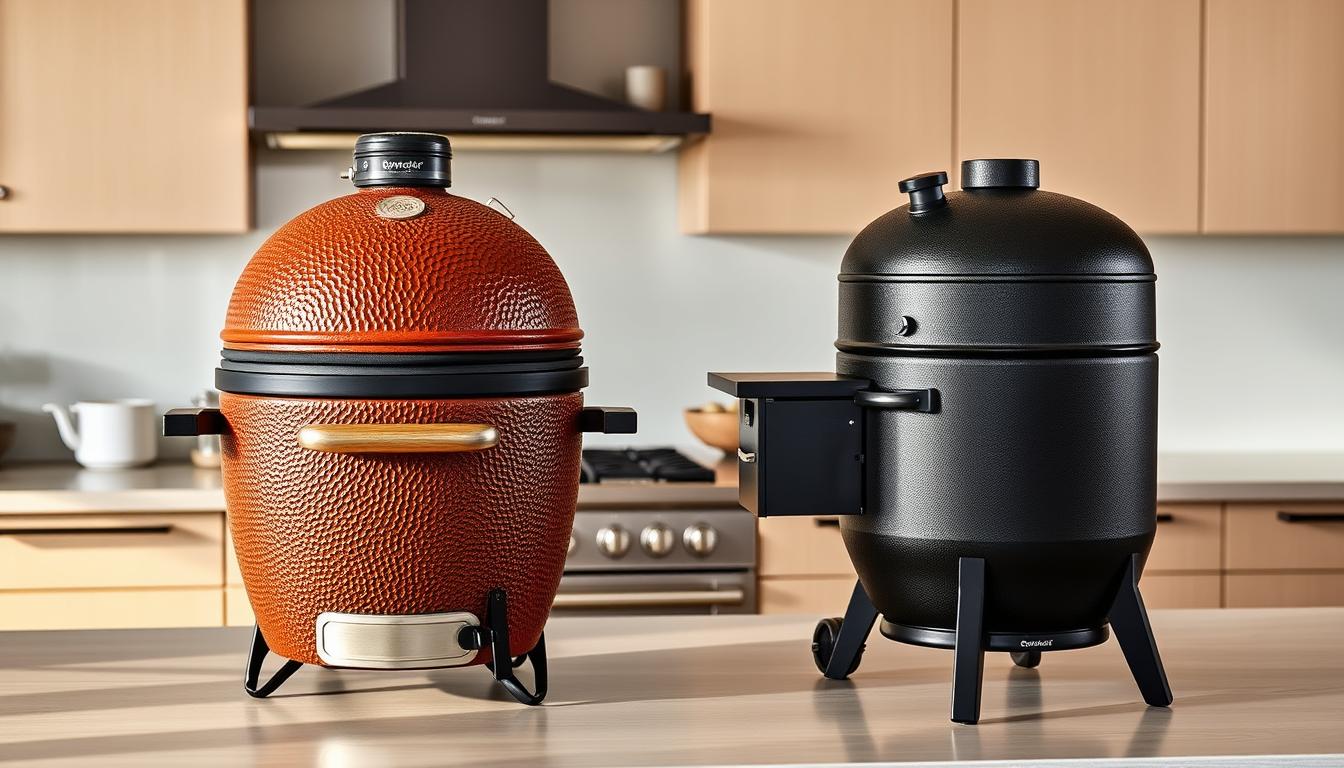
Kamado Vs Offset Smoker Pros Cons present two distinct approaches to backyard smoking that attract different types of BBQ enthusiasts. Each style brings unique advantages and challenges that can make or break your smoking experience.
Understanding these differences helps you choose the right smoker for your cooking style, space, and budget. Both options deliver excellent results when used properly, but they require different techniques and commitment levels.
TL;DR
- Kamado smokers hold heat for 12-24 hours on a single charcoal load, while offset smokers need fuel every 2-3 hours.
- Offset smokers can cook 50+ pounds of meat at once, compared to 15-20 pounds in most kamado grills.
- Kamado grills reach 700°F+ for pizza making, while offset smokers max out around 350-400°F.
- Entry-level kamado grills start at $300, while quality offset smokers begin around $800-1200.
Kamado Vs Offset Smoker Pros Cons
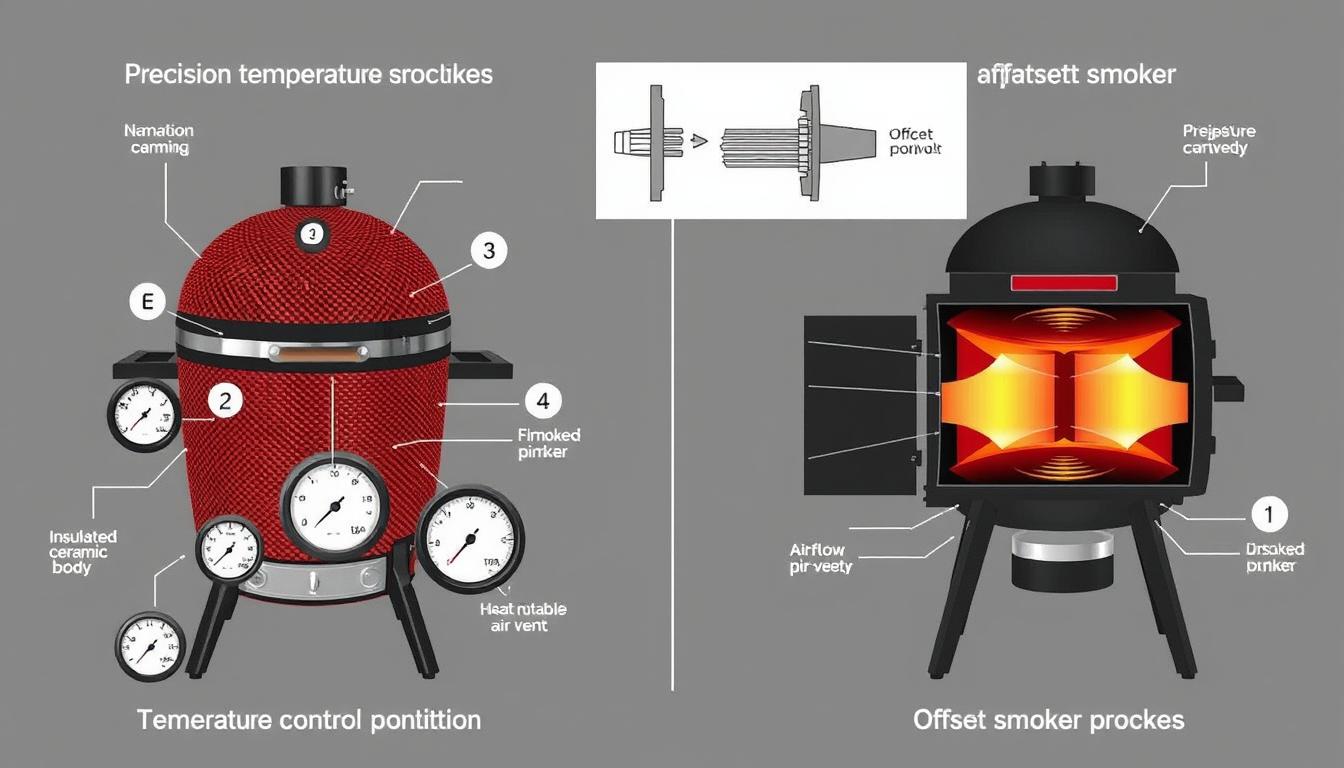
Kamado grills excel at heat retention and fuel efficiency thanks to their thick ceramic walls. The egg-shaped design creates excellent airflow control, allowing precise temperature management through simple vent adjustments.
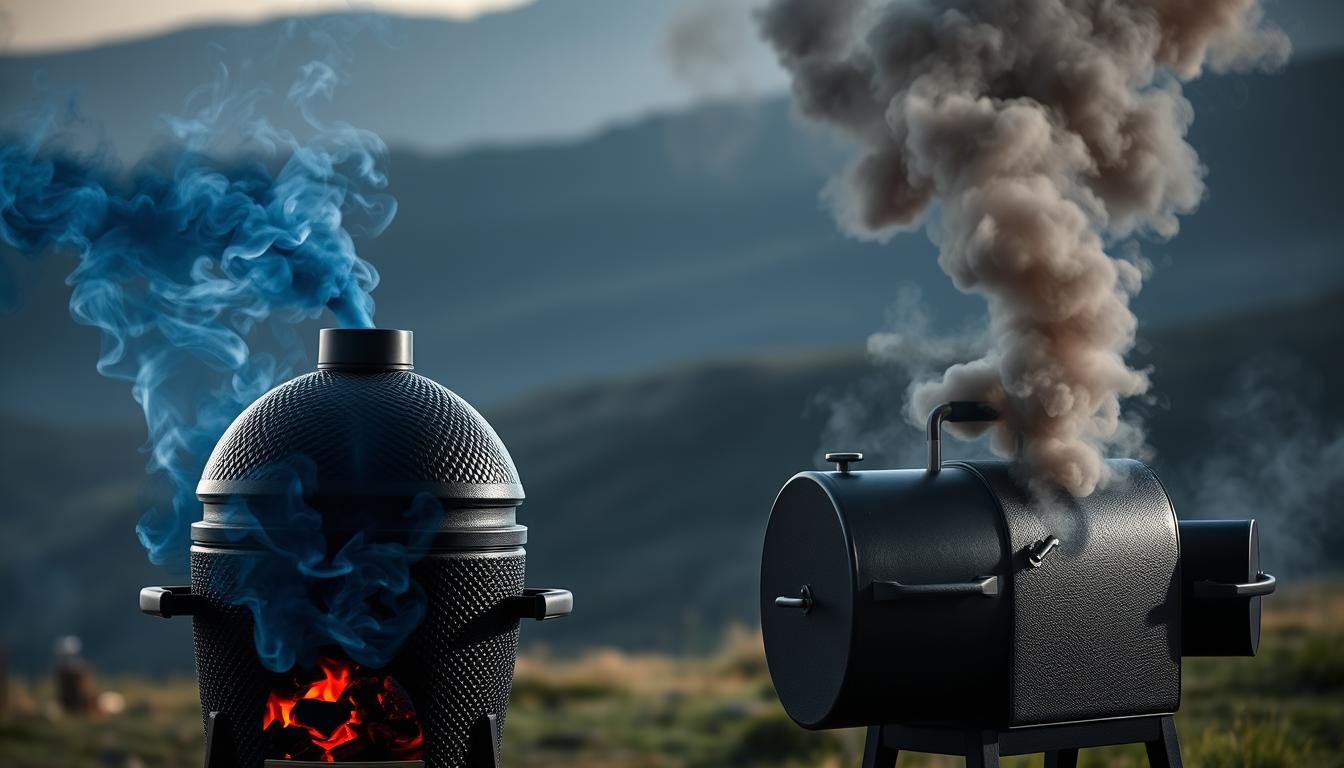
Offset smokers shine when cooking for crowds and delivering traditional BBQ flavor through their horizontal design. The firebox sits separate from the cooking chamber, creating the classic smoke flow that many pitmasters prefer.
Heat Management and Fuel Efficiency
Kamado smokers use significantly less charcoal due to their insulated design. A single load of lump charcoal can maintain 225°F for 18-24 hours, making them perfect for overnight brisket cooks.
Offset smokers require constant attention and regular fuel additions every 2-3 hours. However, this hands-on approach gives you more control over smoke flavor by adjusting wood types and quantities throughout the cook.
Cooking Capacity Differences
Most kamado grills offer 200-400 square inches of cooking space, suitable for 4-8 people. Some larger models provide up to 600 square inches but maintain the same efficient design principles.
Offset smokers typically provide 750-1200+ square inches across multiple racks. This capacity makes them ideal for parties, competitions, or anyone cooking for large groups regularly.
Temperature Range and Versatility
Kamado grills function as complete outdoor cooking systems. They grill steaks at 500°F, smoke brisket at 225°F, and bake pizza at 700°F+ with simple vent adjustments.
Offset smokers focus primarily on low-and-slow smoking between 200-300°F. While some models include grill grates over the firebox, they’re not designed for high-heat searing or baking.
Setup and Learning Curve
Getting consistent results from a kamado takes practice with vent control and charcoal arrangement. Once mastered, they’re nearly foolproof for maintaining steady temperatures.
Offset smokers demand more active management but teach fundamental BBQ skills like fire management and smoke control. Many consider this hands-on approach essential for developing true pitmaster abilities.
Start Small, Think Big
If you’re new to smoking, consider your current cooking frequency and guest count. A kamado handles weekend family meals perfectly, while an offset smoker makes sense if you regularly cook for 10+ people.
Construction and Durability
Quality kamado grills feature thick ceramic walls that last decades with proper care. The main concerns are cracking from thermal shock or impact damage during moves.
Offset smokers vary widely in build quality. Thin steel models under $500 struggle with heat retention, while thick steel or insulated versions perform much better but cost significantly more.
Space and Portability
Kamado grills work well on patios, decks, and smaller spaces. Most models weigh 150-300 pounds but fit in compact areas when not in use.
Offset smokers require substantial space and permanent placement due to their size and weight. Plan for 8-10 feet of clearance around the smoker for safe operation and access to both ends.
Cost Considerations
Entry-level kamado grills from brands like Char-Griller start around $300-400. Premium models like Big Green Egg or Kamado Joe range from $800-2000+ depending on size and accessories.
Quality offset smokers begin around $800-1200 for models with adequate steel thickness. Professional-grade units cost $2000-5000+ but deliver restaurant-quality results and longevity.
Operating Costs
Kamado grills use 50-75% less charcoal than offset smokers for equivalent cooking times. A 20-pound bag of lump charcoal lasts 4-6 long cooks in a kamado versus 1-2 cooks in an offset smoker.
Offset smokers consume more fuel but offer flexibility in using different wood types and chunks for varied flavor profiles. Understanding wood chip varieties helps maximize flavor while managing costs.
Maintenance Requirements
Kamado grills need minimal maintenance beyond ash removal and occasional gasket replacement. The ceramic surface cleans easily and doesn’t rust or require seasoning like steel surfaces.
Offset smokers require regular rust prevention, especially on lower-cost models with thin steel. Seasoning the cooking chamber and maintaining paint or protective coatings extends lifespan significantly.
Weather Resistance
Ceramic kamado grills handle weather extremes well but need protection from rapid temperature changes. A quality cover prevents thermal shock from rain hitting hot surfaces.
Steel offset smokers rust without proper protection, especially in humid climates. Regular maintenance and covered storage prevent deterioration and ensure consistent performance.
Articles You May Like
Frequently Asked Questions
Which smoker is better for beginners?
Kamado grills are more beginner-friendly due to their excellent heat retention and simpler temperature control through vent adjustments.
Can you cook for large groups with a kamado grill?
Most kamado grills handle 4-8 people comfortably, though larger models can serve 10-12 people with careful planning and multi-level cooking.
Do offset smokers produce better BBQ flavor?
Both can produce excellent flavor, but offset smokers allow more control over smoke intensity and wood selection throughout the cooking process.
How much space do I need for each type of smoker?
Kamado grills need 3-4 feet of clearance, while offset smokers require 8-10 feet of space for safe operation and access to both fireboxes and cooking chambers.
Which smoker holds its value better?
Quality kamado grills typically retain value better due to their durability and brand recognition, especially premium models from established manufacturers.
Final Thoughts
Kamado Vs Offset Smoker Pros Cons ultimately depend on your cooking style, space constraints, and commitment level. Kamado grills offer convenience and versatility for regular family cooking, while offset smokers excel at traditional BBQ techniques and large gatherings.
Consider starting with beginner-friendly smoker options that match your current needs, knowing you can always upgrade as your skills and requirements evolve.

Ryan Conlon is a BBQ enthusiast and inspired chef on a journey through the smoky, savory world of outdoor cooking. Hailing from the heart of the Midwest, Ryan’s passion for grilling ignited during his early years, where family gatherings often revolved around the sizzle of the grill and the aroma of seasoned meats.