
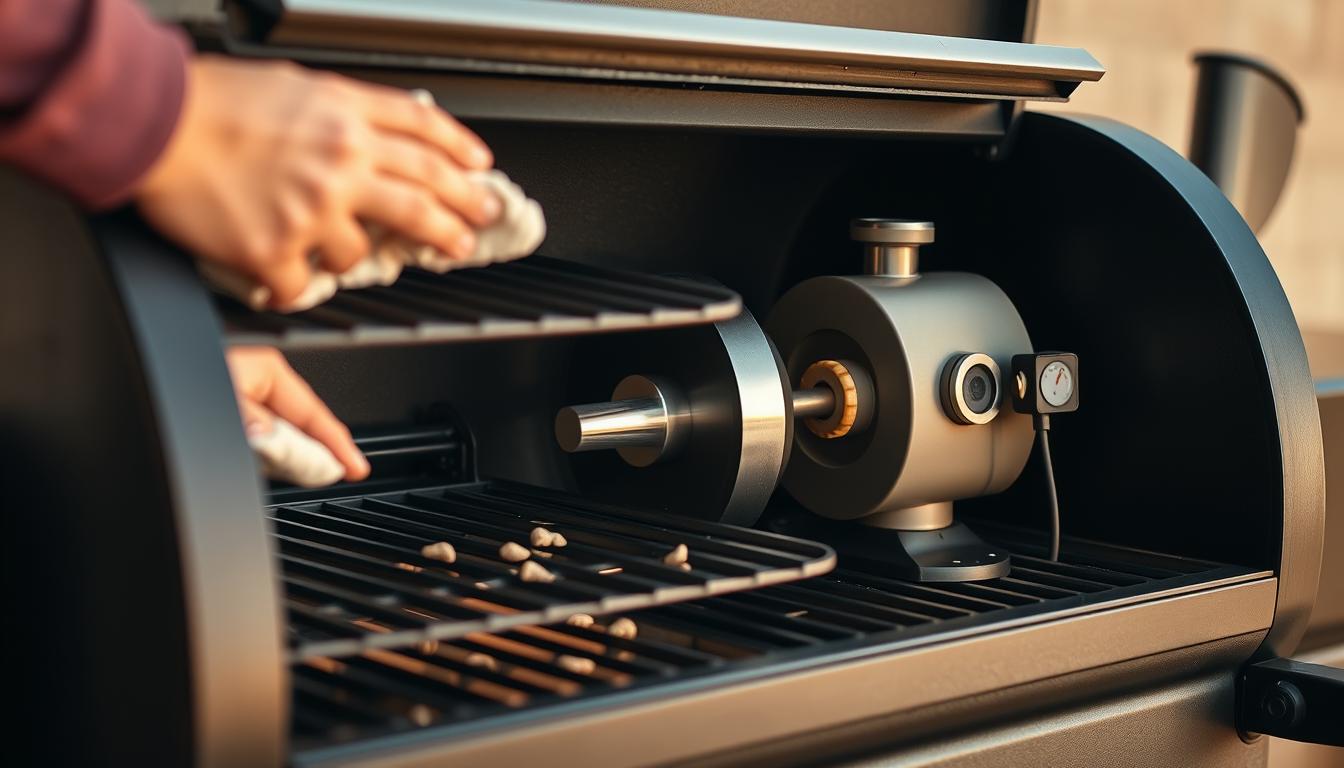
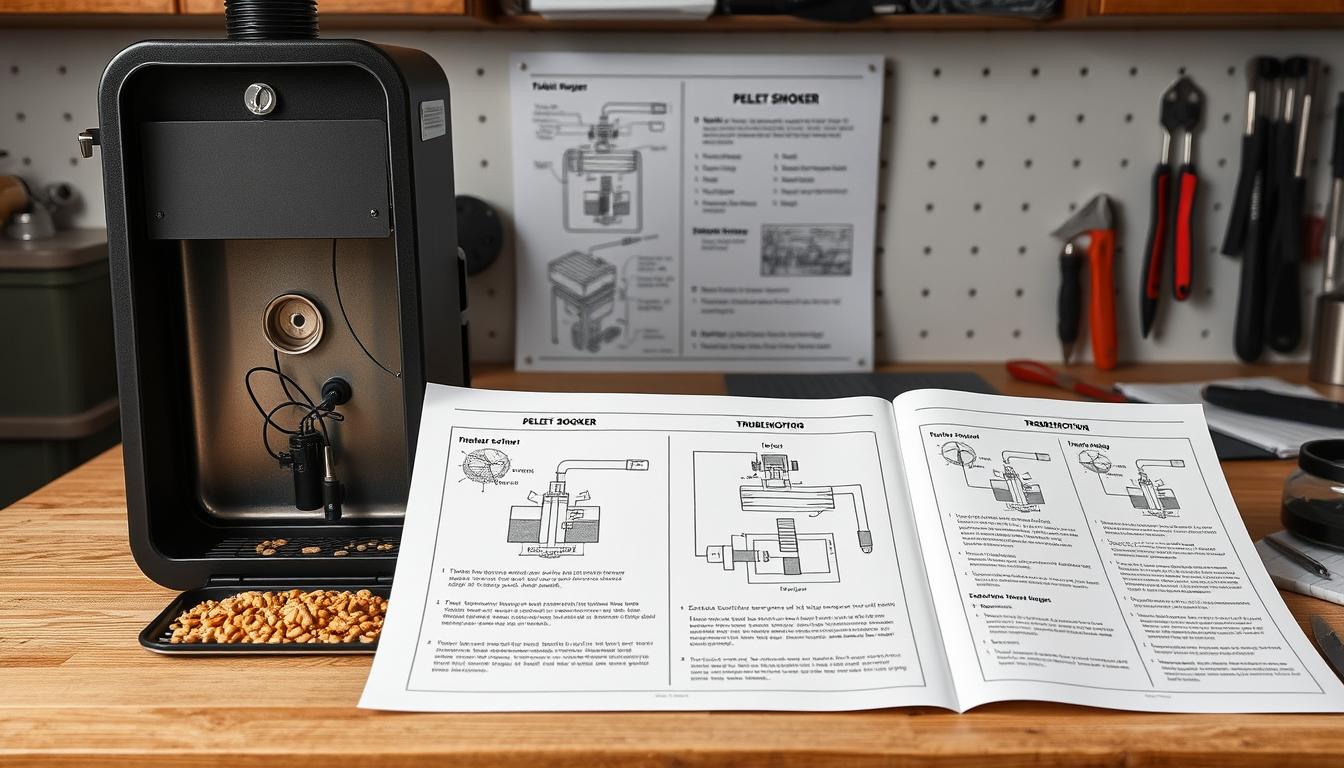
Pellet Smoker Troubleshooting can save you from ruined cookouts and expensive repair bills when your smoker starts acting up. Most pellet smoker problems have simple solutions that you can handle yourself with basic tools and a little know-how.
Understanding how to diagnose and fix common issues keeps your smoker running smoothly for years. Whether it’s temperature swings, auger jams, or ignition problems, most fixes take just a few minutes once you know what to look for.
TL;DR
- Clean your fire pot every 5-10 cooks to prevent ignition failures and temperature issues.
- Replace pellets every 6 months or if they feel soft – moisture ruins pellet quality and causes feed problems.
- Check your RTD probe annually and replace if readings are off by more than 15 degrees from a separate thermometer.
- Vacuum out sawdust from the auger tube monthly to prevent jams that can burn out the motor.
Pellet Smoker Troubleshooting Basics
Start every troubleshooting session by checking the basics before diving into complex repairs. Most pellet smoker problems stem from dirty components, poor pellet quality, or simple maintenance oversights that take minutes to fix.
Your pellet smoker has four main systems that work together – the control board, auger feed system, ignition system, and temperature monitoring. When one system fails, it often affects the others, so systematic checking saves time and prevents missed problems.
Essential Tools for Repairs
- Shop vacuum – removes sawdust and debris from internal components.
- Screwdriver set – access panels and components for cleaning and replacement.
- Digital thermometer – verify temperature probe accuracy independently.
- Needle-nose pliers – remove stuck pellets and clear auger jams safely.
Temperature Control Problems
Temperature swings and inaccurate readings frustrate more pellet smoker owners than any other issue. Your smoker relies on precise pellet feeding and accurate temperature sensing to maintain steady heat, so problems in either area cause wild temperature fluctuations.
Most temperature problems trace back to dirty fire pots, bad pellets, or faulty temperature probes. Check these three areas first before assuming you need expensive controller replacements.
Fire Pot Cleaning
A dirty fire pot blocks proper airflow and creates uneven burning that makes temperature control impossible. Clean buildup appears as thick ash, unburned pellets, or hard clinker formations that block air holes.
Remove the cooking grates and drip tray to access your fire pot directly. Scrape out all ash and debris, then use compressed air or a shop vacuum to clear the air holes completely.
RTD Probe Issues
The RTD (resistance temperature detector) probe tells your controller the actual cooking chamber temperature. When this probe fails or reads incorrectly, your smoker can’t maintain steady temperatures no matter how well everything else works.
Test your probe by comparing its reading to a separate digital thermometer placed near the probe location. Replace the RTD if readings differ by more than 15 degrees consistently.
Quick Temperature Fix
Before replacing expensive parts, try the “factory reset” procedure in your manual. Many temperature control issues resolve with a simple controller reset that clears software glitches.
Auger and Pellet Feed Problems
Auger jams stop pellet flow and can burn out your feed motor if not cleared quickly. Most jams happen when sawdust accumulates in the auger tube or when poor-quality pellets break apart and create blockages.
Listen for unusual sounds from your auger motor – grinding, clicking, or complete silence when pellets should be feeding. These sounds indicate mechanical problems that need immediate attention to prevent motor damage.
Clearing Auger Jams
- Turn off and unplug the smoker. Never work on the auger system with power connected – the motor can start unexpectedly.
- Remove the hopper. Most hoppers lift out or have quick-release mechanisms for easy access to the auger tube.
- Clear visible blockages. Use needle-nose pliers to remove stuck pellets or debris from the top of the auger tube.
- Check pellet quality. Soft, crumbling, or dusty pellets cause more jams – replace with fresh, dry pellets.
Preventing Future Jams
Empty your hopper after every few cooks to prevent pellets from absorbing moisture that makes them swell and stick. Store pellets in airtight containers and check them regularly for signs of moisture damage like soft texture or excessive sawdust.
Vacuum the auger tube monthly to remove sawdust buildup that contributes to jams. Most manufacturers recommend this simple maintenance step that takes less than five minutes.
Ignition System Failures
When your smoker won’t light or takes forever to reach temperature, the ignition system usually needs attention. The hot rod igniter heats up to light the pellets, but it can fail from normal wear or become blocked by ash and debris.
Check your igniter by looking for the orange glow during startup – you should see it heat up within the first few minutes. No glow means a failed igniter that needs replacement.
Hot Rod Igniter Replacement
Most pellet smokers use standard 120V or 240V hot rod igniters that cost $20-40 to replace. The igniter threads into the fire pot area and connects with simple wire nuts or plug connectors.
Replace igniters annually as preventive maintenance – they’re wear items that gradually lose effectiveness. A weak igniter causes longer startup times and inconsistent lighting that affects your cooking schedule.
Electrical and Control Issues
Control board problems show up as erratic behavior, error codes, or complete system failures. Before replacing expensive controllers, check all electrical connections for corrosion, loose wires, or damage from heat and moisture.
Many “failed” controllers actually have simple connection problems that cost nothing to fix. Clean all electrical connections with contact cleaner and ensure tight, secure connections throughout the system.
Common Error Codes
- ErH (Error High) – temperature probe reading too high or disconnected.
- ErL (Error Low) – temperature probe reading too low or shorted.
- Er1/Er2 – ignition failure or temperature not rising during startup.
- Er3 – temperature dropped too low during cooking cycle.
Smoke Production Issues
Thin smoke or no visible smoke output doesn’t always indicate problems – pellet smokers produce less visible smoke than traditional wood smokers. However, complete lack of smoke flavor or excessive white smoke points to real issues that need fixing.
Good pellet smoke appears as thin, blue-tinted wisps that smell clean and woody. Thick white smoke indicates incomplete combustion from poor airflow, wet pellets, or dirty fire pots that need immediate attention.
Improving Smoke Output
Lower cooking temperatures (225-250°F) produce more visible smoke than higher temperatures where pellets burn more completely. Adding wood chips to your pellet smoker can boost smoke flavor for specific recipes that need extra smokiness.
Ensure proper airflow by cleaning all vents and checking that your chimney or exhaust system isn’t blocked. Poor airflow creates smoldering rather than clean combustion that produces good smoke flavor.
Articles You May Like
Frequently Asked Questions
How often should I clean my pellet smoker?
Clean the fire pot every 5-10 cooks and do a deep clean of the entire smoker monthly. Regular cleaning prevents most common problems and extends your smoker’s life significantly.
Why does my pellet smoker keep shutting down?
Most shutdowns happen when the fire goes out due to poor pellet quality, blocked air vents, or failed ignition systems. Check your pellets first, then clean the fire pot and air passages.
Can I use any brand of pellets in my smoker?
Stick to high-quality pellets designed for cooking rather than heating pellets. Poor pellets cause more jams, produce less heat, and can damage your smoker with excessive ash and additives.
How long do pellet smoker parts typically last?
Hot rod igniters last 1-2 years, RTD probes last 2-3 years, and auger motors last 5-10 years with proper maintenance. Regular maintenance significantly extends component life.
Final Thoughts
Pellet Smoker Troubleshooting becomes much easier when you understand your smoker’s basic systems and follow regular maintenance schedules. Most problems have simple solutions that take just minutes to implement once you know what to look for.
Keep spare parts like igniters and fuses on hand for quick repairs that keep your cooking schedule on track. With basic troubleshooting skills and regular maintenance, your pellet smoker will provide years of reliable service for all your barbecue smoking adventures.

Ryan Conlon is a BBQ enthusiast and inspired chef on a journey through the smoky, savory world of outdoor cooking. Hailing from the heart of the Midwest, Ryan’s passion for grilling ignited during his early years, where family gatherings often revolved around the sizzle of the grill and the aroma of seasoned meats.