
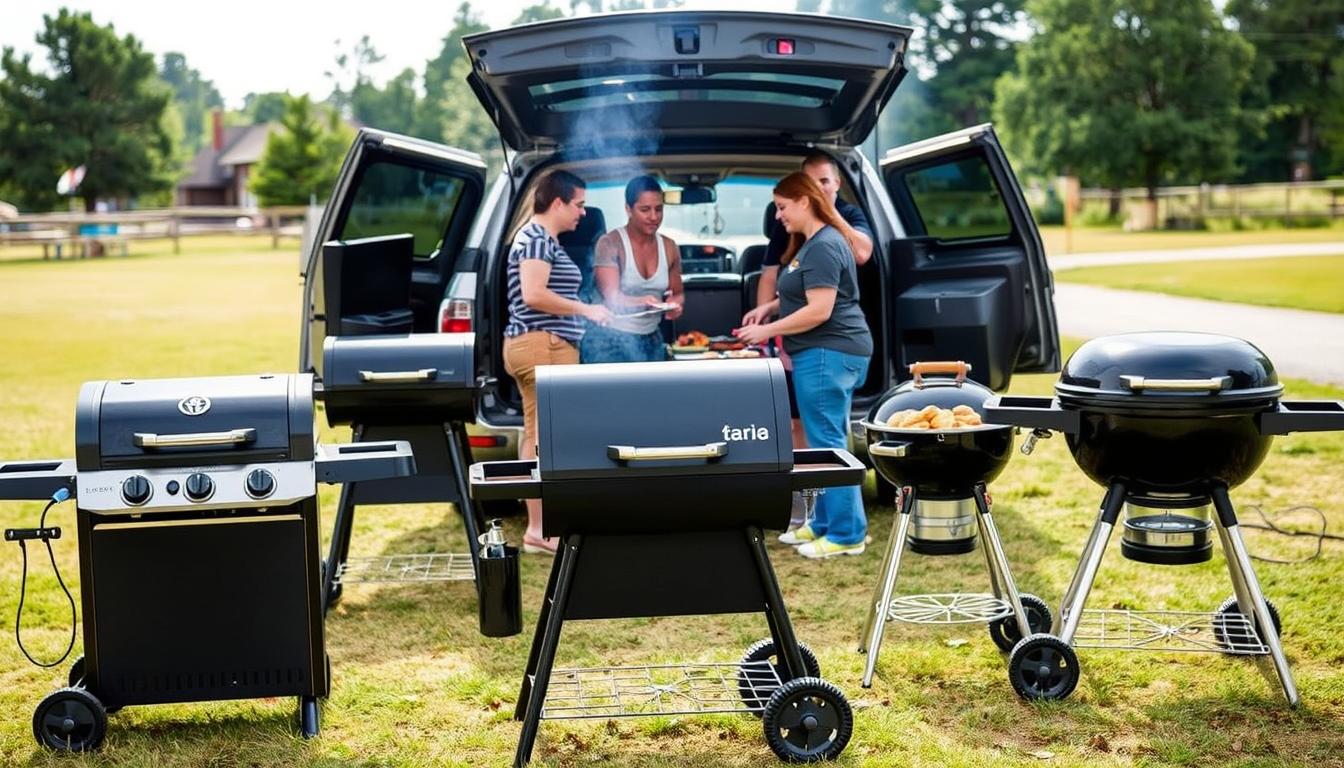
Portable Grills For Tailgating And Camping offer the perfect solution for outdoor cooking enthusiasts who want great-tasting food away from home. Whether you’re setting up in a stadium parking lot or deep in the wilderness, the right portable grill transforms any outdoor adventure into a memorable feast.
The key is finding a grill that balances cooking performance with true portability. Modern portable grills pack serious cooking power into compact, lightweight designs that won’t weigh down your gear or complicate your setup.
TL;DR
- Most portable grills weigh between 10-30 pounds and cook for 2-6 people comfortably.
- Gas portable grills heat up in 3-5 minutes while charcoal versions take 15-20 minutes to reach cooking temperature.
- Top-rated portable grills cost $150-$400 and include features like fold-down legs and locking lids for transport.
- Battery-powered electric grills now offer 45-60 minutes of cooking time per charge for campgrounds with fire restrictions.
Portable Grills For Tailgating And Camping Features That Matter
The best portable grills share several key characteristics that make them ideal for outdoor adventures. Weight matters most – anything over 35 pounds becomes a burden when you’re hauling gear across parking lots or hiking to campsites.
Look for grills with secure latching mechanisms that keep the lid closed during transport. Nothing ruins a tailgate faster than opening your car to find charcoal scattered everywhere because the grill popped open during the drive.
- Cooking surface size – 200-400 square inches handles 4-8 burgers simultaneously.
- Heat output – 12,000+ BTUs for gas models ensure proper searing power.
- Fuel efficiency – Quality portable grills run 2-3 hours on a 1-pound propane cylinder.
- Setup time – The best designs deploy in under 2 minutes with no tools required.
- Temperature control – Multiple heat zones let you cook different foods simultaneously.
Gas Portable Grills
Gas portable grills dominate the tailgating scene because they fire up instantly and offer precise temperature control. Most models run on standard 1-pound propane cylinders available at any gas station or sporting goods store.
The convenience factor is huge – press the ignition button and you’re cooking in minutes. No charcoal to light, no waiting for coals to reach the right temperature, and easy cleanup when the party’s over.
Weber Q Series
Weber’s Q series sets the standard for portable gas grilling with cast aluminum construction and porcelain-enameled cooking grates. The Q1200 weighs just 30 pounds but delivers restaurant-quality results with 8,500 BTUs of cooking power.
The split grate design creates different heat zones, letting you sear steaks on one side while warming buns on the other. The built-in thermometer takes the guesswork out of temperature management.
Coleman RoadTrip Series
Coleman’s RoadTrip grills feature collapsible legs and wheels for easy transport from your vehicle to the cooking spot. The three-burner design provides 20,000 BTUs of total cooking power across 285 square inches of cooking space.
Interchangeable cooktop surfaces let you switch between grilling grates, griddles, and stove grates depending on what you’re cooking. This versatility makes them popular for extended camping trips where you want cooking options beyond basic grilling.
Charcoal Portable Grills
Charcoal portable grills deliver that authentic smoky flavor that gas grills can’t match. They’re typically lighter and less expensive than gas models, making them budget-friendly options for occasional outdoor cooking.
The trade-off is convenience – charcoal takes longer to light and requires more hands-on management throughout the cooking process. But for barbecue purists, the flavor payoff makes the extra effort worthwhile.
Weber Jumbo Joe
The Weber Jumbo Joe offers 240 square inches of cooking space in a package that weighs just 21 pounds. The 18-inch diameter provides enough room for 8 burgers or a whole chicken with space to spare.
The lid doubles as a windscreen when removed and flipped over, which helps maintain consistent temperatures on breezy days. Dampers on the bottom and lid give you precise airflow control for temperature management.
Lodge Cast Iron Sportsman’s Grill
Lodge’s cast iron construction retains and distributes heat more evenly than thin steel competitors. The pre-seasoned cooking surface develops better non-stick properties over time and can handle high-heat searing that would damage other portable grills.
At 15 pounds, it’s one of the lighter charcoal options available. The simple design has fewer parts to break or lose, making it ideal for rough camping conditions where durability matters more than convenience features.
Pre-Light Your Charcoal at Home
Start your charcoal in a chimney starter before leaving home, then transport the hot coals in a cast iron Dutch oven. You’ll be cooking within minutes of arrival instead of waiting 20 minutes for coals to light.
Electric Portable Grills
Electric portable grills work perfectly for campgrounds with electrical hookups or anywhere fire restrictions prohibit gas and charcoal grilling. Modern battery-powered models eliminate the need for power outlets entirely.
They heat up quickly, maintain consistent temperatures, and produce no smoke or open flames. This makes them ideal for apartment balconies, beach cookouts, and areas with strict fire regulations.
George Foreman Indoor/Outdoor Grill
George Foreman’s 15-serving indoor/outdoor grill plugs into any standard outlet and reaches cooking temperature in 5 minutes. The sloped design drains fat away from food, creating healthier results without sacrificing flavor.
The removable stand lets you use it as a countertop grill indoors or elevate it for outdoor cooking. At 13 pounds, it’s among the lightest full-size portable grills available.
CUKYI Battery-Powered Grill
Battery-powered grills represent the newest category in portable cooking. The CUKYI model runs for 60 minutes per charge and reaches temperatures up to 450°F – hot enough for proper searing.
The rechargeable battery eliminates dependence on propane tanks or electrical outlets. You can grill anywhere you can carry the 25-pound unit, making it perfect for beach trips and remote camping spots.
Size and Capacity Considerations
Matching grill size to your group size prevents frustration and ensures everyone eats at the same time. A grill that’s too small forces you to cook in multiple batches, leaving early diners finished while others wait for their food.
Plan for about 60 square inches of cooking space per person for a standard tailgate meal. Families of four need at least 240 square inches, while larger groups should look for 400+ square inches to handle peak cooking demands.
- Small (150-250 sq in) – Perfect for 2-4 people, fits easily in car trunks.
- Medium (250-350 sq in) – Handles 4-6 people comfortably, still manageable for one person to carry.
- Large (350+ sq in) – Feeds 6-10 people but requires two people for comfortable transport.
Transport and Storage Features
The best portable grills include thoughtful design elements that make transport and storage effortless. Locking lids prevent messy spills during transport, while fold-down legs reduce the overall footprint for packing.
Look for grills with built-in handles positioned for balanced carrying. Some models include carrying cases or bags that protect the grill and contain any residual ash or grease during transport.
Essential Transport Features
- Locking lid mechanism – Keeps grill contents secure during transport.
- Cool-touch handles – Allow safe carrying even when grill is warm.
- Removable legs – Reduce packed size for easier storage and transport.
- Grease management – Disposable drip pans prevent messy cleanup and transport issues.
- Wind screens – Removable panels that store flat when not in use.
Fuel Options and Efficiency
Fuel availability and cost impact your long-term enjoyment of any portable grill. Propane cylinders are widely available but add weight to your gear load. Charcoal is lighter per cooking session but requires fire-starting supplies and produces more cleanup.
Consider your typical cooking scenarios when choosing fuel types. Weekend tailgaters might prefer the convenience of gas, while week-long camping trips could benefit from charcoal’s lower ongoing costs.
Fuel Efficiency Comparison
- Propane – One 1-pound cylinder provides 1.5-2 hours of cooking time at medium heat.
- Charcoal – 2-3 pounds of briquettes cook for 45-90 minutes depending on grill size.
- Electric – Battery models run 45-60 minutes per charge, plug-in versions run indefinitely.
Cleaning and Maintenance
Easy cleanup extends your portable grill’s lifespan and makes it more likely you’ll actually use it regularly. Removable cooking grates that fit in your dishwasher eliminate the worst part of post-cookout cleanup.
Porcelain-coated surfaces resist rust and wipe clean easier than bare steel. Disposable aluminum drip pans catch grease and can be tossed after each use, eliminating scrubbing and potential transport mess.
Articles You May Like
Frequently Asked Questions
How long does a 1-pound propane tank last on a portable grill?
A 1-pound propane cylinder typically provides 1.5 to 2 hours of cooking time on medium heat settings. High heat cooking reduces this to about 1 hour per cylinder.
Can you use a portable grill in a campground with fire restrictions?
Many campgrounds allow gas and electric portable grills even during fire restrictions, but charcoal grills are typically prohibited. Always check current fire restrictions with campground staff before bringing any cooking equipment.
What’s the best size portable grill for a family of four?
A family of four needs about 240-280 square inches of cooking space for comfortable meal preparation. This allows cooking 6-8 burgers or equivalent portions simultaneously without overcrowding.
How do you transport a portable grill safely in your car?
Always ensure the grill is completely cool before transport and use the locking lid mechanism if available. Place the grill on a flat surface in your vehicle and secure it to prevent sliding during turns and stops.
Are electric portable grills as good as gas or charcoal?
Electric portable grills offer convenience and consistent temperatures but lack the high heat capability and flavor development of gas and charcoal grills. They work well for basic cooking but struggle with proper searing.
Final Thoughts
Portable Grills For Tailgating And Camping open up endless possibilities for outdoor cooking adventures. The right choice depends on your priorities – gas for convenience, charcoal for flavor, or electric for versatility in restricted areas.
Start with a quality mid-size gas model if you’re new to portable grilling, then expand your collection as you discover your preferences. The investment in good portable cooking gear pays dividends in memorable meals and outdoor experiences for years to come.

Ryan Conlon is a BBQ enthusiast and inspired chef on a journey through the smoky, savory world of outdoor cooking. Hailing from the heart of the Midwest, Ryan’s passion for grilling ignited during his early years, where family gatherings often revolved around the sizzle of the grill and the aroma of seasoned meats.