
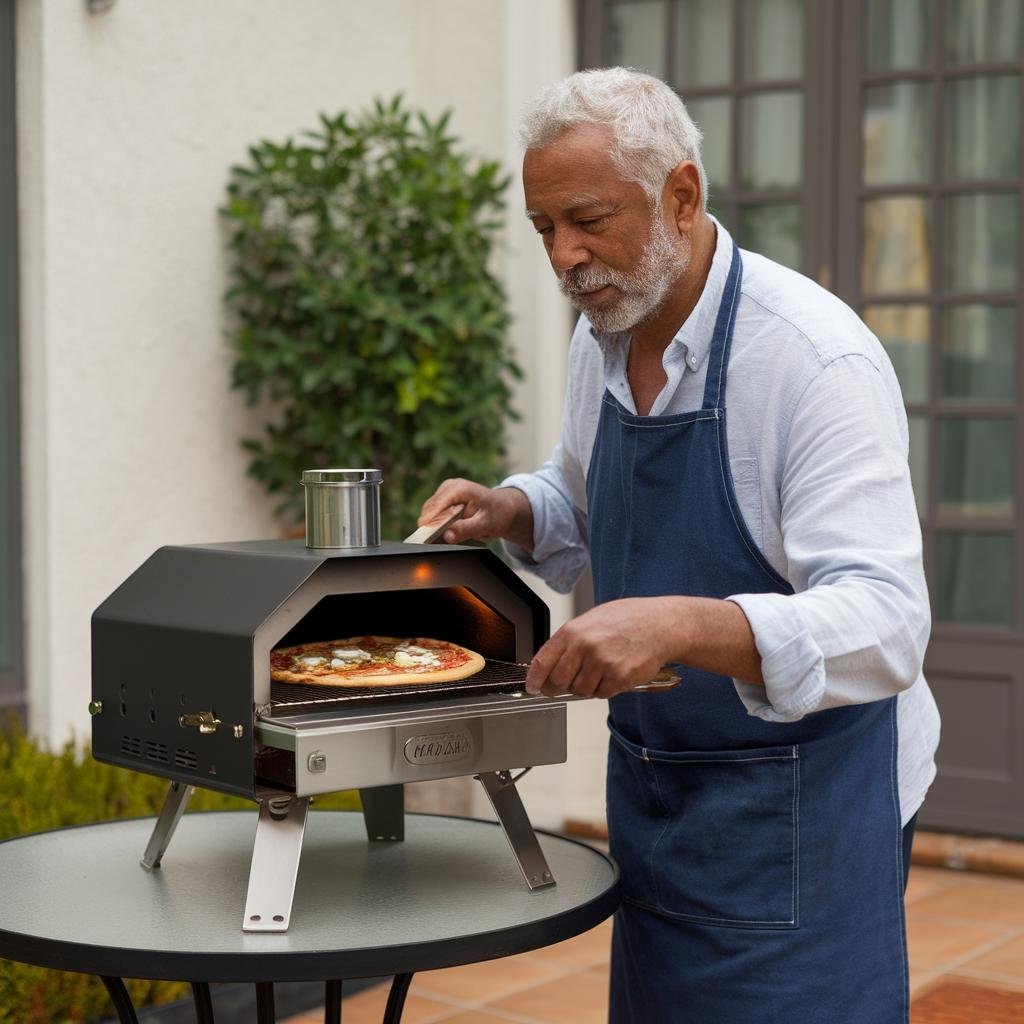
Portable Pizza Ovens offer the perfect solution for pizza lovers who want authentic wood-fired flavor without the commitment of a permanent installation. These compact units deliver surprisingly professional results while giving you the flexibility to cook anywhere from your backyard to camping trips.
Whether you’re hosting a dinner party or craving restaurant-quality pizza at home, portable models have evolved to rival their larger counterparts in both performance and convenience. Modern designs heat up quickly, maintain consistent temperatures, and produce that coveted crispy crust with minimal setup time.
TL;DR
- Most portable pizza ovens reach cooking temperature (800°F+) in 15-20 minutes compared to 45+ minutes for built-in models.
- Quality portable units weigh between 25-75 pounds, making them manageable for transport while retaining heat effectively.
- Wood pellet models use 1-2 pounds of fuel per hour, while gas versions connect to standard 20-pound propane tanks.
- Cooking surface areas range from 10-16 inches, accommodating personal pizzas up to medium family-size pies.
Portable Pizza Ovens: Key Features and Benefits
The main advantage of portable pizza ovens lies in their quick heat-up time and versatility. Most quality models reach optimal cooking temperatures within 20 minutes, letting you satisfy pizza cravings without extensive planning.
These ovens excel at creating the high-heat environment necessary for authentic Neapolitan-style pizza. The intense heat – often exceeding 900°F – creates the signature leopard-spotted crust and perfectly melted toppings that define quality pizza.
Weight and Portability Considerations
True portability varies significantly across models. Lightweight options around 25-30 pounds work well for car camping or moving between outdoor spaces, while heavier units up to 75 pounds offer better heat retention but require two people for transport.
Consider your intended use before choosing. Frequent movers benefit from lighter models with carrying handles, while those planning occasional backyard-to-patio moves can prioritize performance over ultimate portability.
Fuel Types: Wood, Gas, and Pellet Options
Wood-fired portable ovens provide the most authentic flavor but require more skill and attention. You’ll need to maintain the fire, manage temperature swings, and have a steady supply of dry hardwood or quality pellets.
Gas models offer convenience and precise temperature control through adjustable burners. They heat up faster than wood options and eliminate the need to source and store fuel, making them ideal for beginners or quick cooking sessions.
Pellet-Fed Systems
Wood pellet ovens bridge the gap between convenience and flavor. These systems automatically feed pellets into the fire chamber, maintaining consistent heat while delivering that smoky wood-fired taste without constant tending.
- Fuel efficiency – Pellet models typically consume 1-2 pounds per hour of cooking
- Temperature stability – Automated feeding maintains steady heat better than manual wood feeding
- Flavor quality – Different pellet woods (oak, cherry, apple) add distinct taste profiles
- Storage convenience – Pellets store easier than logs and produce less ash
Quick Setup Tip
Keep a digital infrared thermometer handy to check your cooking surface temperature. Most portable ovens cook best when the stone reaches 750-850°F for optimal crust development.
Size and Cooking Capacity
Cooking surface diameter directly impacts what you can make. Models with 10-12 inch cooking areas work well for personal pizzas and small households, while 14-16 inch surfaces accommodate larger pizzas for families or groups.
Remember that effective cooking space is often smaller than the total interior dimensions. Account for the space needed to maneuver your pizza peel and rotate pies during cooking.
Beyond Pizza: Versatility Features
Many portable ovens excel at more than just pizza. The high-heat environment works excellently for flatbreads, roasted vegetables, and even bread baking when temperatures cool down after pizza cooking.
Some models include accessories like cast iron pans or baking stones specifically designed for different cooking styles. Multi-function pizza ovens maximize your investment by serving multiple cooking needs.
Setup and Maintenance Requirements
Most portable pizza ovens require minimal assembly – typically just attaching legs, handles, or the chimney. Quality models come mostly pre-assembled with clear instructions for the few components that need attachment.
Regular maintenance involves cleaning ash buildup, checking for cracks in fire bricks, and protecting metal components from weather when stored outdoors. Proper care extends the life of your oven significantly.
Storage and Weather Protection
While built for outdoor use, portable ovens benefit from covered storage or weather-resistant covers. Moisture can damage internal components and cause rust on metal parts over time.
- Cool completely. Always let the oven cool to room temperature before covering or moving.
- Clean thoroughly. Remove ash and food debris to prevent odors and pest attraction.
- Check for damage. Inspect fire bricks and metal components for cracks or rust spots.
- Cover or store indoors. Protect from rain, snow, and extreme temperature swings.
Popular Models and Price Ranges
Entry-level portable pizza ovens start around $300-400 for basic gas models or simple wood-fired designs. These work well for occasional use and testing your interest in pizza making.
Mid-range options ($500-800) typically offer better insulation, larger cooking surfaces, and more durable construction. Premium models above $1000 feature advanced temperature control, superior build quality, and comprehensive accessory packages.
Value Considerations
Focus on build quality and warranty coverage rather than the lowest price. Best value pizza ovens balance performance, durability, and price to deliver long-term satisfaction.
Consider the total cost including necessary accessories like pizza peels, covers, and extra fuel. Some manufacturers bundle these items while others sell them separately.
Cooking Tips for Portable Ovens
Portable ovens require slightly different techniques than full-size models due to their compact size and faster heat cycles. Preheat thoroughly and have all your ingredients prepped before starting – cooking happens quickly at high temperatures.
Rotate pizzas frequently to ensure even cooking, especially in smaller ovens where hot spots develop more easily. Mastering pizza oven cooking techniques helps you get consistently better results regardless of oven size.
Frequently Asked Questions
How long does it take to cook pizza in a portable oven?
Most pizzas cook in 2-4 minutes in a properly preheated portable oven. The high heat creates crispy crusts quickly while melting toppings perfectly.
Can portable pizza ovens be used indoors?
No, portable pizza ovens are designed for outdoor use only due to carbon monoxide production and high heat output. Always use in well-ventilated outdoor areas.
What’s the difference between portable and countertop pizza ovens?
Portable ovens are designed for outdoor use and reach much higher temperatures (800°F+), while countertop models are indoor appliances with lower maximum temperatures around 500-600°F.
Do portable pizza ovens require special tools?
You’ll need a pizza peel for safely moving pizzas in and out of the oven. Most manufacturers sell peels separately or include them in starter bundles.
How much space do I need for a portable pizza oven?
Allow at least 3 feet of clearance on all sides for safety and operation. You’ll also need space for fuel storage and prep work nearby.
Final Thoughts
Portable Pizza Ovens deliver authentic wood-fired results with the flexibility to cook anywhere you can safely operate them. They bridge the gap between convenience and quality, making restaurant-style pizza accessible without permanent installation.
Start by identifying your primary use cases – frequent camping, occasional backyard entertaining, or regular family pizza nights – then choose a model that matches your portability needs and cooking ambitions.

Ryan Conlon is a BBQ enthusiast and inspired chef on a journey through the smoky, savory world of outdoor cooking. Hailing from the heart of the Midwest, Ryan’s passion for grilling ignited during his early years, where family gatherings often revolved around the sizzle of the grill and the aroma of seasoned meats.