
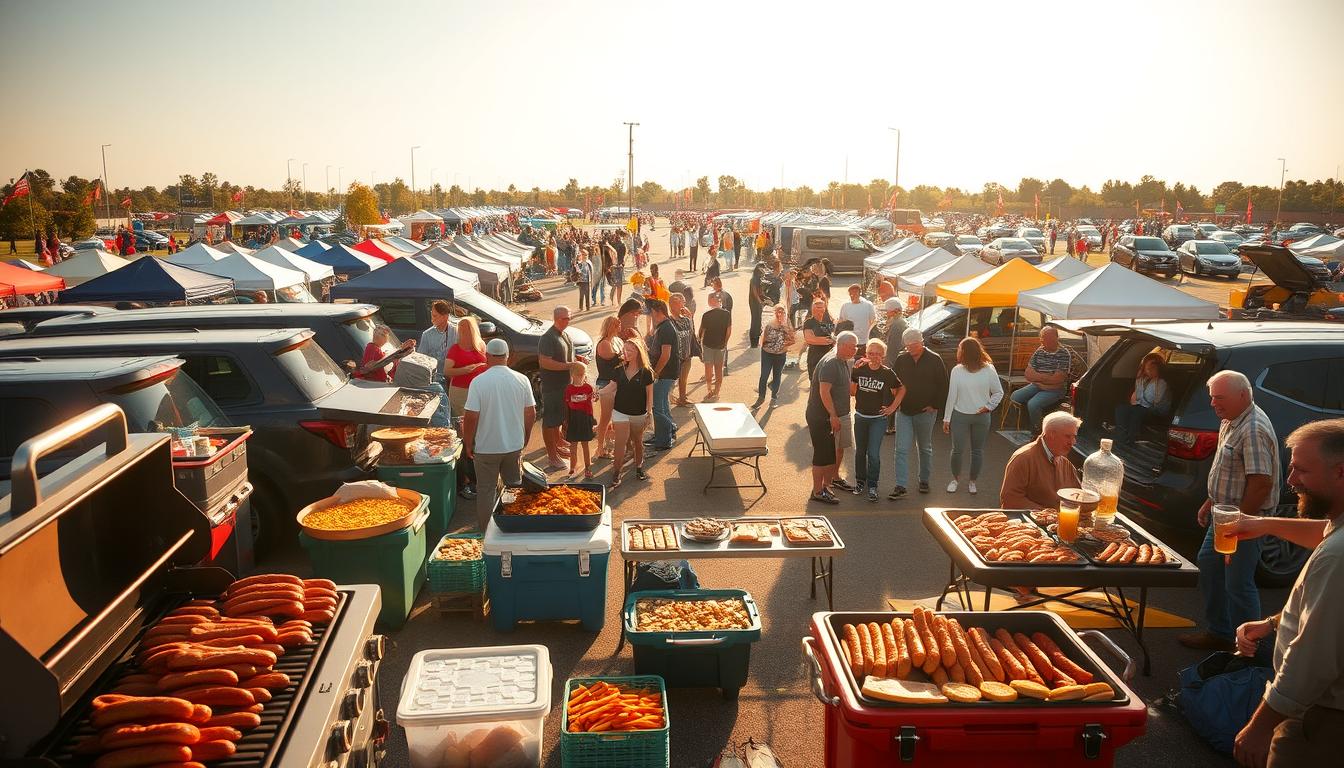
Tailgating For Large Groups requires careful planning to keep everyone fed, comfortable, and entertained without the chaos that comes with coordinating dozens of people. The key is scaling your approach systematically rather than just buying more of everything.
Large group tailgates can be incredibly rewarding when done right, but they demand different strategies than intimate gatherings. You’ll need to think like an event planner while keeping the fun, relaxed spirit that makes tailgating special.
TL;DR
- Plan 1.5 pounds of food per person for groups of 20+ to account for varying appetites and ensure nobody goes hungry.
- Designate cooking zones with 6-8 feet between grills to prevent crowding and allow safe movement around hot equipment.
- Use the “rule of thirds” for seating – provide seats for one-third of your group since people naturally stand and mingle.
- Assign 3-4 people specific roles like grill master, setup crew, and cleanup coordinator to prevent confusion.
Tailgating For Large Groups Food Planning
Food calculations change dramatically when you’re feeding 25+ people instead of your usual crew. The standard “half-pound of meat per person” rule becomes inadequate because large groups include bigger appetites, kids who eat unpredictably, and people who show up hungrier than expected.
Plan for 1.5 pounds of food per person total, including sides, snacks, and desserts. This might seem excessive, but it accounts for the reality that some people will eat much more while others pick at their plates.
Bulk Cooking Strategies
Large groups demand different cooking approaches than small gatherings. You can’t simply multiply your usual recipes because cooking times, equipment capacity, and logistics all change.
- Pre-cook proteins – Partially cook chicken, ribs, or sausages at home, then finish them on-site for food safety and time management.
- One-pot sides – Focus on dishes like baked beans, mac and cheese, or chili that can feed many people from single containers.
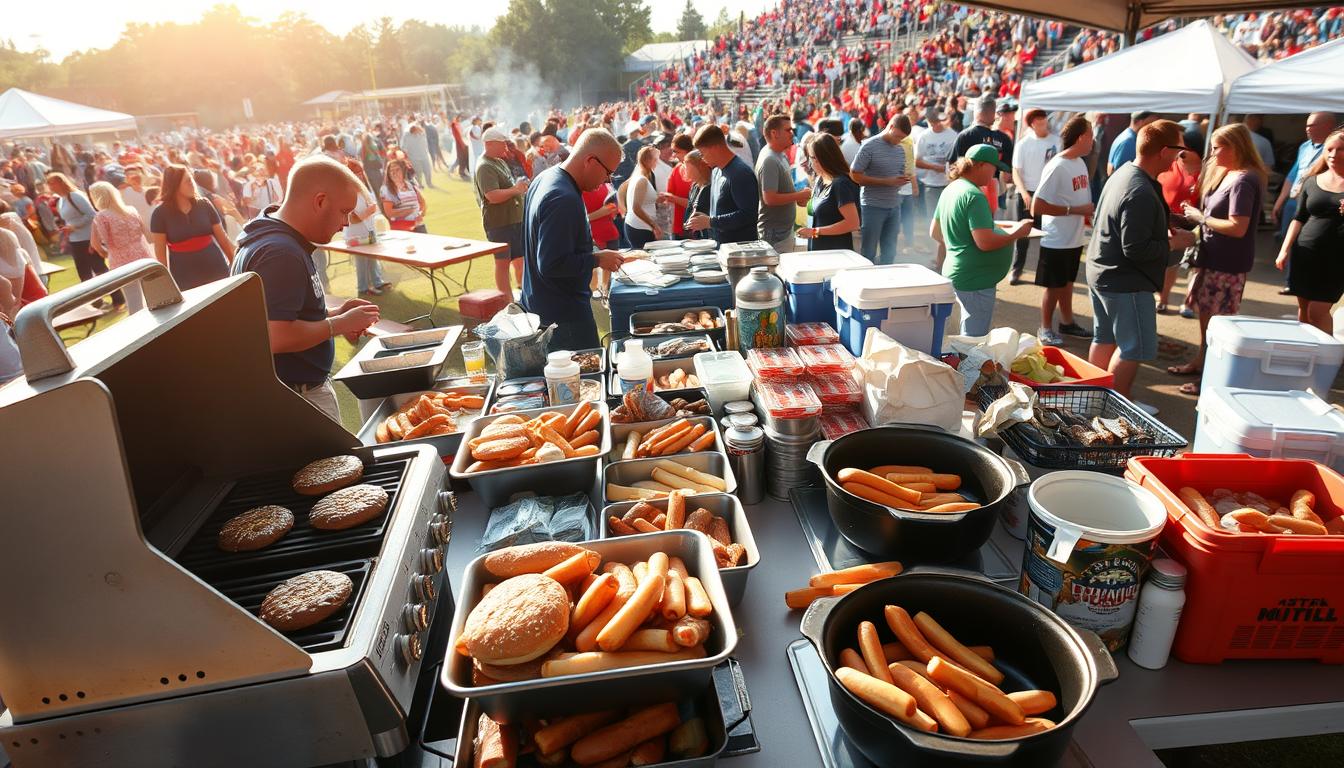
- Assembly-line items – Burgers, hot dogs, and sandwiches work well because people can customize their own and you can cook continuously.
- Cold prep items – Potato salad, coleslaw, and fruit salads can be made entirely ahead and require no on-site cooking space.
Space and Layout Management
Large groups need more than just more space – they need organized space that prevents bottlenecks and keeps traffic flowing smoothly. Poor layout planning leads to long food lines, crowded cooking areas, and frustrated tailgaters.
Create distinct zones for different activities rather than clustering everything together. How to set up the perfect tailgating space becomes critical when managing larger crowds and multiple activity areas.
Essential Zone Planning
- Cooking zone. Position grills and prep tables with 6-8 feet of clearance on all sides for safety and workflow.
- Serving zone. Set up a buffet-style serving area separate from cooking to prevent crowds around hot grills.
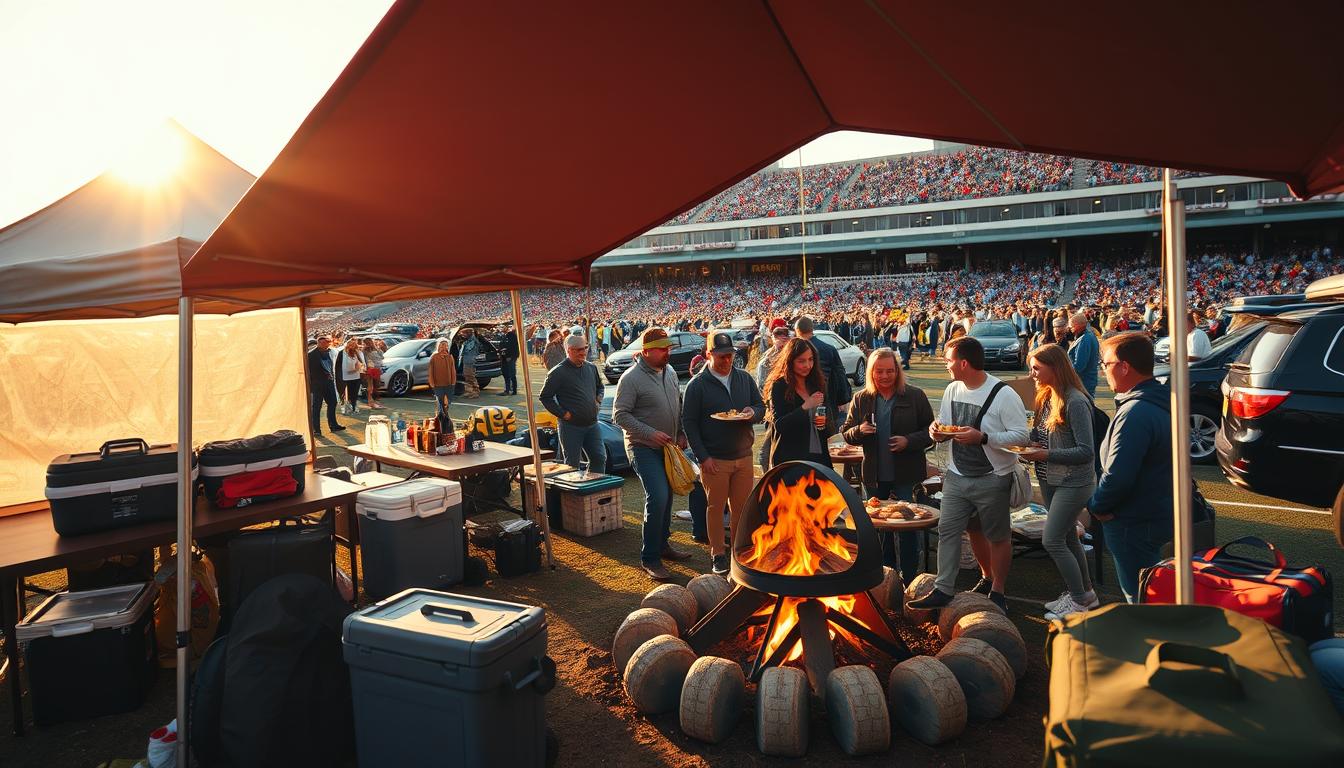
- Seating zone. Arrange chairs and tables in conversation clusters rather than long rows that prevent mingling.
- Activity zone. Designate space for classic tailgate games away from food prep and seating areas.
- Storage zone. Keep coolers, extra supplies, and personal items organized in one area to prevent clutter.
Equipment and Gear Scaling
Large groups require different equipment strategies than simply bringing more of the same items. You need gear that can handle volume efficiently while remaining manageable for your setup crew.
Focus on high-capacity items rather than multiples of smaller gear. Two large coolers work better than six small ones for organization and ice efficiency.
Essential Large Group Gear
- Multiple grilling surfaces – Rent or borrow additional grills rather than trying to cook everything on one large grill that creates bottlenecks.
- Large serving containers – Aluminum pans, chafing dishes, or slow cookers that can hold full recipes without constant refilling.
- Beverage stations – Multiple coolers or beverage tubs positioned around your space to prevent crowding at one location.
- Portable tables – Folding tables for food prep, serving, and extra surface space that can be positioned as needed.
- Trash and recycling stations – Multiple clearly marked containers throughout your space, not just one overflowing bin.
Delegate Before You Arrive
Assign specific people to bring key items like extra tables, grills, or large coolers before game day. This prevents last-minute scrambling and ensures you have the capacity you need.
Coordination and Communication
Large group success depends more on organization than equipment or food. Without clear communication and defined roles, even well-planned tailgates can become chaotic experiences that stress hosts and guests alike.
Create a simple coordination system that keeps everyone informed without over-complicating the fun atmosphere. Planning a tailgate potluck provides frameworks that work well for large group coordination.
Key Coordination Strategies
- Create a group chat. Use text messaging or apps to coordinate arrival times, parking, and last-minute changes.
- Assign team leaders. Designate people responsible for setup, cooking, games, and cleanup rather than leaving everything to chance.
- Share essential information. Send parking instructions, what to bring, and arrival times 2-3 days before the event.
- Plan arrival windows. Stagger arrival times for setup crew (early), general group (middle), and cleanup crew (late) to prevent overcrowding during setup.
Safety Considerations for Large Groups
More people means more potential safety issues, especially around cooking equipment and in parking areas. Tailgating safety tips become even more critical when managing larger crowds.
Designate safety-conscious people to monitor cooking areas and keep pathways clear. Large groups can create blind spots and crowded conditions that increase accident risks.
Large Group Safety Essentials
- Fire safety – Keep fire extinguishers accessible and ensure at least two people know their locations.
- First aid preparation – Designate someone to bring a well-stocked first aid kit and know basic first aid procedures.
- Clear pathways – Maintain 4-foot-wide walkways between activity areas to prevent trips and allow emergency access.
- Alcohol management – Monitor consumption and ensure designated drivers are identified before drinking begins.
Budget Management
Large group tailgates can become expensive quickly if costs aren’t managed strategically. The key is creating fair cost-sharing systems that don’t burden hosts while ensuring quality experiences for everyone.
Establish contribution guidelines early rather than hoping everything works out naturally. People appreciate clear expectations and fair systems for sharing expenses.
Cost-Effective Large Group Strategies
- Potluck assignments – Assign food categories (appetizers, sides, desserts) rather than letting people choose randomly.
- Bulk purchasing – Coordinate group purchases for expensive items like meat, alcohol, or ice to get better per-unit prices.
- Equipment sharing – Create a list of who’s bringing what equipment to prevent duplicates and ensure coverage.
- Cleanup incentives – Offer small incentives for people who stay to help with cleanup and breakdown.
Articles You May Like
Frequently Asked Questions
How much food should I plan for a group of 30 tailgaters?
Plan for 45 pounds of total food (1.5 pounds per person) including proteins, sides, snacks, and desserts. This accounts for varying appetites and ensures nobody goes hungry.
What’s the best way to keep food hot for large groups?
Use multiple chafing dishes, slow cookers, or aluminum pans with sterno warmers to maintain safe serving temperatures. Avoid trying to keep everything hot on the grill simultaneously.
How do I prevent long food lines at large tailgates?
Set up multiple serving stations with different items at each location, or create a buffet line with multiple access points. Keep drinks separate from food to reduce bottlenecks.
Should I assign specific roles to people in large groups?
Yes, assign 3-4 key roles like grill master, setup coordinator, and cleanup leader. This prevents confusion and ensures important tasks get handled properly.
Final Thoughts
Tailgating For Large Groups succeeds when you plan systematically and delegate responsibilities rather than trying to handle everything yourself. The key is scaling your approach thoughtfully instead of just making everything bigger.
Start with clear communication and defined roles, then focus on efficient food systems and organized space layout. Essential tailgating gear becomes even more important when coordinating larger groups, so plan your equipment needs carefully and delegate key items to reliable team members.
Ryan Conlon is a BBQ enthusiast and inspired chef on a journey through the smoky, savory world of outdoor cooking. Hailing from the heart of the Midwest, Ryan’s passion for grilling ignited during his early years, where family gatherings often revolved around the sizzle of the grill and the aroma of seasoned meats.