
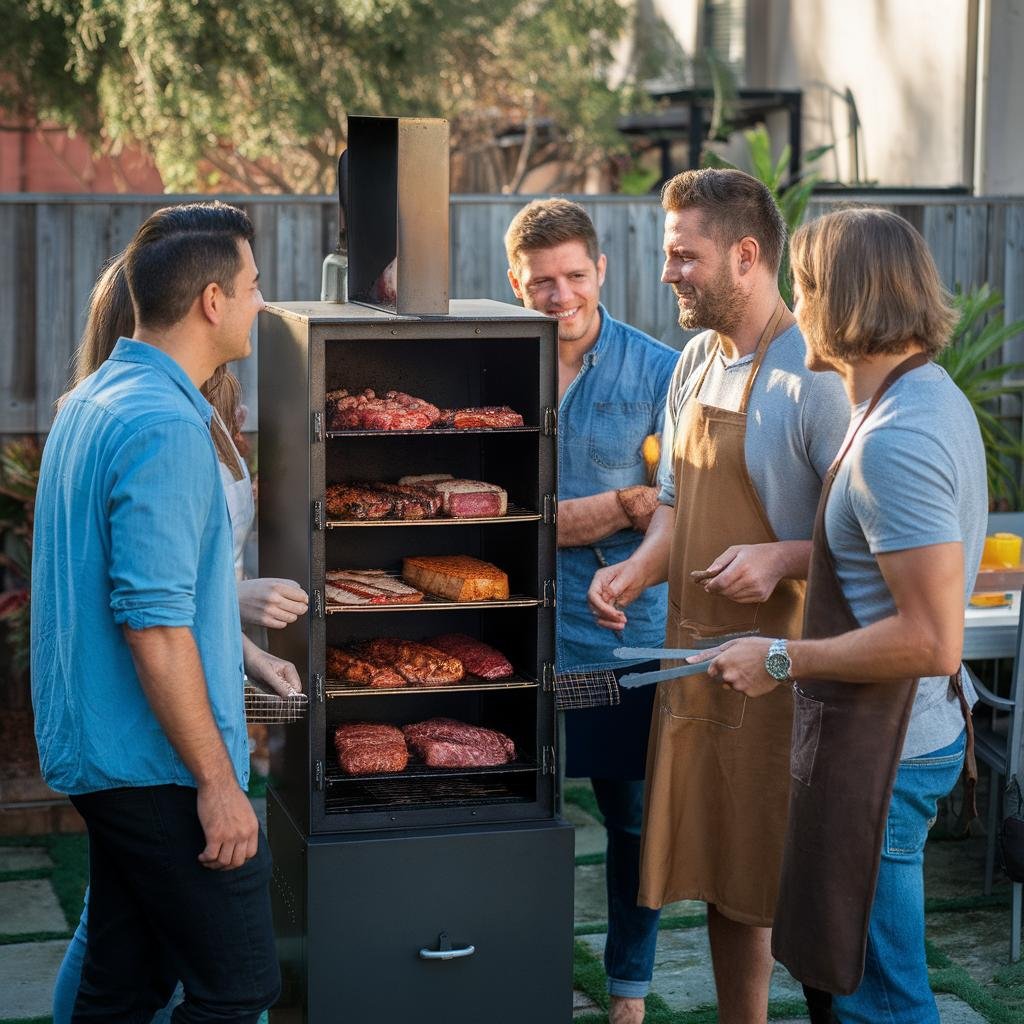
Vertical Smokers A Complete Guide To Vertical Smoking opens up a world of multi-level cooking that can transform your BBQ game. These towering cooking machines stack food on multiple racks, allowing you to smoke different cuts simultaneously while maintaining consistent temperature throughout the cooking chamber.
Whether you’re feeding a crowd or want to maximize your smoking efficiency, vertical smokers offer unique advantages that traditional horizontal models simply can’t match. The vertical design creates natural convection currents that help distribute heat and smoke evenly across all cooking levels.
TL;DR
- Vertical smokers can hold 2-3 times more food than horizontal models of similar footprint size.
- Water pan placement in the middle chamber maintains 225-250°F temperature range automatically.
- Multi-rack cooking lets you smoke brisket on bottom, ribs in middle, and chicken on top simultaneously.
- Electric vertical smokers use 500-800 watts per hour compared to 15-20 pounds of charcoal in offset smokers.
Vertical Smokers A Complete Guide To Vertical Smoking
Vertical smokers work by stacking cooking chambers vertically rather than spreading them horizontally like traditional offset smokers. Heat and smoke rise naturally from the bottom chamber, passing through each cooking level before exiting at the top.
This design creates several cooking zones with slightly different temperatures – typically hottest at the bottom and coolest at the top. You can use these temperature differences strategically to cook different foods that require varying heat levels.
How Vertical Smokers Work
The basic operation involves three main components working together. The firebox or heating element sits at the bottom, generating heat and smoke that rises through the cooking chambers.
- Heat Source – Electric element, gas burner, or charcoal/wood fire at the base
- Water Pan – Middle chamber that regulates temperature and adds moisture
- Cooking Racks – Multiple levels for different foods and cooking stages
- Ventilation – Top vents control airflow and temperature
Types of Vertical Smokers
Understanding the different types helps you choose the right vertical smoker for your needs and cooking style. Each type offers distinct advantages depending on your experience level and preferences.
Electric Vertical Smokers
Electric models provide the most consistent temperature control with minimal effort. They use heating elements and wood chips to generate smoke, making them perfect for beginners.
- Temperature Control – Digital thermostats maintain precise heat levels
- Ease of Use – Set and forget operation with minimal monitoring
- Fuel Efficiency – Low operating costs compared to charcoal or gas
- Weather Independence – Work well in cold or windy conditions
Charcoal Vertical Smokers
Charcoal vertical smokers deliver authentic smoke flavor that many BBQ enthusiasts prefer. Popular models like the Weber Smokey Mountain have earned cult followings among serious pitmasters.
- Flavor Profile – Rich, traditional smoke taste from burning charcoal and wood
- Temperature Range – Can achieve higher heat for searing when needed
- Portability – No electrical requirements for camping or tailgating
- Learning Curve – Requires practice to master temperature control
Gas Vertical Smokers
Gas-powered vertical smokers combine convenience with good flavor production. They offer more control than charcoal while still providing authentic smoke taste through wood chips or chunks.
Temperature Zone Strategy
Place tougher cuts like brisket or pork shoulder on lower racks where temperatures run 10-15°F higher. Put delicate items like fish or vegetables on upper racks where cooler temperatures prevent overcooking.
Setting Up Your Vertical Smoker
Proper setup determines the success of your smoking session. The key lies in understanding how heat and airflow work in your specific vertical smoker design.
Initial Seasoning Process
New vertical smokers need seasoning before first use to remove manufacturing residues and create a protective coating. This process also helps you learn your smoker’s temperature patterns.
- Clean Thoroughly. Wash all cooking surfaces with warm soapy water and dry completely.
- Apply Oil Coating. Brush cooking oil on all interior surfaces including racks and walls.
- Run Empty Cycle. Heat to 250°F for 2-3 hours with wood chips to build seasoning layer.
- Monitor Temperature Zones. Use multiple thermometers to map heat distribution across levels.
Water Pan Management
The water pan serves multiple critical functions in vertical smoking. It stabilizes temperature, adds moisture to prevent food from drying out, and acts as a heat deflector.
- Fill Level – Keep water pan 3/4 full but not overflowing
- Water Temperature – Start with hot water to reach cooking temperature faster
- Maintenance – Check and refill every 4-6 hours during long cooks
- Alternative Liquids – Try apple juice, beer, or wine for subtle flavor additions
Mastering Temperature Control
Temperature control in vertical smokers requires understanding how airflow affects heat distribution. Unlike horizontal smokers, vertical units create natural convection currents that you can learn to manage.
Airflow Management
Controlling air intake and exhaust determines both temperature and smoke production. Most vertical smokers have intake vents at the bottom and exhaust vents at the top.
- Intake Vents – Control oxygen supply to fire for temperature adjustment
- Exhaust Vents – Regulate smoke density and maintain proper airflow
- Draft Effect – Natural rising heat creates consistent air movement
- Wind Considerations – Position smoker to minimize wind interference
Temperature Monitoring
Accurate temperature reading becomes crucial when cooking on multiple levels. Each rack may run 10-20°F different from others, so know your smoker’s personality.
Digital probe thermometers work best for monitoring both food and ambient temperatures simultaneously. Place one probe at grate level where your main protein sits and another to track overall chamber temperature.
Multi-Level Cooking Strategies
The real advantage of vertical smoking lies in cooking multiple items simultaneously. Strategic placement based on cooking times and temperature requirements maximizes your efficiency.
Timing Your Cook
Start with items requiring longest cooking times on lower racks where temperatures run slightly higher. Add quicker-cooking foods to upper racks as your session progresses.
- Long Cooks First. Begin with brisket, pork shoulder, or whole chickens that need 8-12 hours.
- Medium Items Second. Add ribs or pork chops that need 4-6 hours cooking time.
- Quick Items Last. Finish with vegetables, fish, or sausages requiring 1-2 hours.
- Temperature Matching. Group foods requiring similar final temperatures on same levels.
Rack Placement Strategy
Understanding your smoker’s temperature zones helps you place foods where they’ll cook best. Most vertical smokers run hottest at the bottom and coolest at the top.
- Bottom Rack – Best for tough cuts needing higher heat and longer cooking
- Middle Racks – Ideal for ribs, chicken pieces, and medium-sized roasts
- Top Rack – Perfect for delicate foods, vegetables, and finishing touches
Common Vertical Smoking Challenges
Every vertical smoker presents unique challenges that become manageable once you understand the solutions. Learning these common issues helps prevent frustrating cooking sessions.
Uneven Heat Distribution
Heat distribution varies between racks in most vertical smokers. The solution involves understanding these patterns and using them to your advantage rather than fighting them.
Rotate foods between racks during cooking if you need more even results. Some pitmasters swap top and bottom items halfway through cooking to balance exposure to different temperatures.
Moisture Management
Vertical smokers can either dry out food or create too much moisture depending on your water pan management. Finding the right balance takes practice with your specific unit.
- Dry Conditions – Add more water to pan or use larger water reservoir
- Too Moist – Reduce water pan size or partially cover with foil
- Grease Buildup – Clean regularly to prevent off-flavors and flare-ups
Articles You May Like
Frequently Asked Questions
How much food can a vertical smoker hold compared to horizontal models?
Vertical smokers typically hold 2-3 times more food than horizontal models with the same footprint. A standard vertical unit can smoke 6-8 racks of ribs compared to 2-3 racks in most horizontal smokers.
Do I need to rotate food between racks during cooking?
Rotation isn’t always necessary but can help achieve more even results. If you notice significant temperature differences between racks, swap food positions halfway through cooking for better consistency.
What’s the best wood to use in vertical smokers?
Fruit woods like apple and cherry work well for most vertical smoking applications. Oak provides steady heat for longer cooks, while hickory adds stronger flavor for beef and pork.
How often should I add water to the water pan?
Check the water pan every 4-6 hours during long cooks. Keep it at least half full to maintain proper temperature control and moisture levels throughout your cooking session.
Can I use my vertical smoker in winter weather?
Yes, but expect longer heat-up times and higher fuel consumption in cold weather. Electric models perform better in winter than charcoal units, which struggle more with temperature control in freezing conditions.
Final Thoughts
Vertical Smokers A Complete Guide To Vertical Smoking shows how these efficient cooking machines can expand your BBQ capabilities while saving space and fuel. The multi-level design lets you cook entire meals simultaneously while developing skills in temperature zone management.
Start with simple single-protein cooks to learn your smoker’s personality, then gradually work up to complex multi-level meals. With practice, you’ll master the art of vertical smoking techniques that make you the neighborhood BBQ hero.

Ryan Conlon is a BBQ enthusiast and inspired chef on a journey through the smoky, savory world of outdoor cooking. Hailing from the heart of the Midwest, Ryan’s passion for grilling ignited during his early years, where family gatherings often revolved around the sizzle of the grill and the aroma of seasoned meats.