
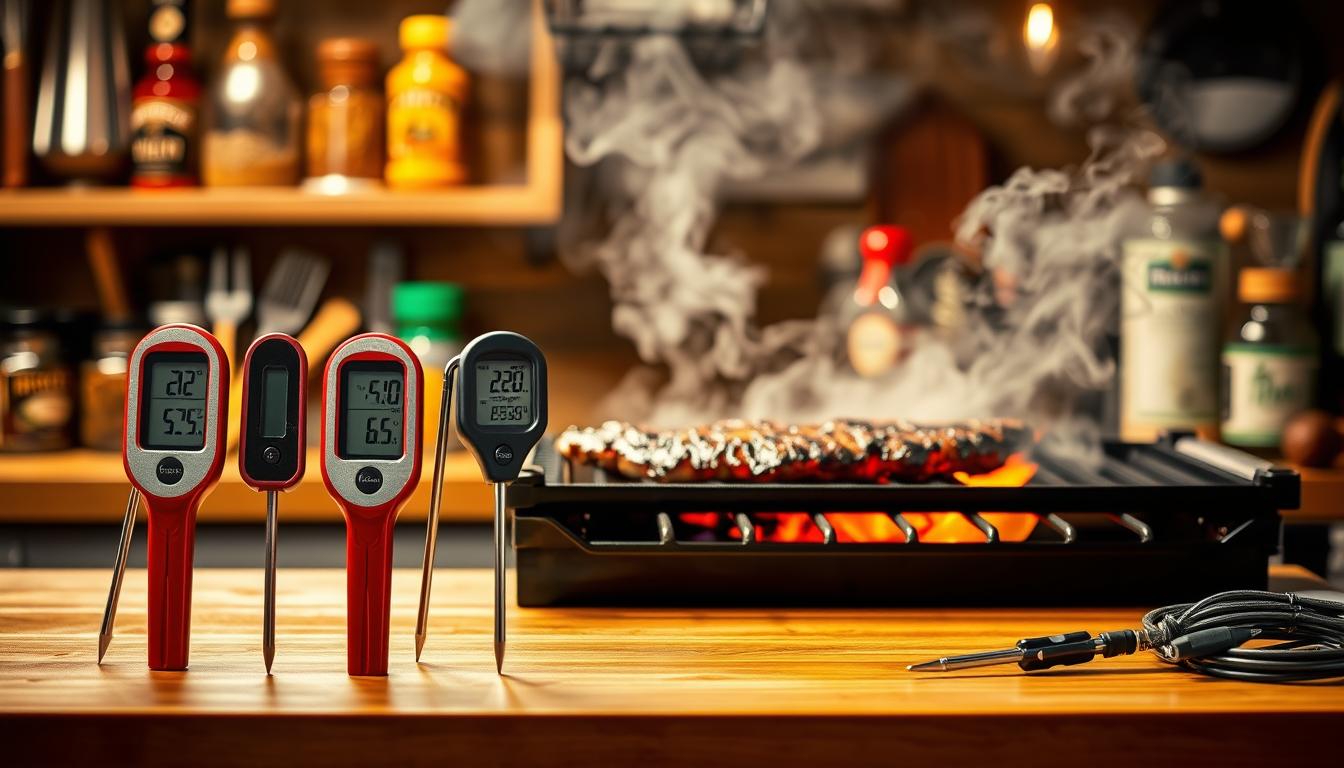
Why BBQ Thermometers Matter goes beyond just checking if your meat is done – it’s about transforming your outdoor cooking from guesswork into precision. A reliable thermometer ensures food safety, prevents overcooking expensive cuts, and helps you achieve consistent results every time you fire up the grill.
Without proper temperature monitoring, even experienced pitmasters struggle with uneven cooking and food safety concerns. The difference between a perfectly smoked brisket and a dried-out disappointment often comes down to accurate temperature control throughout the cooking process.
TL;DR
- Food safety requires internal temperatures of 165°F for poultry, 145°F for pork, and 135°F for medium-rare beef.
- Digital instant-read thermometers provide results in 3-5 seconds compared to 15-20 seconds for analog models.
- Probe thermometers allow continuous monitoring without opening the grill, maintaining steady cooking temperatures.
- Calibrating your thermometer in ice water (32°F) ensures accuracy within 1-2 degrees for reliable readings.
Why BBQ Thermometers Matter for Every Outdoor Cook
Temperature control separates amateur backyard cooks from barbecue masters who consistently deliver restaurant-quality results. Choosing the right digital thermometer eliminates the guesswork that leads to overcooked steaks and undercooked chicken.
Professional pitmasters rely on precise temperature readings to manage both internal meat temperatures and cooking chamber heat. This dual monitoring approach ensures food safety while maximizing flavor and texture in every cut of meat.
Food Safety Through Accurate Temperature Monitoring
Foodborne illness from undercooked meat sends thousands of people to hospitals each year, making temperature monitoring a critical safety practice. The USDA establishes minimum internal temperatures based on scientific research about harmful bacteria elimination.
Different proteins require specific internal temperatures to destroy dangerous pathogens safely:
- Poultry – 165°F in the thickest part of the breast or thigh
- Ground meats – 160°F throughout to eliminate E. coli and salmonella
- Pork – 145°F with a 3-minute rest period
- Beef steaks – 135°F for medium-rare, 145°F for medium
- Fish – 145°F or until flesh flakes easily
Visual cues like color and texture can mislead even experienced cooks, especially when using marinades or rubs that affect meat appearance. Only accurate temperature readings guarantee safe consumption.
Avoiding the Danger Zone
Bacteria multiply rapidly between 40°F and 140°F, known as the “danger zone” in food safety. Meat sitting in this temperature range for more than two hours becomes unsafe to eat, regardless of how it looks or smells.
Thermometers help you track cooking progress and ensure meat moves through this danger zone quickly during the cooking process. This knowledge prevents both undercooking and the food safety risks of extended warm holding.
Achieving Consistent Cooking Results
Professional barbecue competitors use thermometers to replicate winning recipes with precision every time they cook. Temperature consistency allows you to develop reliable techniques that work regardless of weather conditions or equipment variations.
Different cuts of meat have optimal internal temperatures for peak flavor and texture:
- Brisket – 203°F for tender, pullable texture
- Pork shoulder – 195-205°F for easy shredding
- Ribs – 195°F with probe tenderness test
- Chicken thighs – 175°F for juicy, fully rendered fat
- Salmon – 125°F for moist, flaky texture
These target temperatures come from years of testing by barbecue experts who understand how collagen breaks down and moisture retention changes at specific heat levels. Following these guidelines eliminates the trial-and-error approach that wastes expensive ingredients.
Pro Temperature Tip
Insert your probe into the thickest part of the meat, avoiding fat, bone, or gristle for the most accurate reading. Angle the probe so it reaches the center of the cut for consistent results.
Managing Cooking Chamber Temperature
Maintaining steady cooking temperatures creates the controlled environment needed for even heat distribution and predictable cooking times. Temperature control on charcoal smokers requires constant monitoring to prevent temperature swings that affect cooking quality.
Most barbecue styles work best within specific temperature ranges that thermometers help you maintain throughout the cooking session. Low and slow smoking typically operates between 225-250°F, while direct grilling uses higher temperatures from 350-450°F.
Types of BBQ Thermometers and Their Applications
Different thermometer styles serve specific purposes in outdoor cooking, from quick spot checks to continuous monitoring during long smoking sessions. Understanding these differences helps you choose the right tool for each cooking situation.
Instant-Read Thermometers
Digital instant-read models provide fast, accurate temperature readings for quick checks during cooking. These handheld units work best for testing doneness in steaks, chops, and other cuts that cook relatively quickly.
Key features to look for in instant-read thermometers include:
- Response time – Quality digital models read in 3-5 seconds
- Temperature range – Look for -40°F to 450°F+ capability
- Accuracy – ±1°F precision for reliable results
- Display – Large, backlit screens for easy reading
- Probe length – 4-6 inches for thick cuts
Leave-In Probe Thermometers
Probe thermometers stay in the meat throughout cooking, connected to external displays that monitor temperature without opening the grill. This continuous monitoring maintains steady cooking chamber temperatures while tracking internal progress.
Wireless probe systems offer the ultimate convenience, sending temperature data to smartphone apps so you can monitor cooking progress from anywhere in your home. Some advanced models track both meat and grill temperatures simultaneously.
Infrared Thermometers
Infrared models measure surface temperatures instantly without touching the meat or grill grates. These tools excel at checking grill surface heat for proper searing temperatures and identifying hot spots on cooking surfaces.
While infrared thermometers can’t measure internal meat temperatures, they’re valuable for two-zone grilling setups where different areas need specific surface temperatures for optimal cooking.
Proper Thermometer Technique and Maintenance
Accurate temperature readings depend on proper insertion technique and regular calibration to ensure your thermometer provides reliable data. Poor technique can give false readings that compromise both safety and cooking quality.
Follow these steps for accurate temperature readings:
- Clean the probe. Sanitize with alcohol wipes before each use to prevent cross-contamination.
- Insert properly. Push the probe into the thickest part of the meat, avoiding bones, fat, and gristle.
- Wait for stabilization. Allow the reading to stabilize completely before recording the temperature.
- Check multiple spots. Test different areas of large cuts to ensure even cooking throughout.
- Recalibrate regularly. Test accuracy monthly using ice water (32°F) and boiling water (212°F) methods.
Calibration and Accuracy Checks
Even quality thermometers can drift out of calibration over time, especially with frequent use and temperature extremes. Regular accuracy checks ensure your readings remain reliable for food safety and cooking quality.
The ice water method provides the most accessible calibration check – simply fill a glass with ice water, insert your probe, and verify it reads 32°F (±1°F). If readings are consistently off, most digital thermometers have calibration adjustment features in their settings.
Common Temperature Monitoring Mistakes
Understanding typical thermometer errors helps you avoid the pitfalls that lead to inconsistent results and food safety issues. These mistakes occur even among experienced outdoor cooks who haven’t developed proper monitoring habits.
The most frequent errors include:
- Testing too early. Checking temperatures before meat has had time to cook properly
- Single-point testing. Only checking one spot in large cuts that may cook unevenly
- Ignoring carryover cooking. Not accounting for temperature rise during resting periods
- Poor probe placement. Hitting bones or fat deposits that don’t represent true meat temperature
- Opening too frequently. Constant lid lifting that disrupts cooking chamber temperatures
Understanding Carryover Cooking
Large cuts continue cooking after removal from heat as internal temperatures equalize throughout the meat. This carryover cooking can add 5-10°F to internal temperatures during resting periods.
Account for carryover by removing meat when it reaches 5-10°F below your target temperature, then monitor during the resting phase. Proper meat resting redistributes juices while completing the cooking process safely.
Articles You May Like
Frequently Asked Questions
How often should I calibrate my BBQ thermometer?
Calibrate your thermometer monthly or whenever you drop it, expose it to extreme temperatures, or notice inconsistent readings. Regular calibration ensures accuracy within 1-2 degrees for reliable food safety.
Can I leave a probe thermometer in meat while smoking?
Yes, probe thermometers are designed to stay in meat throughout cooking. Choose heat-resistant cables rated for your cooking temperatures and position probes away from direct flames.
What’s the difference between instant-read and probe thermometers?
Instant-read thermometers provide quick spot checks in 3-5 seconds but must be removed from heat. Probe thermometers monitor continuously throughout cooking without opening the grill.
Why do my temperature readings vary in different parts of the meat?
Uneven cooking occurs due to varying thickness, proximity to heat sources, and bone placement. Check multiple spots in large cuts to find the lowest temperature for food safety.
Do I need different thermometers for different types of cooking?
A quality instant-read thermometer handles most grilling tasks, while probe thermometers excel for long smoking sessions. Consider your cooking style and frequency when selecting tools.
Final Thoughts
Why BBQ Thermometers Matter becomes clear when you experience the confidence and consistency that accurate temperature monitoring brings to your outdoor cooking. These tools transform barbecue from guesswork into a precise craft where food safety and optimal results go hand in hand.
Start with a reliable instant-read thermometer this week and experience the difference that proper temperature control makes in your grilling and smoking results.



Ryan Conlon is a BBQ enthusiast and inspired chef on a journey through the smoky, savory world of outdoor cooking. Hailing from the heart of the Midwest, Ryan’s passion for grilling ignited during his early years, where family gatherings often revolved around the sizzle of the grill and the aroma of seasoned meats.