
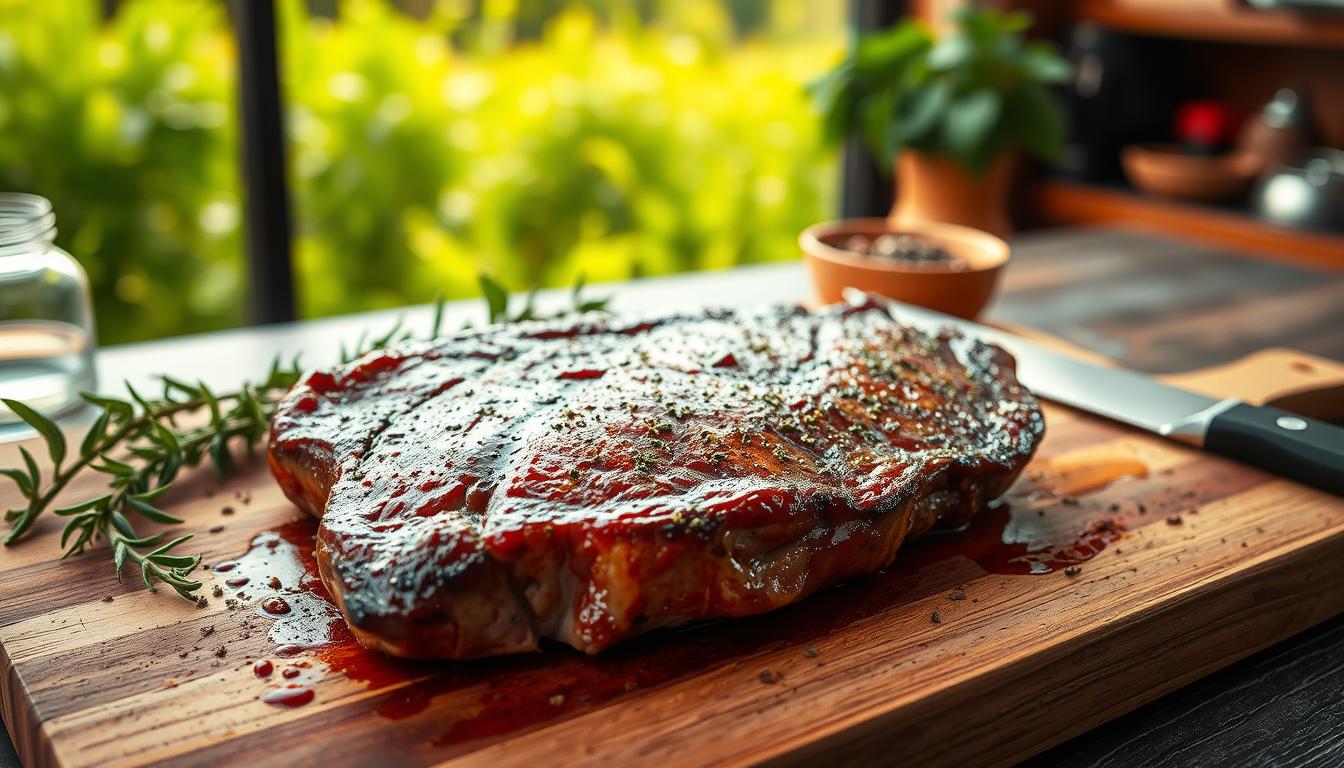
Why Resting Meat Matters is a fundamental concept that separates good BBQ from great BBQ. When you pull that perfectly smoked brisket or grilled steak off the heat, your instinct might be to slice and serve immediately.
However, letting meat rest for the right amount of time allows the juices to redistribute throughout the fibers, creating a more tender and flavorful result. Understanding the science behind this process will transform your outdoor cooking and help you serve restaurant-quality meals every time.
TL;DR
- Rest large cuts like brisket and pork shoulder for 30-60 minutes under foil to retain heat and redistribute juices.
- Steaks and chops need 5-10 minutes of resting time to prevent juice loss when sliced.
- Internal temperature drops 5-10°F during resting, so factor this into your target cooking temperatures.
- Tenting with foil maintains warmth while allowing steam to escape, preventing soggy bark on smoked meats.
Why Resting Meat Matters: The Science Behind Better BBQ
When meat cooks, heat causes muscle fibers to contract and squeeze moisture toward the surface. During the cooking process, proteins coagulate and create a network that temporarily holds these juices in place.
If you cut into meat immediately after cooking, those contracted fibers haven’t had time to relax and reabsorb the displaced moisture. The result is dry meat with all the flavorful juices pooling on your cutting board instead of staying where they belong.
What Happens During the Resting Period
As meat cools slightly, the muscle fibers begin to relax and the protein network loosens. This allows the redistributed juices to move back into the muscle tissue through a process called moisture migration.
The external temperature drops while the internal temperature remains relatively stable, creating an ideal environment for this redistribution. This is why properly rested meat feels more tender and releases less juice when sliced.
Optimal Resting Times for Different Cuts
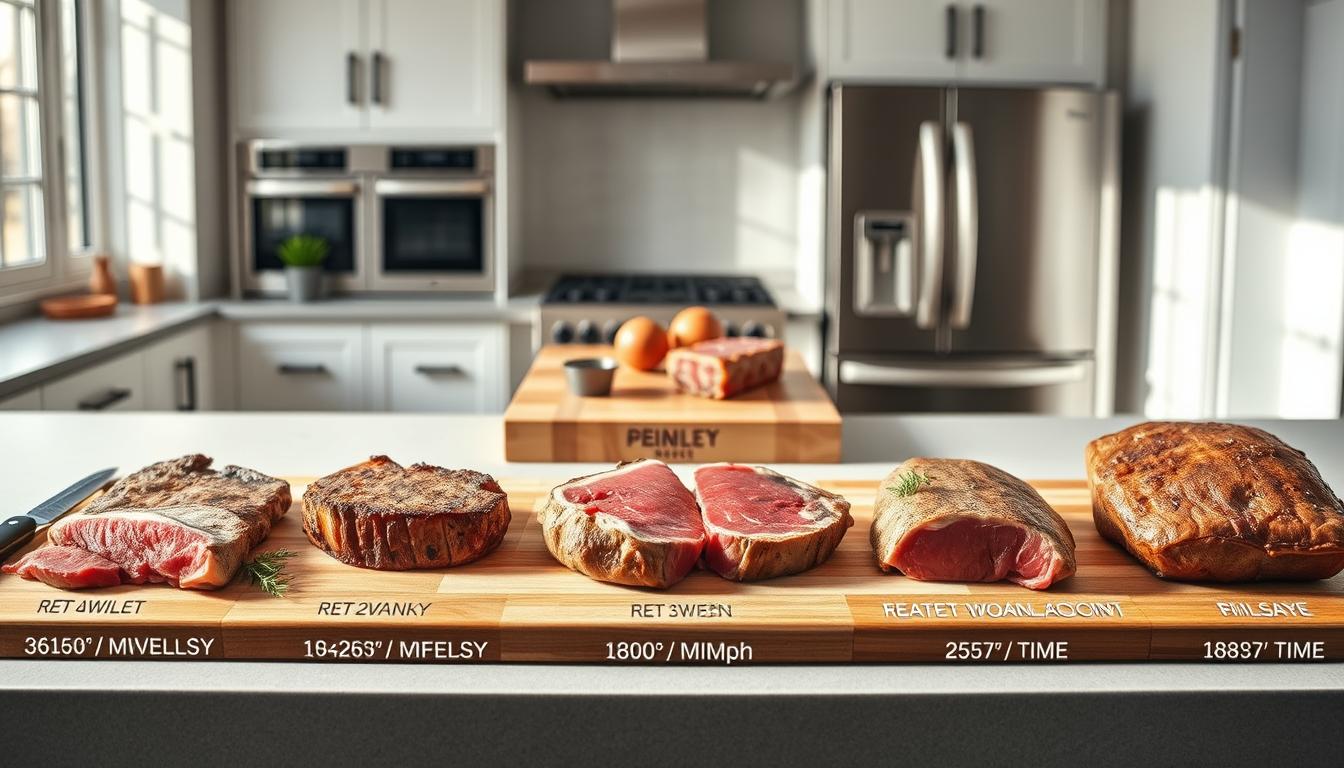
The size and density of your meat determines how long it needs to rest. Larger, thicker cuts require more time for complete juice redistribution, while smaller pieces need less.
Large Smoking Cuts
- Brisket – 45-60 minutes wrapped in foil or butcher paper
- Pork shoulder – 30-45 minutes covered to maintain temperature
- Whole chicken – 15-20 minutes under loose foil tent
- Turkey breast – 20-30 minutes depending on size
Grilled Steaks and Chops
- Thick steaks (1.5+ inches) – 8-10 minutes on a warm plate
- Regular steaks – 5-7 minutes loosely covered
- Pork chops – 5-8 minutes depending on thickness
- Lamb chops – 3-5 minutes for optimal tenderness
Temperature Considerations During Resting
Internal temperature continues to rise for the first few minutes of resting due to carryover cooking. This residual heat from the exterior continues cooking the interior, which is why many pitmasters pull large cuts 5-10°F below their target temperature.
After the initial temperature spike, the meat begins cooling at a predictable rate. Using a reliable thermometer helps you track this process and determine when your meat has rested long enough.
Professional Resting Technique
Wrap large cuts in butcher paper instead of foil – it retains heat while allowing moisture to escape, keeping your bark crispy. Place the wrapped meat in a cooler without ice to maintain temperature for extended resting periods.
How Resting Affects Different Cooking Methods
The resting process varies slightly depending on how you cooked the meat. High-heat grilling creates different conditions than low-and-slow smoking, affecting how long your meat needs to rest.
Smoked Meats
Low-temperature smoking creates less dramatic temperature gradients, but the long cooking times still cause significant moisture displacement. Smoked meats benefit from longer resting periods because the collagen breakdown continues during this time.
The rendered fat and collagen need time to redistribute and set properly. Different smoking woods can affect surface moisture, making proper resting even more important for maintaining that perfect bark.
Grilled Meats
High-heat grilling creates steep temperature gradients between the exterior and interior. Quick-cooking cuts like steaks develop a seared crust that helps retain moisture during the shorter resting period.
The rapid cooking process means less collagen breakdown, so grilled meats need less resting time than their smoked counterparts. However, skipping this step entirely will still result in significant juice loss.
Common Resting Mistakes to Avoid
Many backyard cooks make simple errors that reduce the effectiveness of the resting period. Understanding these mistakes helps you maximize the benefits of this important step.
- Cutting too early. Impatience leads to dry meat and wasted juices on the cutting board.
- Over-wrapping. Tight foil wrapping can make crispy bark soggy from trapped steam.
- Cold surfaces. Placing hot meat on cold plates or cutting boards accelerates cooling.
- Inconsistent timing. Not adjusting rest time based on meat size and cooking method.
Environmental Factors
Room temperature, humidity, and air circulation affect how quickly your meat cools during resting. Cold winter conditions require longer wrapping or insulated containers to maintain proper temperatures.
Wind and drafts can accelerate cooling, while humid conditions might affect surface texture. Proper food safety practices ensure your meat stays in the safe temperature range during extended resting periods.
Signs Your Meat Has Rested Properly
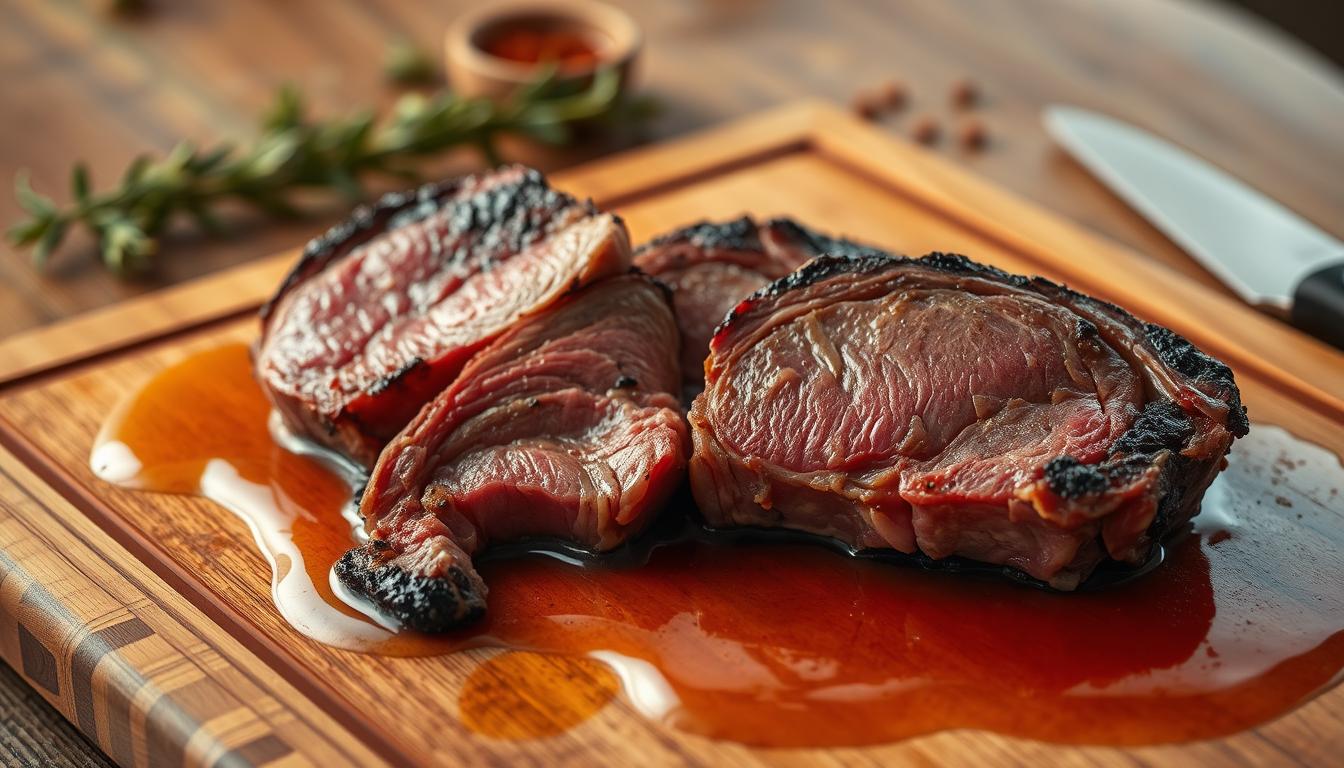
Visual and tactile cues help determine when your meat has rested long enough. The surface should look slightly less shiny as juices redistribute internally rather than pooling on the exterior.
When you press gently with your finger, properly rested meat feels firmer and more resilient. The internal temperature should have stabilized, and any visible juices on the surface should be minimal.
Frequently Asked Questions
How do I keep meat warm during long resting periods?
Wrap in butcher paper or foil and place in an empty cooler, or use a low oven (170°F) with the door slightly open. Some pitmasters use towels in a cooler for extended holds.
Does resting time affect food safety?
Yes, meat should not stay in the danger zone (40-140°F) for more than 2 hours total. Monitor internal temperature and use warming methods for longer rests.
Can I rest meat too long?
Extended resting can make meat lukewarm and affect texture, especially with smaller cuts. Large smoked meats can rest longer but may need reheating before serving.
Should I rest meat after reheating leftovers?
Brief resting (2-3 minutes) after reheating helps redistribute any moisture, but extended resting isn’t necessary for previously cooked meat.
Final Thoughts
Why Resting Meat Matters becomes clear once you experience the difference properly rested BBQ makes in your cooking results. The science behind juice redistribution isn’t complicated, but the impact on flavor and texture is dramatic.
Start timing your rests based on the guidelines above and adjust based on your specific conditions and preferences. Your patience during this final step will be rewarded with consistently juicier, more flavorful BBQ that rivals any restaurant.

Ryan Conlon is a BBQ enthusiast and inspired chef on a journey through the smoky, savory world of outdoor cooking. Hailing from the heart of the Midwest, Ryan’s passion for grilling ignited during his early years, where family gatherings often revolved around the sizzle of the grill and the aroma of seasoned meats.