
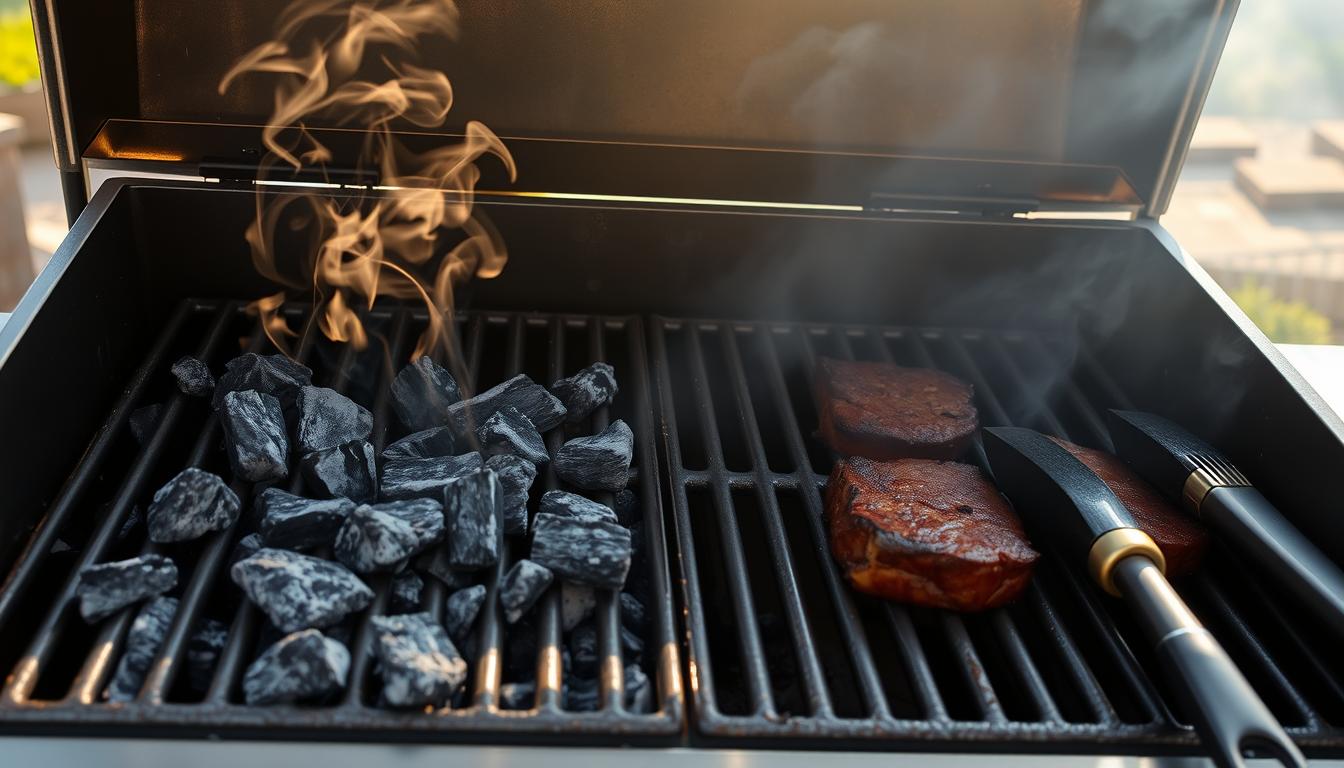
Getting perfect results while grilling can be tough. But it all comes down to temperature control. When the heat is just right, flavors pop and textures are perfect. But uneven heat can ruin everything.
Two-zone grilling helps manage heat better. It divides the grill into two areas. One for direct heat and the other for indirect.
This way, cooks can sear meat over high heat and then finish it at a lower temperature. This results in a dish that’s perfectly cooked. With better temperature control, there’s less chance of overcooking or undercooking.
Key Takeaways
- Two-zone grilling allows for better temperature control.
- Dividing the grill into direct and indirect heat zones enhances cooking flexibility.
- Better temperature control results in perfectly cooked dishes.
- This technique minimizes the risk of overcooking or undercooking.
- Two-zone grilling is a valuable technique for achieving grilling success.
Understanding the Basics of Two-Zone Grilling
Effective grilling starts with knowing the basics of two-zone grilling. This method divides the grill into two zones. One for high heat and the other for low heat.
What Is Two-Zone Grilling?
Two-zone grilling lets grill masters cook a variety of foods perfectly. It creates separate zones for direct heat and indirect heat. This way, grillers can pick the best cooking method for their needs.
Direct vs. Indirect Heat Explained
Direct heat is great for searing foods quickly over high temperatures. It’s perfect for getting those perfect grill marks on steaks and burgers. On the other hand, indirect heat is ideal for cooking foods slowly. This is good for larger cuts of meat or delicate fish, without burning them.
Knowing when to use direct versus indirect heat is key to mastering grilling. The two-zone setup gives grillers the flexibility to move food between zones. This helps achieve the desired cooking outcome.
The Science Behind Temperature Control in Grilling
Effective grilling starts with understanding the science behind temperature control. It’s not just about throwing food on a hot surface. It’s about knowing how heat works with different foods to get the right results.
How Heat Transfer Works on the Grill
Heat transfer is key to cooking food on the grill. There are three main ways heat moves: conduction, convection, and radiation. Conduction happens when food touches the grill grates. Convection is when hot air moves around the food. Radiation is when heat from the flames directly hits the food.
Why Temperature Zones Matter for Different Foods
Different foods need specific temperature zones to cook right. For example, fish needs a lower temperature to avoid overcooking. Steaks need high heat for a great sear. Knowing these needs is key to getting the food just right.
Measuring and Monitoring Grill Temperatures
To keep temperature control in check, you need to measure and watch the grill’s temperature. Use thermometers and adjust the grill settings to keep the temperature where you want it. This is very important with a charcoal grill, as the temperature can change a lot.
By understanding the science of temperature control, grillers can make their food perfect every time. This ensures that their dishes are always cooked just right.
Benefits of Two-Zone Grilling for Perfect Results
Two-zone grilling changes the game for perfect grilling results. It brings many benefits that make grilling better.
Preventing Flare-Ups and Burnt Food
Two-zone grilling helps avoid flare-ups and burnt food. You can move food to a cooler zone fast when flare-ups happen. This keeps your food safe and intact. It’s great for fatty meats or delicate foods that easily burn.
Cooking Different Foods Simultaneously
Two-zone grilling lets you cook different foods at once without losing quality. For example, sear steaks hot and cook veggies cooler. This trick is handy for big gatherings or complex meals. Check out this grilling tip for more ideas.
Creating Restaurant-Quality Sears and Finishes
Learning two-zone cooking helps you get restaurant-quality sears and finishes. Sear food hot and then finish it cooler to keep flavors in. This works well with both gas grills and charcoal grills.
Adding two-zone grilling to your skills means always getting great results. It takes your grilling to a new level.
Setting Up Two-Zone Grilling on a Charcoal Grill
Grilling with a charcoal grill is an art when you know the two-zone technique. This method lets you control cooking temperatures. You can get perfect sears and tender, well-cooked food.
Proper Charcoal Arrangement Techniques
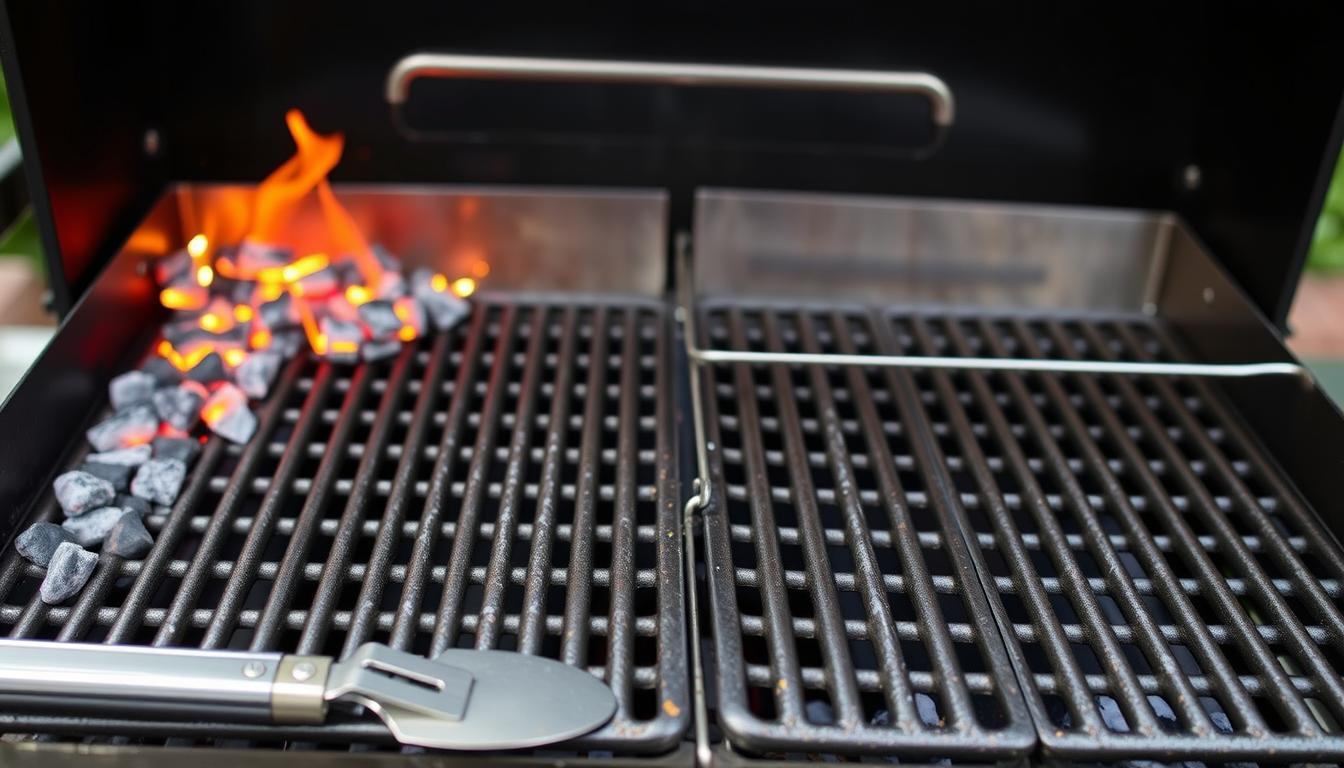
The key to a great two-zone grill setup is how you arrange the charcoal. For a charcoal grill, pile coals on one side for high heat. Leave the other side empty for indirect cooking.
Key charcoal arrangement techniques include:
- Use a charcoal chimney to light coals evenly before pouring them into the grill.
- Make a mound of coals on one side for high-heat searing.
- Leave the opposite side empty for lower-temperature cooking.
Maintaining Temperature Consistency Over Time
Keeping temperatures consistent is key for perfect grilling. Adjust airflow and sometimes move coals to ensure even heat.
Essential Tools for Monitoring Heat Zones
To manage your two-zone grill well, you need tools to check temperatures. You’ll need a grill thermometer and a heat-resistant glove for adjusting coals and vents.
| Tool | Purpose | Benefits |
|---|---|---|
| Grill Thermometer | Monitors grill temperature | Ensures accurate temperature control |
| Charcoal Chimney | Lights coals evenly | Simplifies charcoal lighting, reduces flare-ups |
| Heat-Resistant Gloves | Protects hands when adjusting grill | Safely manages coals and vents during cooking |
Creating Two-Zone Heat on a Gas Grill
Setting up your gas grill for two-zone grilling opens up new cooking possibilities. It lets you sear food at high heat and cook it at lower temperatures. This is great for many dishes. To get this setup, you’ll need to adjust your grill’s burners and might use heat deflectors or barriers.
Configuring Burner Settings for Optimal Control
To start two-zone grilling, adjust your grill’s burners. Most gas grills have separate burners you can control. Turn one area’s burners to high or medium-high. Leave the other area’s burners off or on low.
This creates a hot zone for searing and a cooler zone for gentle cooking.
Using Heat Deflectors and Barriers Effectively
Heat deflectors and barriers help even out heat and prevent flare-ups. Put a heat deflector between the lit and unlit areas. This helps for cooking that needs steady, lower heat.
Troubleshooting Common Gas Grill Temperature Issues
Even with a good two-zone setup, temperature problems can happen. Issues like uneven heating and hard-to-keep temperatures are common. To fix these, make sure your burners are clean and your grill’s parts are working right.
Adjusting your burners and using deflectors can also solve these problems.
Mastering two-zone grilling on a gas grill can greatly improve your cooking. You’ll get perfectly cooked dishes with less effort.
Advanced Two-Zone Grilling Techniques
Learning advanced two-zone grilling techniques opens up a world of flavors. It lets grill lovers get restaurant-quality food at home. With two-zone grilling, you can cook many foods perfectly.
Mastering the Reverse Sear Method
The reverse sear method changes the game for steak lovers. It cooks the steak in low heat first, then in high heat. This makes the steak tender and the crust crispy.
| Step | Description | Temperature |
|---|---|---|
| 1 | Preheat grill to two-zone heat | Low: 225°F, High: 450°F |
| 2 | Cook steak in low-heat zone | 225°F |
| 3 | Sear steak in high-heat zone | 450°F |
Creating and Managing Multiple Heat Zones
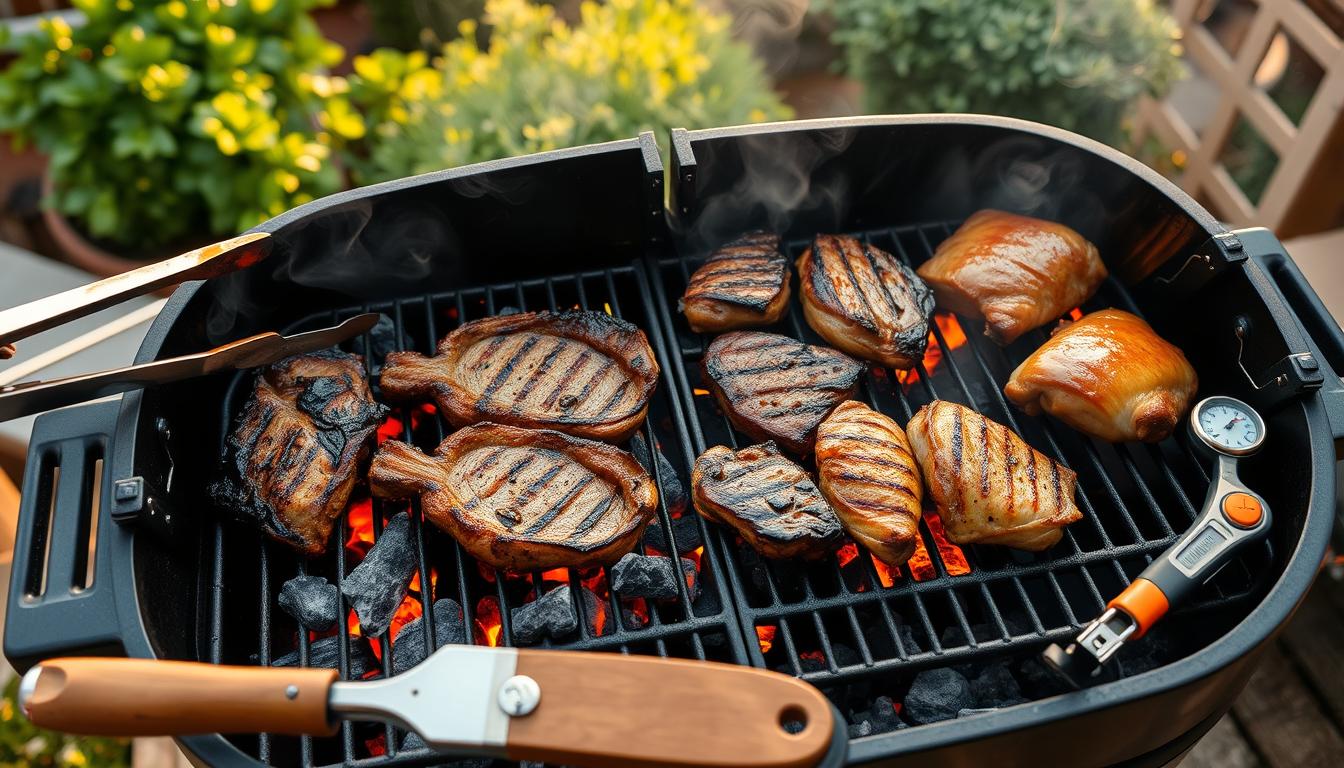
Grills can have multiple heat zones for more cooking options. Adjusting charcoal or burners lets you set up zones for direct and indirect heat. This is great for cooking for many people or making different dishes at once.
Using the “Snake Method” for Extended Low-Temperature Cooking
The “snake method” is for slow cooking on a charcoal grill. It uses charcoal in a snake shape for even heat. It’s perfect for long-cooking foods like brisket or ribs.
With these advanced techniques, grill enthusiasts can improve their skills. They can make amazing food every time.
Common Mistakes to Avoid When Using Two-Zone Grilling
Grilling perfectly with the two-zone method means avoiding common mistakes. This method gives you better temperature control. But, it only works if you do it right.
Improper Zone Size Ratios
Getting the size ratio between hot and cool zones right is key. An improper size can make food undercooked or overcooked. For example, a big hot zone is good for searing steaks. But, a bigger cool zone is better for slow-cooking ribs.
Neglecting Temperature Monitoring
Not watching the temperature in both zones can cause inconsistent cooking. You need a thermometer to track the temperature. This lets you adjust as you go, ensuring perfect cooking.
Poor Timing and Food Placement Decisions
Bad timing and where you place food can mess up your grilling. Knowing when to move food is key for the right doneness. For instance, sear a steak in the hot zone then move it to the cool zone to finish cooking.
Knowing these mistakes and how to avoid them can make your grilling better. You’ll get more consistent and tasty results.
Conclusion: Elevating Your Grilling Game with Temperature Control
Learning to master two-zone grilling and temperature control can really boost your grilling skills. This method lets you cook a wide range of foods, from quick-grilled items to slow-smoked dishes. It’s all about setting up a hot zone and a cool zone on your grill.
This way, you can cook steaks, chicken, seafood, and ribs to perfection. It’s all about controlling the heat. You can adjust the airflow and use grill vents to keep the temperature just right.
With a bit of practice and patience, you’ll get the hang of two-zone grilling. You’ll be able to make amazing dishes that everyone will love. Follow the tips in this article, and you’ll soon be a grilling pro.
FAQ
What is two-zone grilling?
Two-zone grilling divides the grill into two heat zones. One zone is for direct heat, and the other is for indirect heat. This setup lets you control cooking temperatures and techniques better.
How do I set up a two-zone charcoal grill?
To set up a two-zone charcoal grill, place charcoal on one side and leave the other side empty. Use a charcoal chimney to light the coals. Adjust the vents to control the temperature.
Can I use two-zone grilling on a gas grill?
Yes, you can set up a two-zone heat setup on a gas grill. Configure the burner settings, use heat deflectors and barriers, and adjust the grill’s temperature controls.
What are the benefits of using two-zone grilling?
Two-zone grilling prevents flare-ups and burnt food. It lets you cook different foods at once. You can also achieve restaurant-quality sears and finishes.
How do I measure and monitor grill temperatures?
Use a thermometer to measure grill temperatures. Consider getting a grill thermometer with multiple probes to monitor different zones.
What is the “snake method” in two-zone grilling?
The “snake method” is for low-temperature cooking. Arrange unlit charcoal around the grill’s perimeter. Place a few lit coals at one end for a slow burn.
How do I avoid common mistakes when using two-zone grilling?
To avoid mistakes, ensure the right zone size ratios. Regularly monitor temperatures. Make informed timing and food placement decisions.
Can I use two-zone grilling for different types of food?
Yes, two-zone grilling is versatile. It works for meats, vegetables, and seafood. It allows for different cooking techniques and temperatures.
How do I maintain temperature consistency over time?
To keep temperatures consistent, adjust the grill’s vents. Use a thermometer to monitor temperatures. Make adjustments as needed to keep the desired temperature.

Ryan Conlon is a BBQ enthusiast and inspired chef on a journey through the smoky, savory world of outdoor cooking. Hailing from the heart of the Midwest, Ryan’s passion for grilling ignited during his early years, where family gatherings often revolved around the sizzle of the grill and the aroma of seasoned meats.