
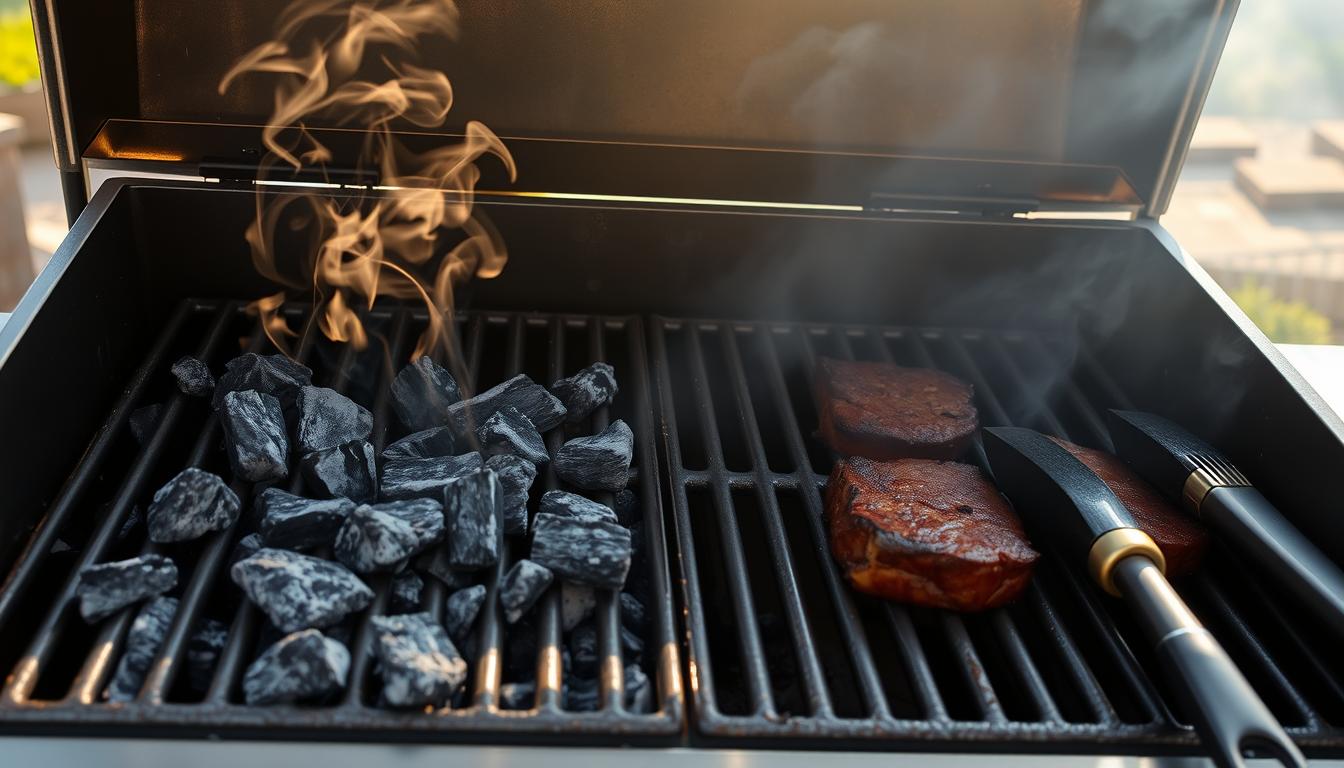
Two Zone Grilling creates distinct hot and cool areas on your grill, giving you precise control over how your food cooks. This simple setup technique transforms any grill into a versatile cooking station where you can sear, roast, and keep food warm all at the same time.
Most backyard cooks struggle with overcooked exteriors and undercooked centers because they’re cooking everything over the same high heat. Two zone grilling solves this problem by letting you move food between different temperature areas as needed.
TL;DR
- Two zone grilling uses 70% of your grill for direct high heat and 30% for indirect cooking at 250-300°F.
- Thick steaks need 2-3 minutes per side on the hot zone, then 5-10 minutes on the cool side to reach perfect doneness.
- You can cook 4-6 different items simultaneously by rotating them between hot and cool zones based on cooking requirements.
- Charcoal grills create better zone separation than gas grills, with temperature differences of 200-300°F between zones.
Why Two Zone Grilling Offers Better Temperature Control
Two zone grilling gives you the power to cook different foods at their ideal temperatures without moving them to separate cooking devices. The hot zone delivers intense direct heat for searing and creating crispy exteriors, while the cool zone provides gentle indirect heat for thorough cooking without burning.
This method prevents the most common grilling mistakes – charred outsides with raw centers, or overcooked food that’s dry and tough. Common BBQ smoking mistakes often stem from using only one temperature zone throughout the entire cooking process.
Setting Up Your Two Zone System
Creating effective temperature zones requires different approaches depending on your grill type. The key is establishing a clear separation between your hot and cool areas.
Charcoal Grill Setup
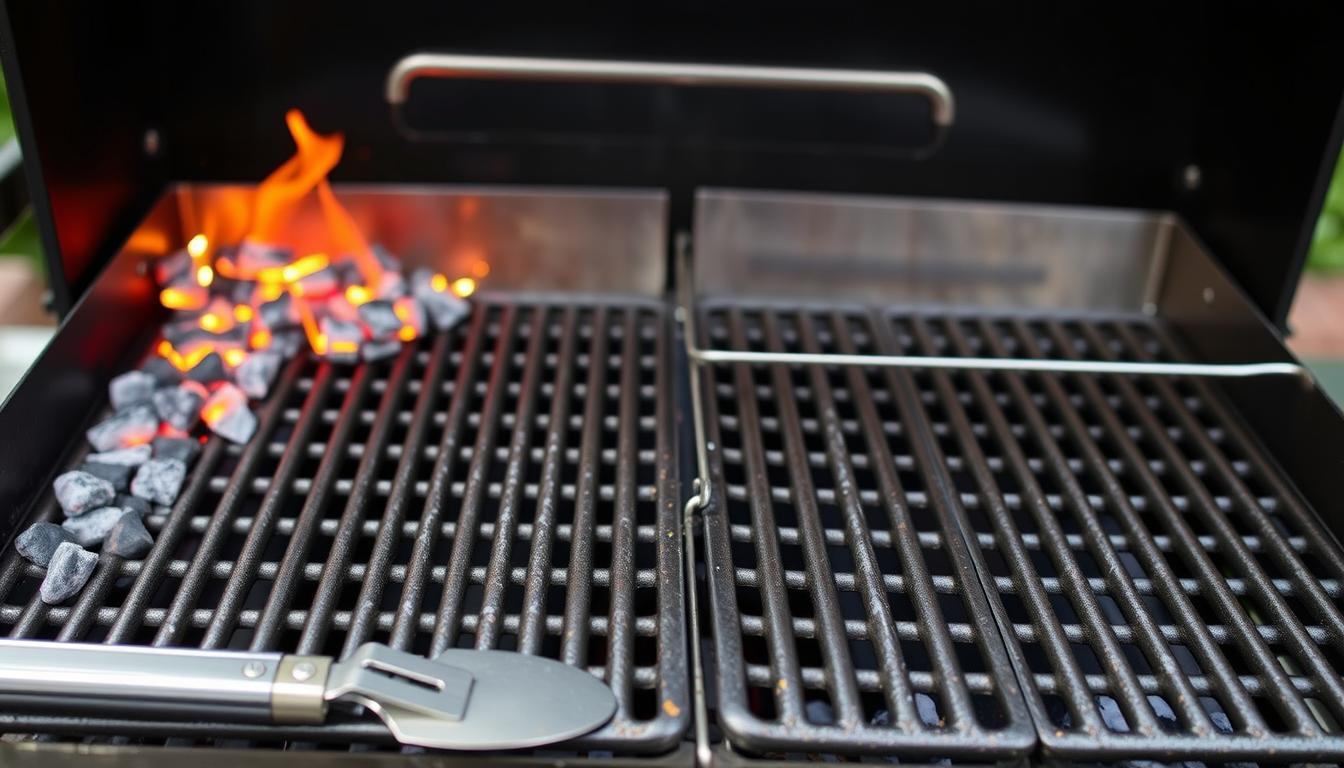
Charcoal grills offer the best zone separation and temperature control. Push all your lit coals to one side of the grill, leaving the other side completely empty.
- Hot zone – Direct heat over the coals reaches 450-500°F for searing and quick cooking.
- Cool zone – Indirect heat away from coals stays around 250-300°F for slower cooking.
- Coal arrangement – Stack coals 2-3 layers deep on one side for maximum heat concentration.
Gas Grill Setup
Gas grills require turning on only half of your burners to create temperature zones. Turn the left burners to high and keep the right burners completely off.
- Active burners – Set to high heat for your direct cooking zone.
- Inactive burners – Keep completely off to maintain the cool zone.
- Heat distribution – Gas grills have less dramatic temperature differences than charcoal setups.
Temperature Management Techniques
Managing heat across your zones requires understanding how different foods respond to direct and indirect cooking. Temperature control techniques from smoking apply directly to zone grilling methods.
Monitor both zones with a reliable thermometer to maintain consistent cooking conditions. The temperature difference between zones should stay steady throughout your cooking session.
Zone Temperature Targets
- Hot zone – 400-500°F for searing steaks, burgers, and vegetables that need crispy exteriors.
- Cool zone – 250-350°F for finishing thick cuts, cooking chicken through, and keeping food warm.
- Transition cooking – Move food between zones based on doneness rather than time alone.
Pro Temperature Tip
Place a probe thermometer in the cool zone to track indirect temperatures. This lets you treat that area like a low-temperature oven for perfect results.
Foods That Benefit Most From Two Zone Cooking
Thick cuts of meat see the biggest improvement with two zone grilling because they need high heat for browning and lower heat for even cooking throughout. Understanding direct vs indirect heat helps you choose the right zone for each food type.
Perfect Two Zone Foods
- Thick steaks – Sear 2-3 minutes per side on hot zone, finish on cool zone to desired doneness.
- Bone-in chicken – Start skin-side down on hot zone, flip and move to cool zone for thorough cooking.
- Pork chops – Quick sear on hot side, then gentle cooking on cool side prevents drying out.
- Whole fish – Crisp the skin over direct heat, finish cooking with indirect heat.
Multi-Item Cooking Strategy
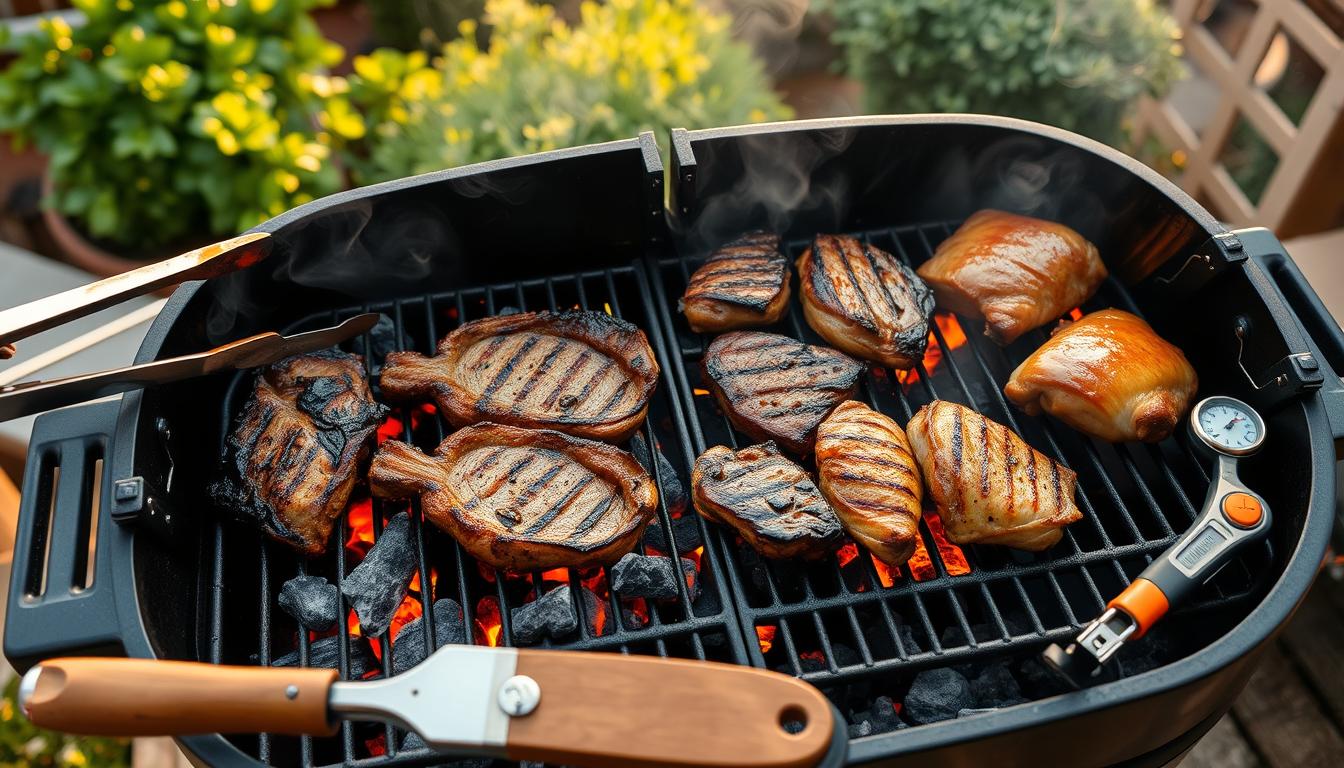
Two zone grilling shines when cooking multiple items with different requirements simultaneously. You can sear steaks on the hot side while vegetables finish cooking on the cool side.
- Start longest items first. Begin thick cuts or whole pieces on the appropriate zone based on cooking time.
- Add quick-cooking items later. Vegetables and thin cuts go on last since they cook fastest.
- Use the cool zone as a holding area. Keep finished items warm while others complete cooking.
Troubleshooting Common Zone Issues
Most two zone problems come from inadequate separation between hot and cool areas, or from not maintaining consistent temperatures throughout cooking. BBQ safety practices become even more important when managing multiple temperature zones.
Temperature Consistency Problems
- Uneven zones – Rearrange coals or adjust gas burner settings to create clearer separation.
- Cool zone too hot – Move coals further to one side or turn off more gas burners.
- Hot zone cooling down – Add fresh coals or increase gas burner settings as needed.
Articles You May Like
Frequently Asked Questions
How much of the grill should be the hot zone?
Use about 60-70% of your grill space for the hot zone and 30-40% for the cool zone. This gives you plenty of searing space while maintaining an effective indirect cooking area.
Can you do two zone grilling on a small grill?
Yes, even small grills work for two zone cooking. Push coals to one side or turn on only one burner to create temperature differences, though the zones will be smaller.
How do you maintain temperature in the cool zone?
Keep the cool zone temperature steady by maintaining consistent heat in the hot zone and keeping the grill lid closed. Add coals or adjust gas as needed to prevent temperature drops.
What’s the biggest mistake with two zone grilling?
Moving food too early between zones is the most common error. Let each zone do its job fully before transferring food to maintain proper cooking progression.
Final Thoughts
Two Zone Grilling transforms your outdoor cooking by giving you restaurant-level control over heat and timing. This simple setup lets you sear, roast, and keep food warm all on the same grill without any guesswork.
Start with thick steaks or bone-in chicken to see the dramatic difference this technique makes. Quality grilling tools and accurate thermometers will help you master zone control faster and get consistent results every time.

Ryan Conlon is a BBQ enthusiast and inspired chef on a journey through the smoky, savory world of outdoor cooking. Hailing from the heart of the Midwest, Ryan’s passion for grilling ignited during his early years, where family gatherings often revolved around the sizzle of the grill and the aroma of seasoned meats.